Category

Project

LA MACCHIA DELL’UNICORNO

By Project, Uncategorized

La Macchia dell’Unicorno (2015)

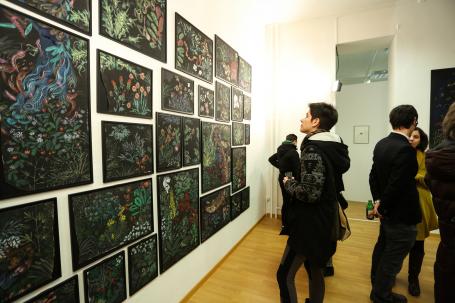
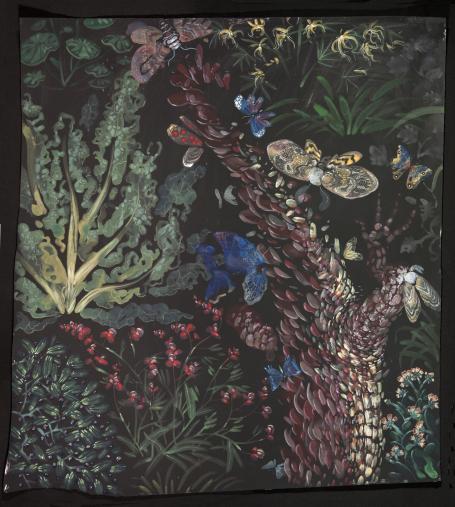
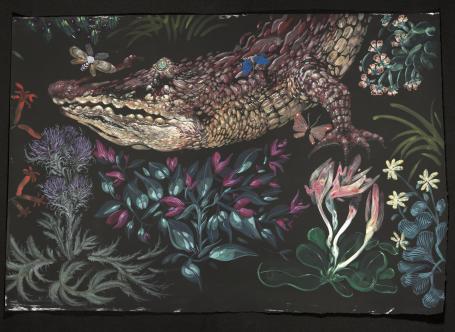
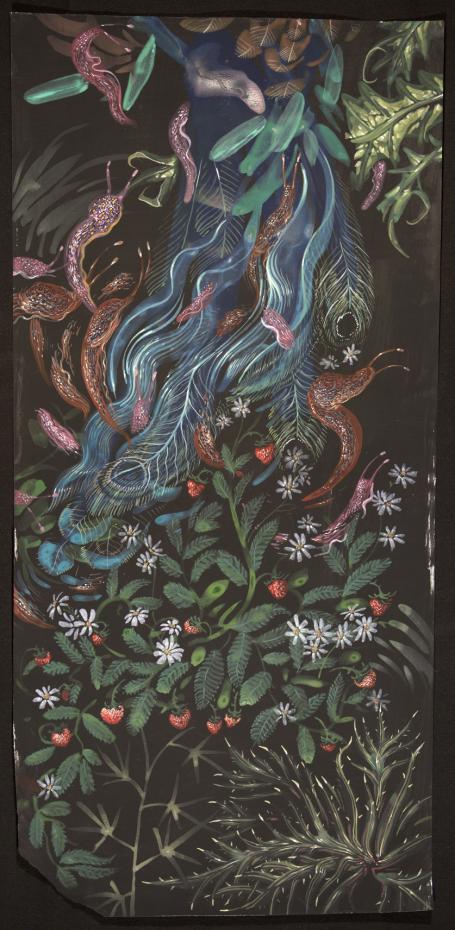
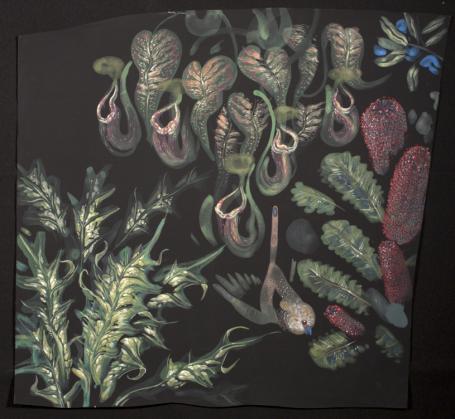
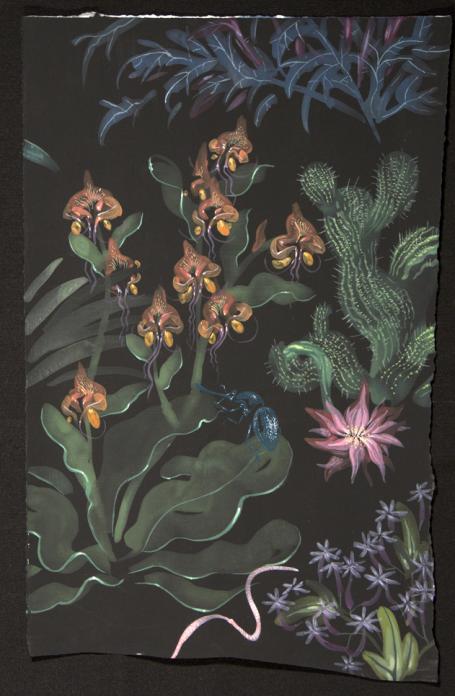
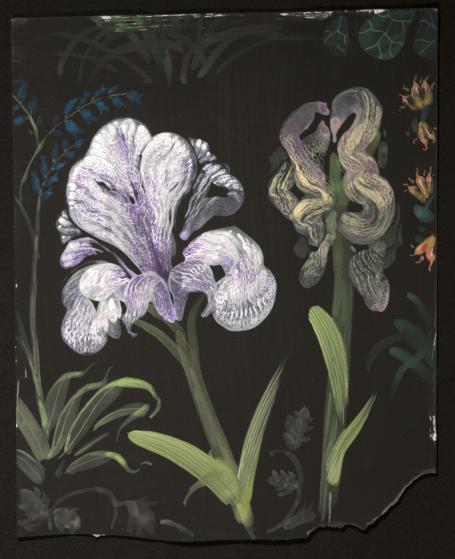
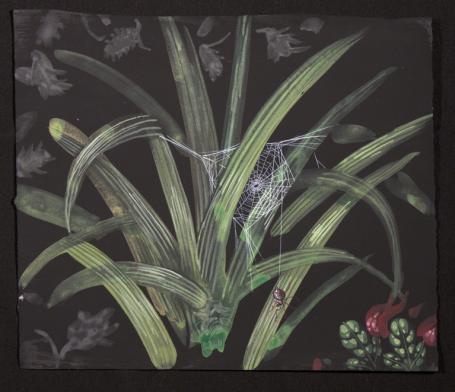
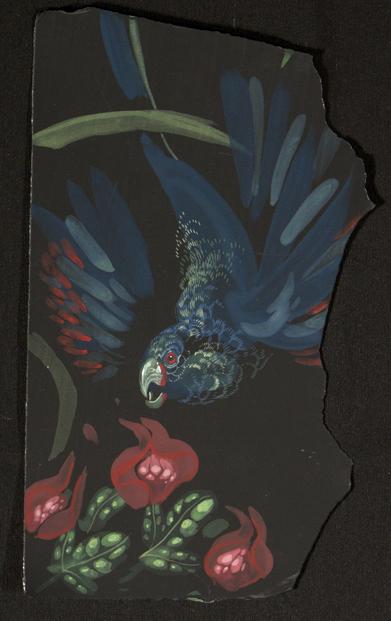
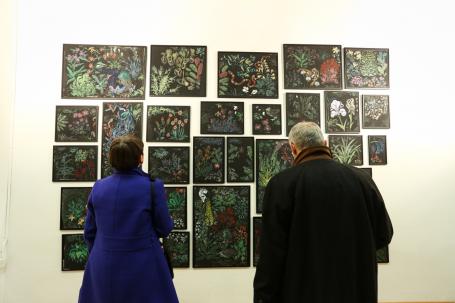
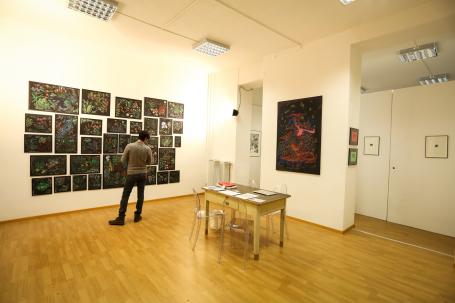
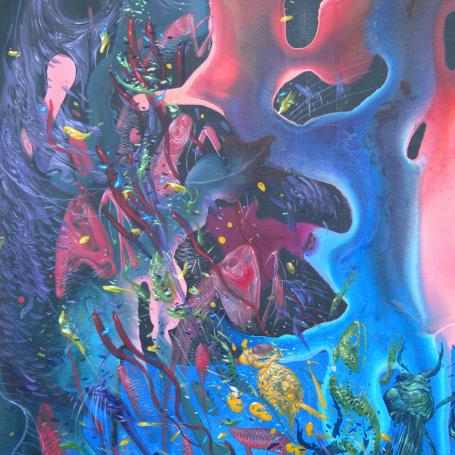
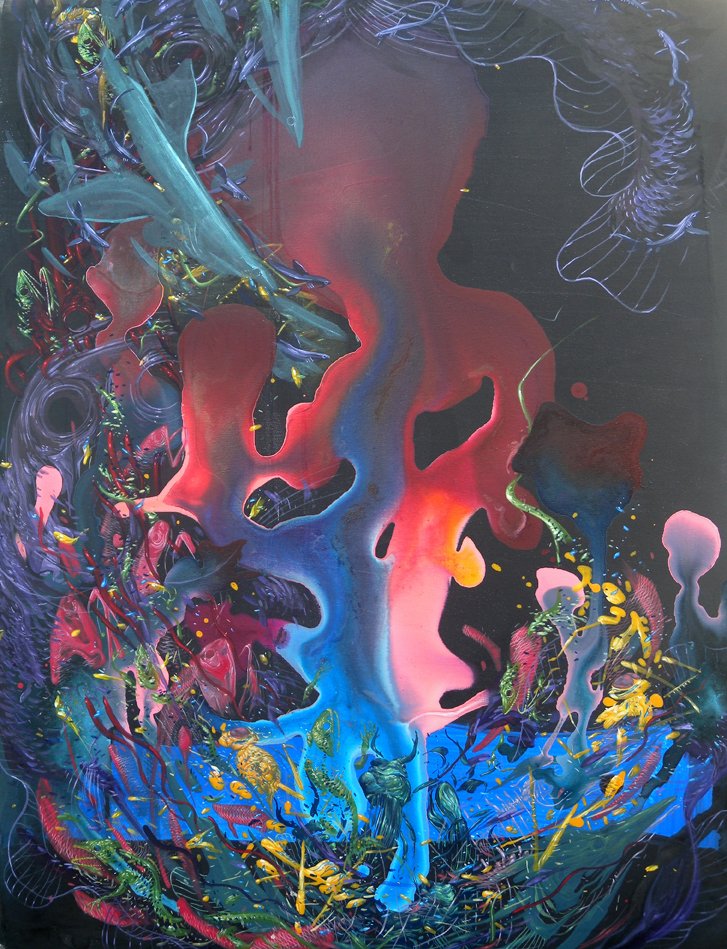
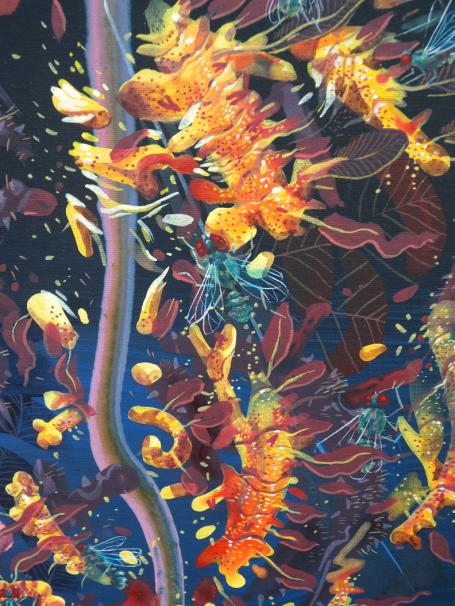
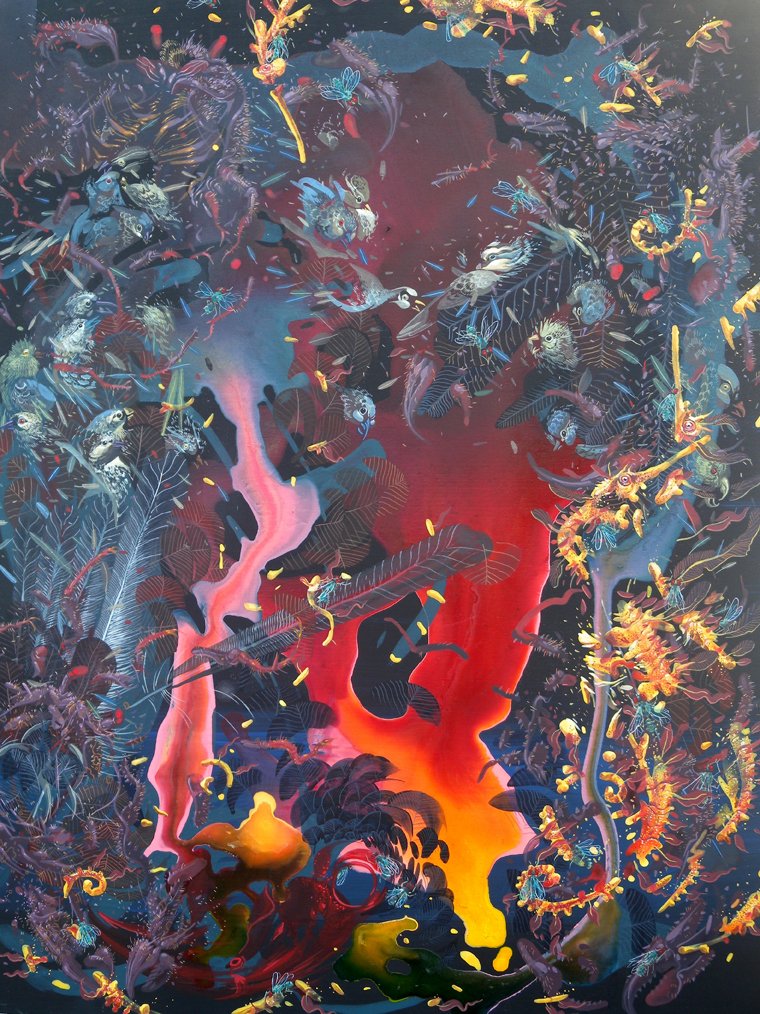
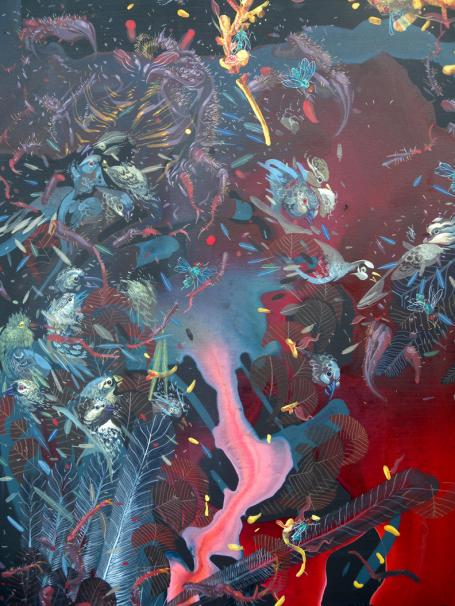
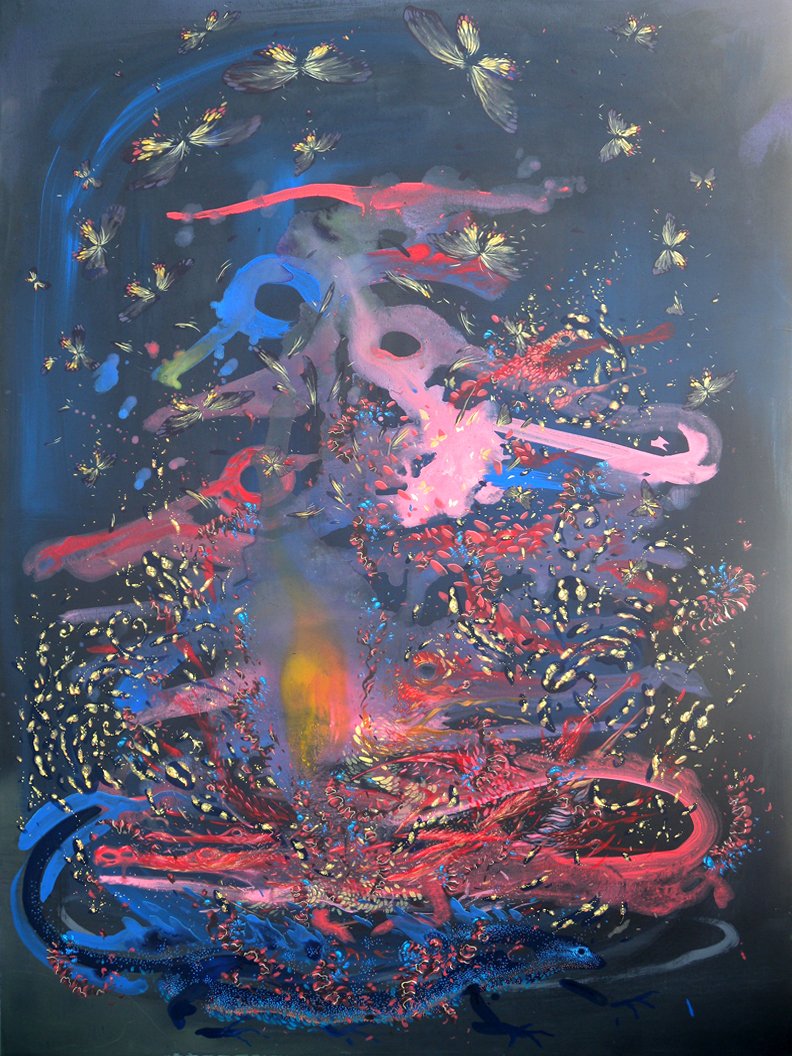
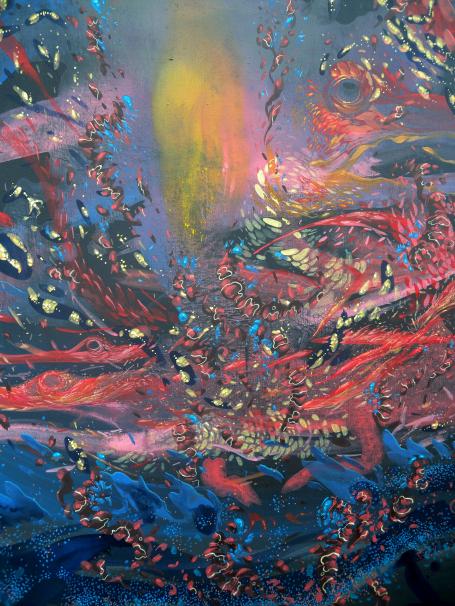
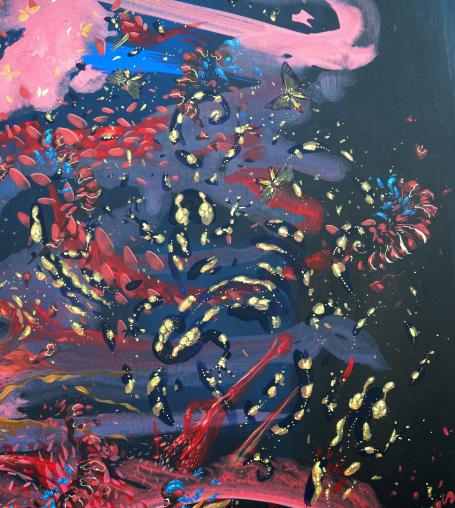
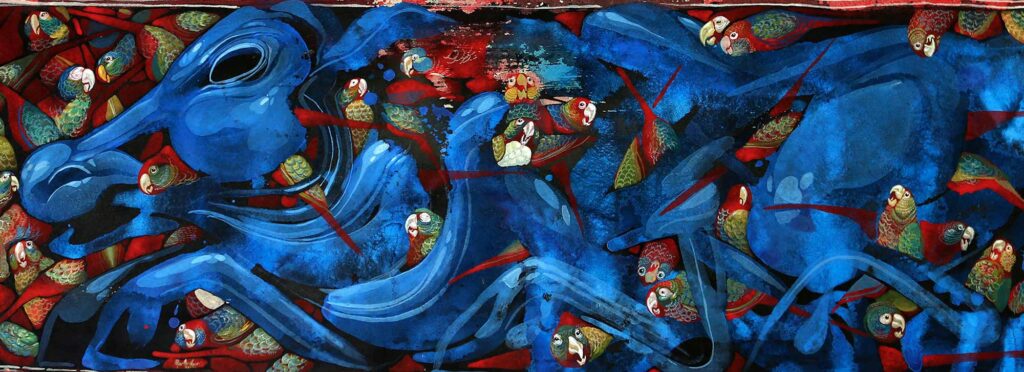
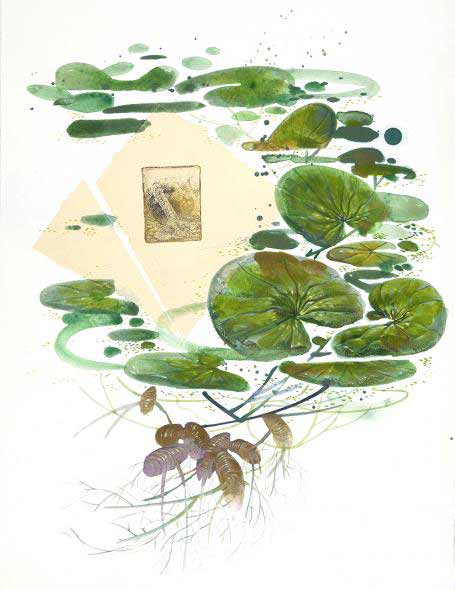
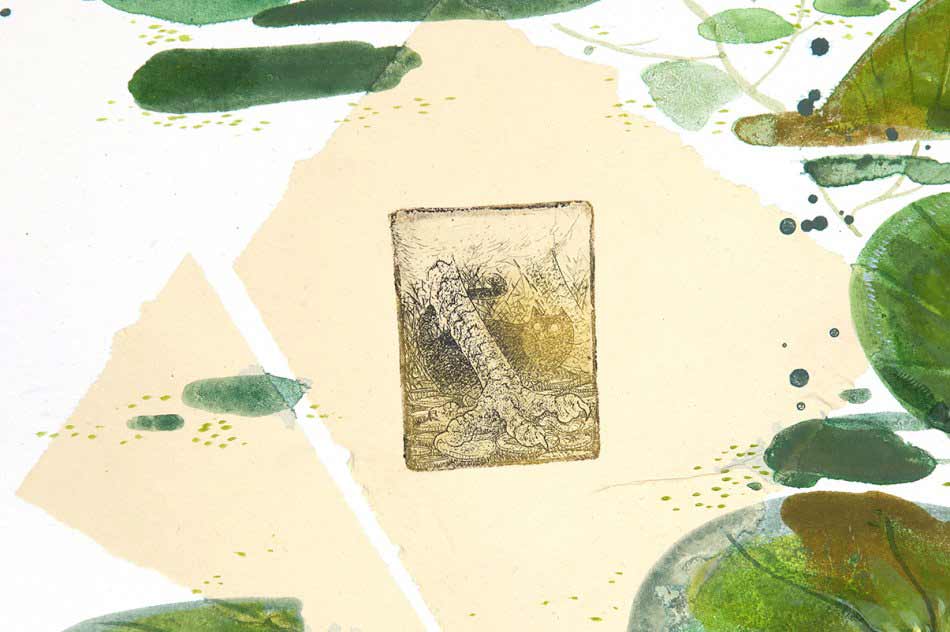
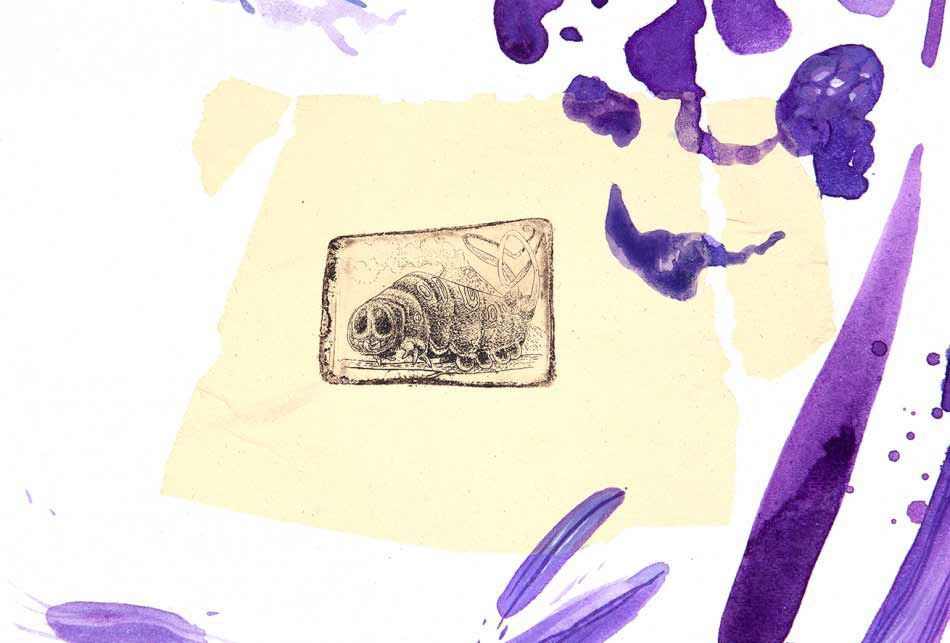
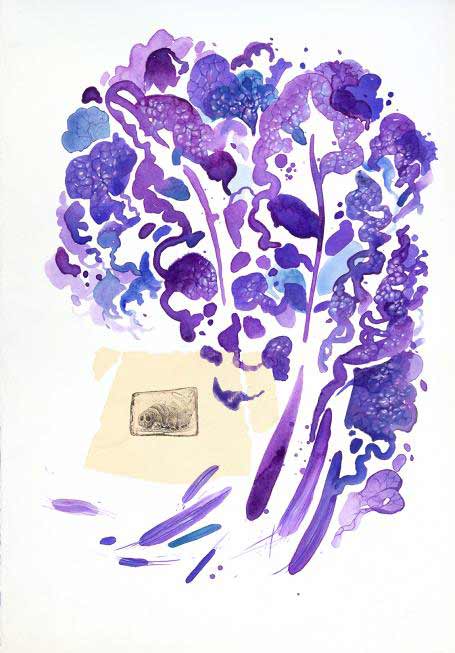
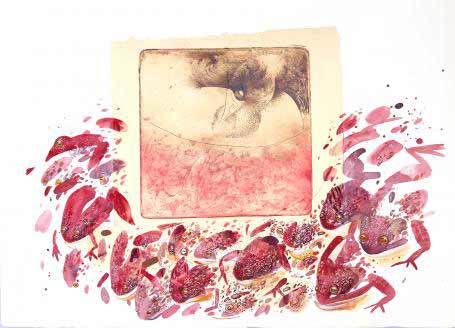
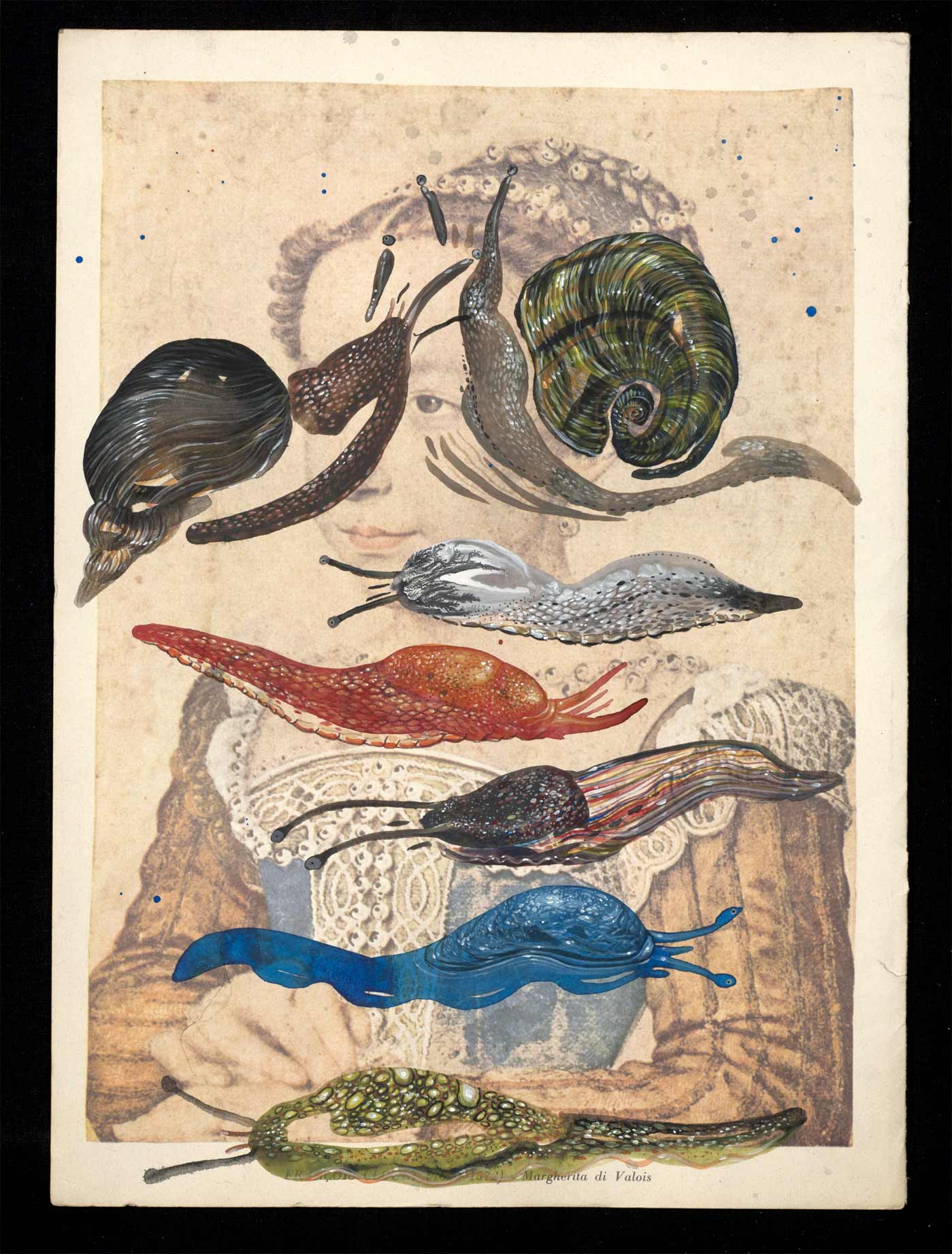
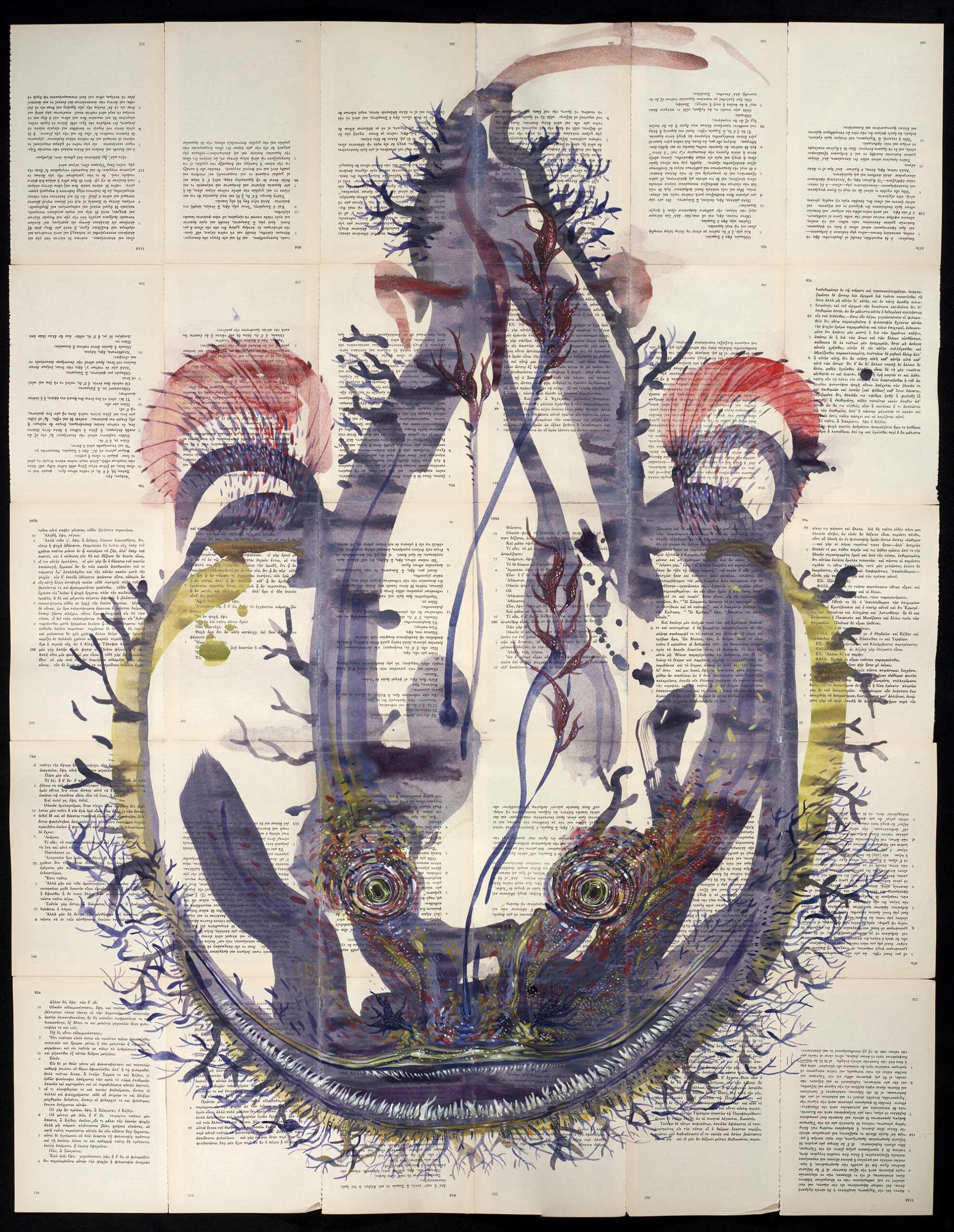
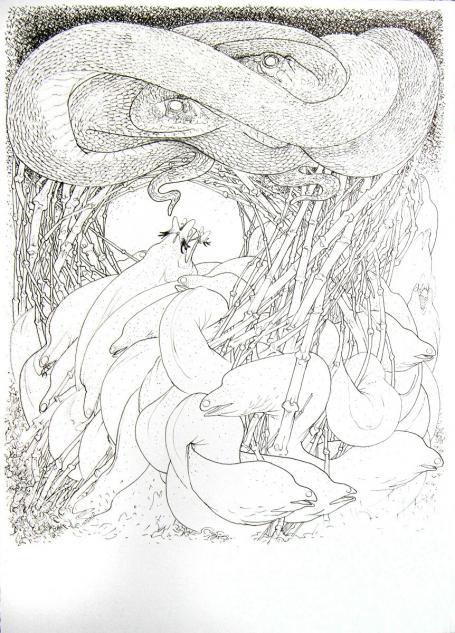
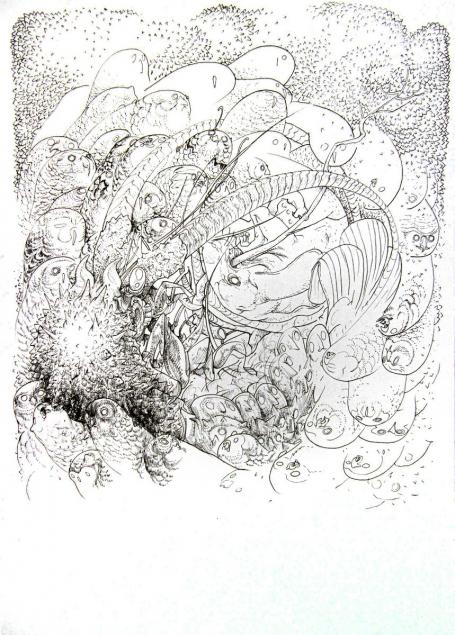
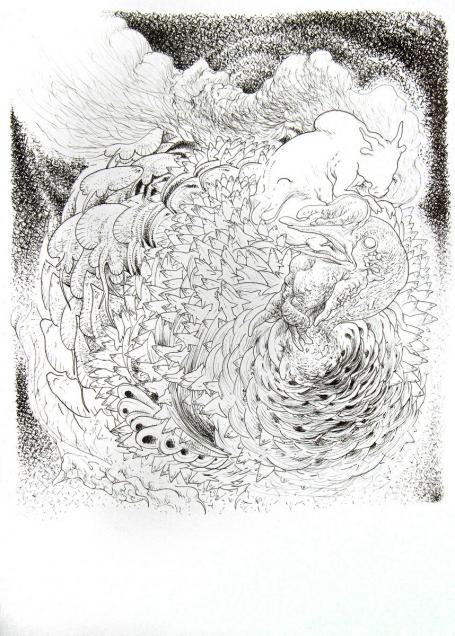
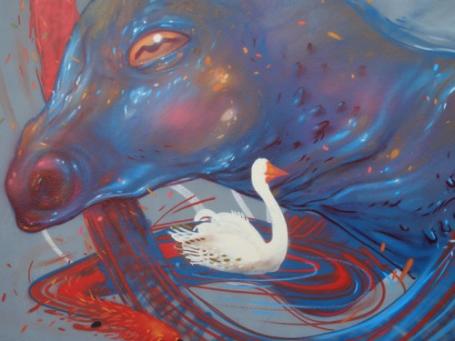
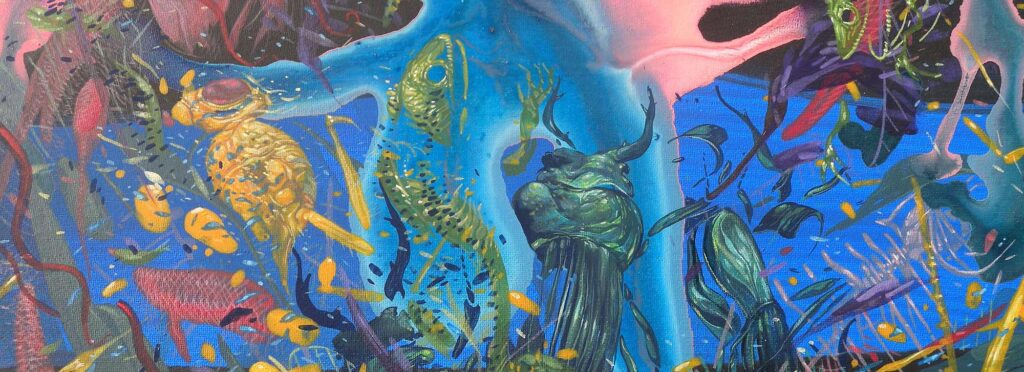
Creato dal tempo come molte altre figure fantastiche, l’unicorno è formato da tasselli di cronache e leggende, che uniti tra loro, gli hanno attribuito sembianze e significati sempre diversi. L’unicorno fra questi lavori non c’è. O Forse non è visibile. Si vede invece una fitta macchia di fiori, da dove l’unicorno è sfuggito ai cacciatori che lo braccano. Opera ispiratrice di questo “labirinto vegetale”, formato da 31 dipinti su carta, è il ciclo di arazzi fiammingo sulla “Mistica caccia dell’unicorno” (XV secolo). Questa perenne primavera irta di allegorie sulla dolcezza e le crudeltà della natura, è l’unicorno stesso. Sulle tele, ispirate alla lettura Junghiana, l’unicorno diventa invece il mercurio dell’arte ermetica, si osserva la fiamma liquida di una formula alchemica, macchia che brucia il suo stesso eroe rendendolo altro. Muta la sua forma e diventa i suoi nuovi significati.
“Nel quattrocento avanti Cristo, il medico di Artaserse Mnemone, il greco Ctesia, descrive velocissimi asini selvatici che popolano i regni dell’Indostan, di pelo bianco testa purpurea, occhi azzurri sulla fronte un corno che alla base è bianco,rosso in punta, ed in mezzo perfettamente nero. Plinio il Vecchio ne riporta altre caratteristiche ( Naturalis Historiae libroVIII, 31) In india si caccia anche un’altra fiera, l’unicorno, che per il corpo assomiglia al cavallo, ma per la testa al cervo, per le zampe
all’elefante, e per la coda al cinghiale. Il suo muggito è profondo. Un corno lungo e nero s’erge in mezzo alla sua fronte. Dicono che sia impossibile
prenderlo vivo. Al principio del VII secolo, nell’enciclopedia di Isidoro da Siviglia (Etimologiae XII libro), è riportato che una sola cornata dell’unicorno basta per uccidere un elefante: questa immagine ricorda l’analoga vittoria del karkadàn (rinoceronte) nel secondo viaggio di Sinbad, di quest’ultimo diceva che se
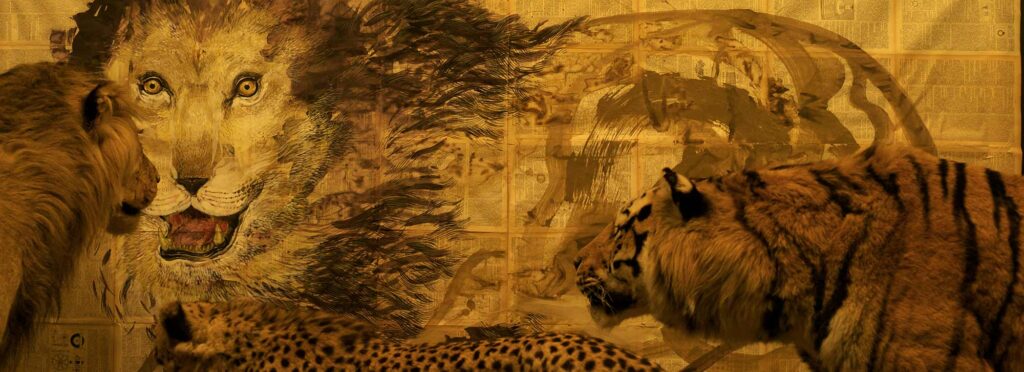
spaccato in due, il corno mostrava la figura di un uomo. Nemico dell’unicorno era il leone: in un’ottava dell’epopea The Faerie Queen è descritto il combattimento in cui il leone affronta l’unicorno davanti ad un albero e quando questi lo carica, il felino si scosta e l’unicorno rimane inchiodato al tronco. Questi versi si possono datare tra il secolo XVI, e il principio del XVIII, l’unione dei regni d’Inghilterra e di Scozia metterà nello stemma della Gran Bretagna: il leopardo (leone) inglese e l’unicorno scozzese. I bestiari Medievali insegnano che l’unicorno può essere catturato da una bambina: “Come lo prendono. Gli mettono davanti una vergine e lui salta in grembo alla vergine e la vergine lo abbraccia con amore e lo porta al palazzo del re.” Molti e famosi arazzi illustrano questo trionfo, le cui applicazioni allegoriche sono le più disparate: lo Spirto Santo, Gesù Cristo,
un amante, il mercurio e il male sono stati simboleggiati dall’unicorno. Nell’opera Psycologie und Alchemie (1944), Karl Jung narra la storia di questi simboli e li analizza. Un cavallino bianco con zampe posteriori d’antilope, barba di capra ed un lungo e ritorto corno sulla fronte, è la rappresentazione abituale di quest’animale fantastico. Jorge Luís Borges Manuale di zoologia fantastica(1957)
Sono l’antico drago che è ovunque sulla terra, giovane e vecchio forte e debole, morte e resurrezione, visibile e invisibile, duro e morbido; discendo nelle profondità della terra e salgo al cielo, sono il più alto e il più basso, il più leggero e il più pesante… tenebre e luce… si sa chi sono e tuttavia non esisto affatto.

Karl Gustav Jung Psycologie und Alchemie (1944)
FromStreetToArt

By Project, Uncategorized

FromStreetToArt (2014)
graffito . painting . sewing

“FromStreetToArt” a collective exhibition of italian street-art, curated by Simone
Pallotta. From the 20 ofJune till the 20 of August 2014, at the Italian Institute of
Culture in New York, showing the works of : Agostino Iacurci, Aris, BR1,
Cyop&Kaf, Dem, Eron, Hitnes, Sten&Lex, Ufo5, 2501.

MAL D’AFRICA

By Project, Uncategorized

Mal’ d’ Africa (2014)
painting

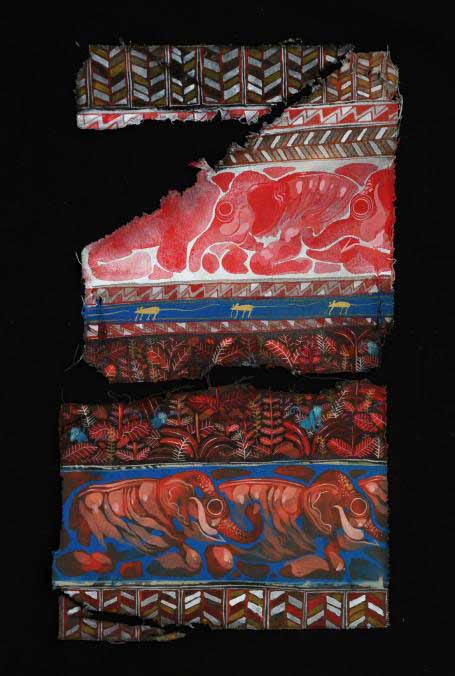
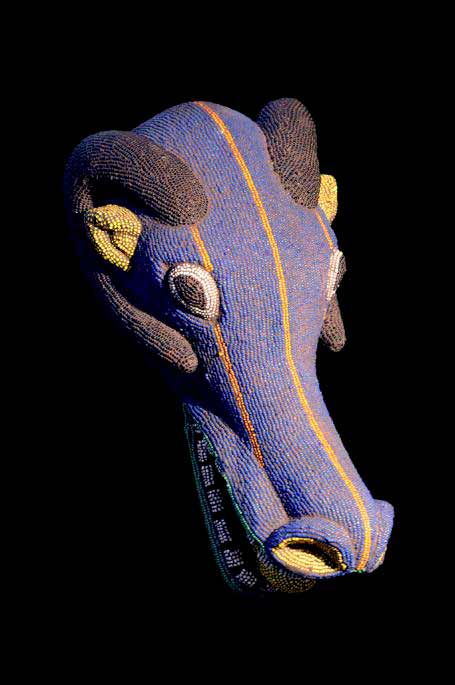
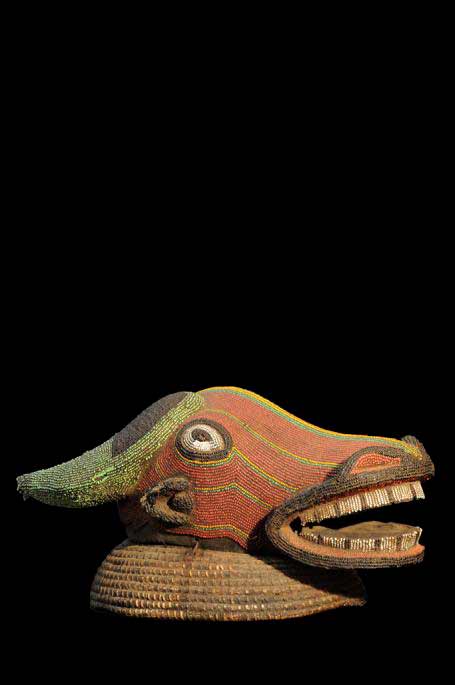
At EgoGAllery in Lugano, every artist got inspired by the pieces of a famous collection of African artifacts exposed with the art-works

LO STORNO E LA MOSCA INVISIBILE

By Project, Uncategorized

Lo storno e la mosca invisibile

etching • paintings (2013)
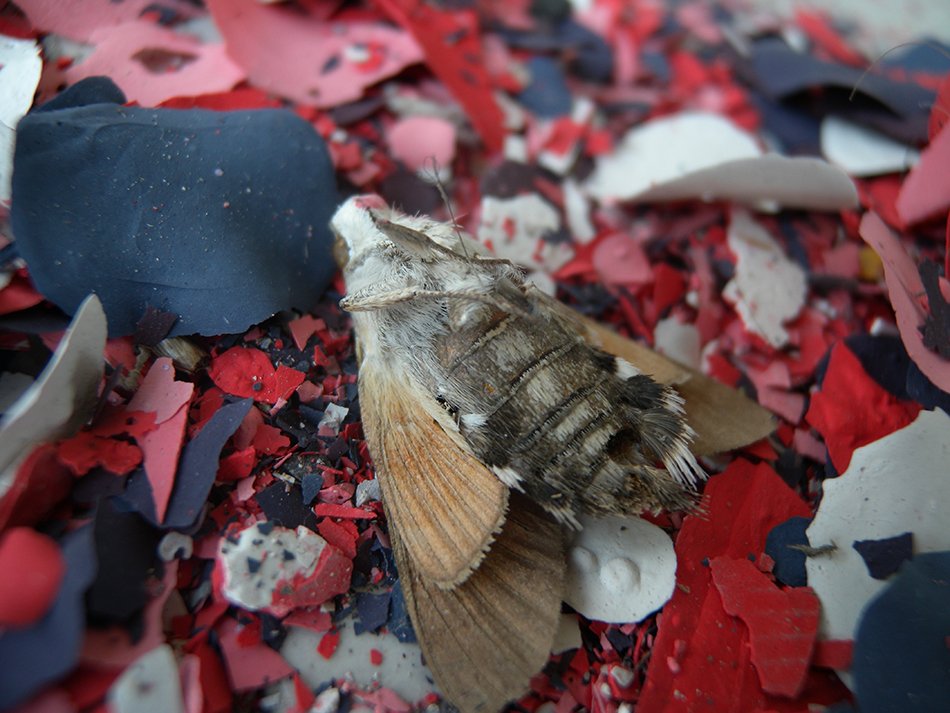
Una psicosi dolce quella del Cedro.
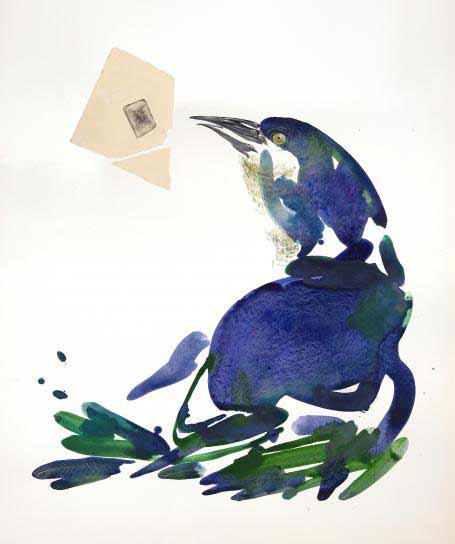
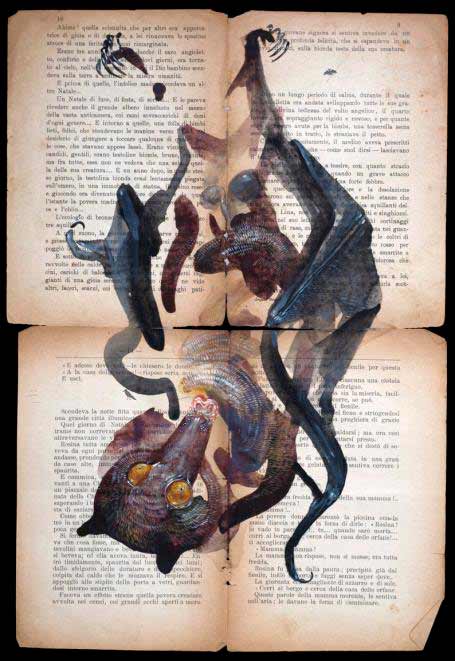
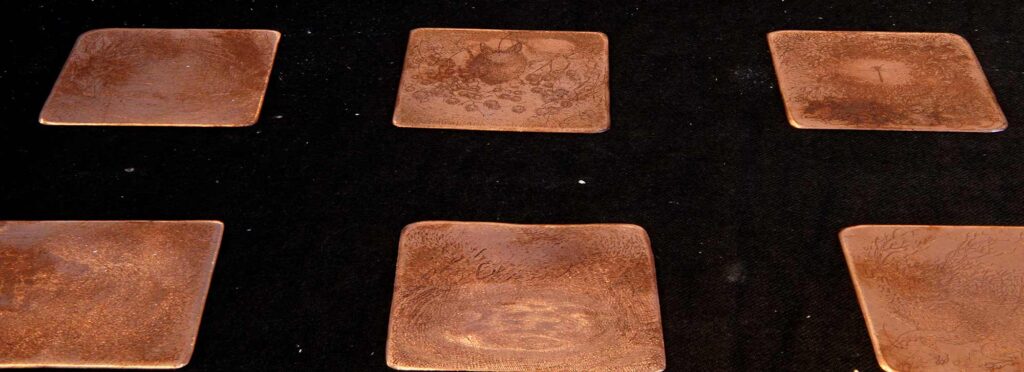
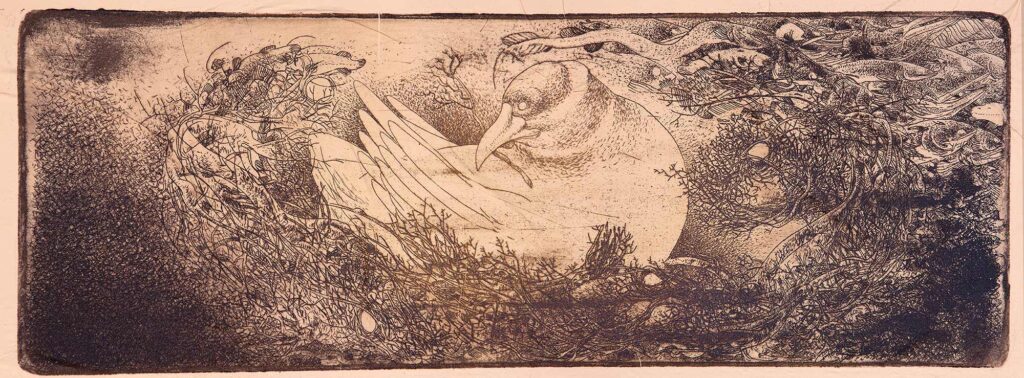
Il lavoro è un’interpretazione delle idee e dell’immaginario, del etologo e filosofo J.von Uexkull, nel libro “Ambienti animali ambienti umani”.Fra le pagine del capitolo sugli “ambienti magici”, cioè luoghi di un’esperienza soggettiva eccezionale, l’esperienza del giovane storno e della mosca immaginaria diventano il ritratto di una suggestione con protagonisti ben definiti: il rame, i segni e l’inchiostro interpretano la psicosi e il colore, il pennello e l’acqua il soggetto.

Sweet is the Citron’s psychosis.
The work is an interpretation of the ideas and the imaginary of the philosopher and ethologist J.von Uexküll, in the book”Animal environments and Human environments”.Among the pages of the chapter on “Magic Environments”, places of an exceptional subjective experience, the experience ofa young starling and an imaginary fly becomes the portrait of a suggestion whit defined characters: the copper, the signs and the ink interpret psychosis and colors, brush and water play the subject.

PAGINAE NATURALIS

By Project, Uncategorized

Paginae Naturalis (2013)
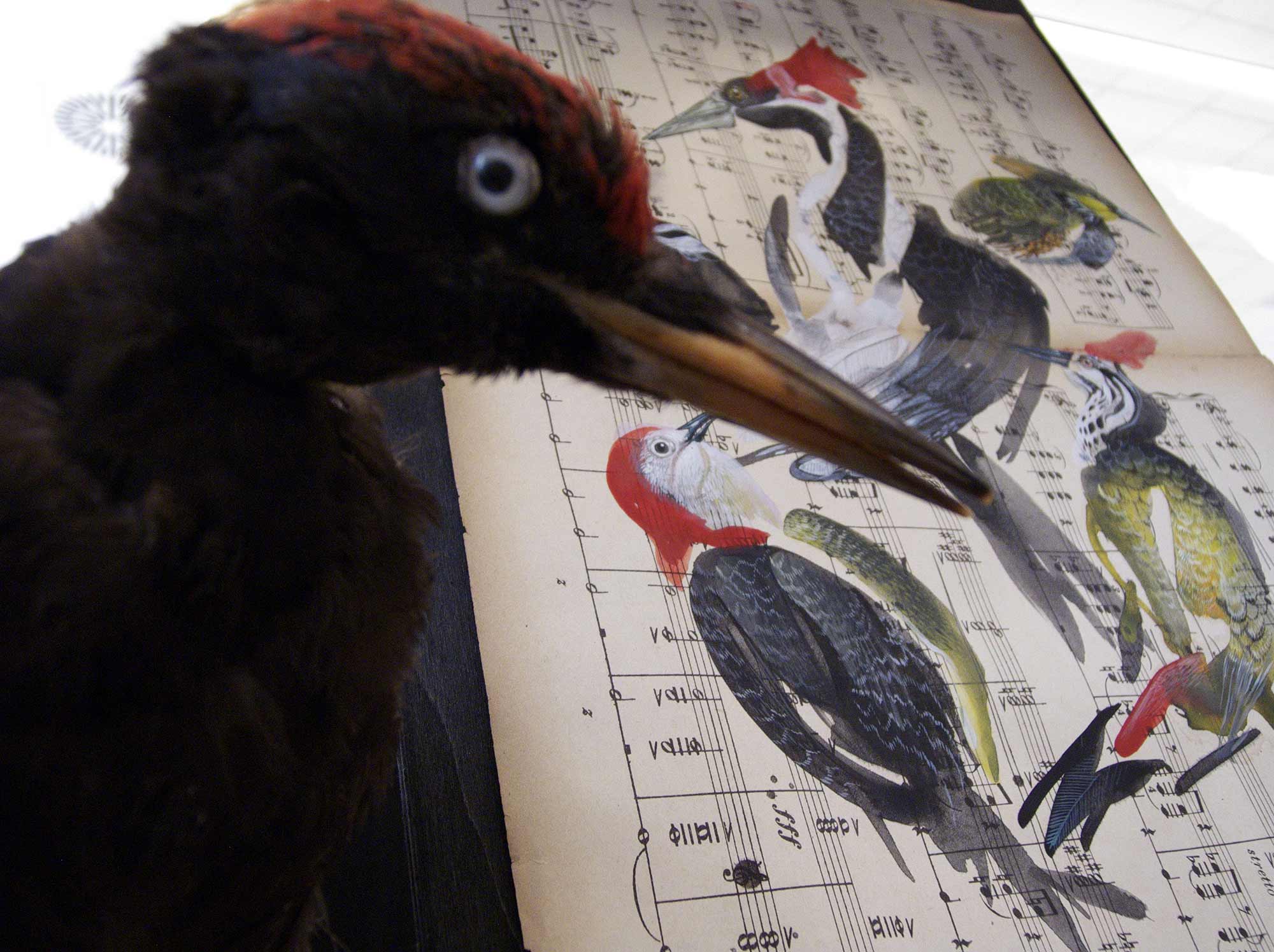
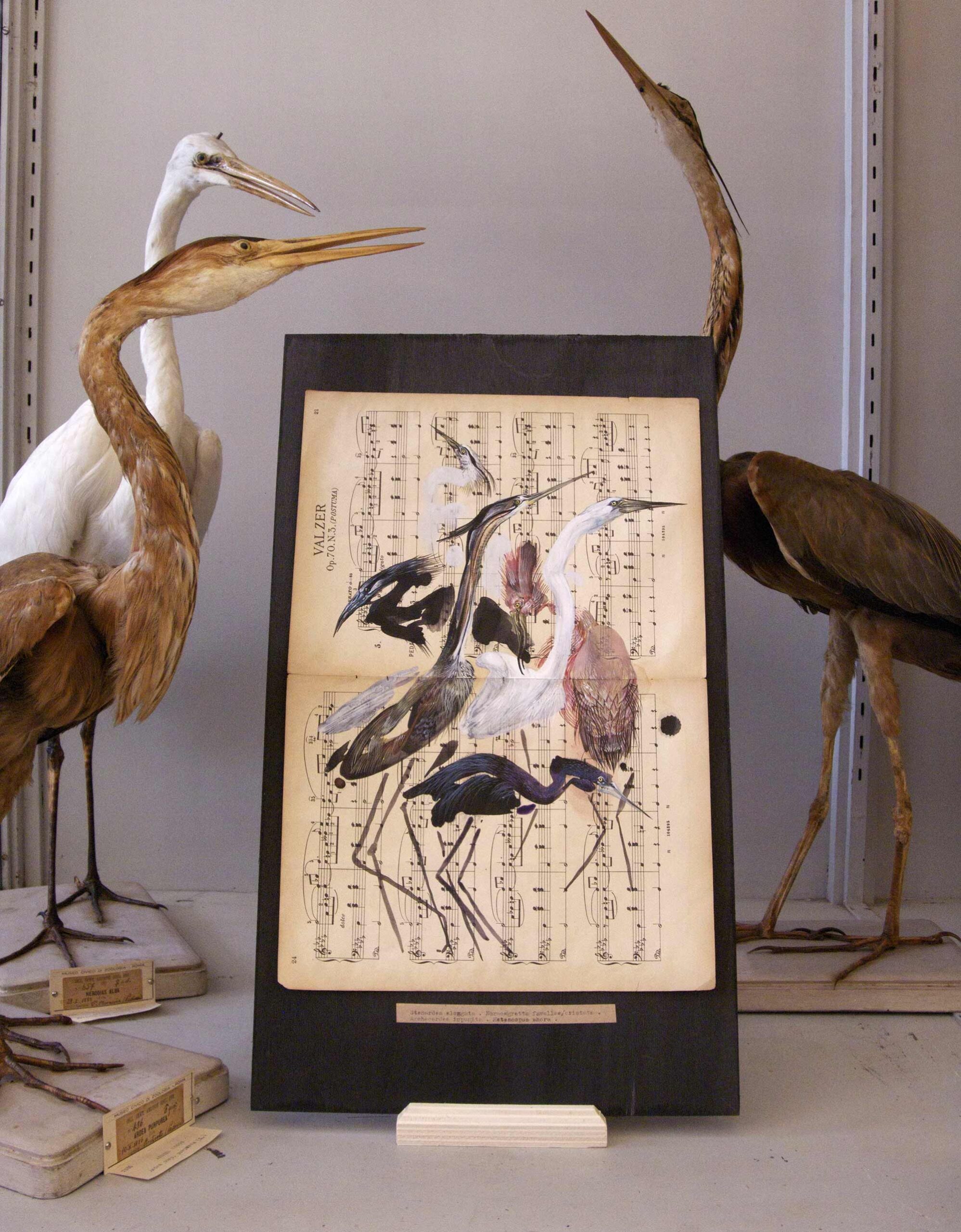
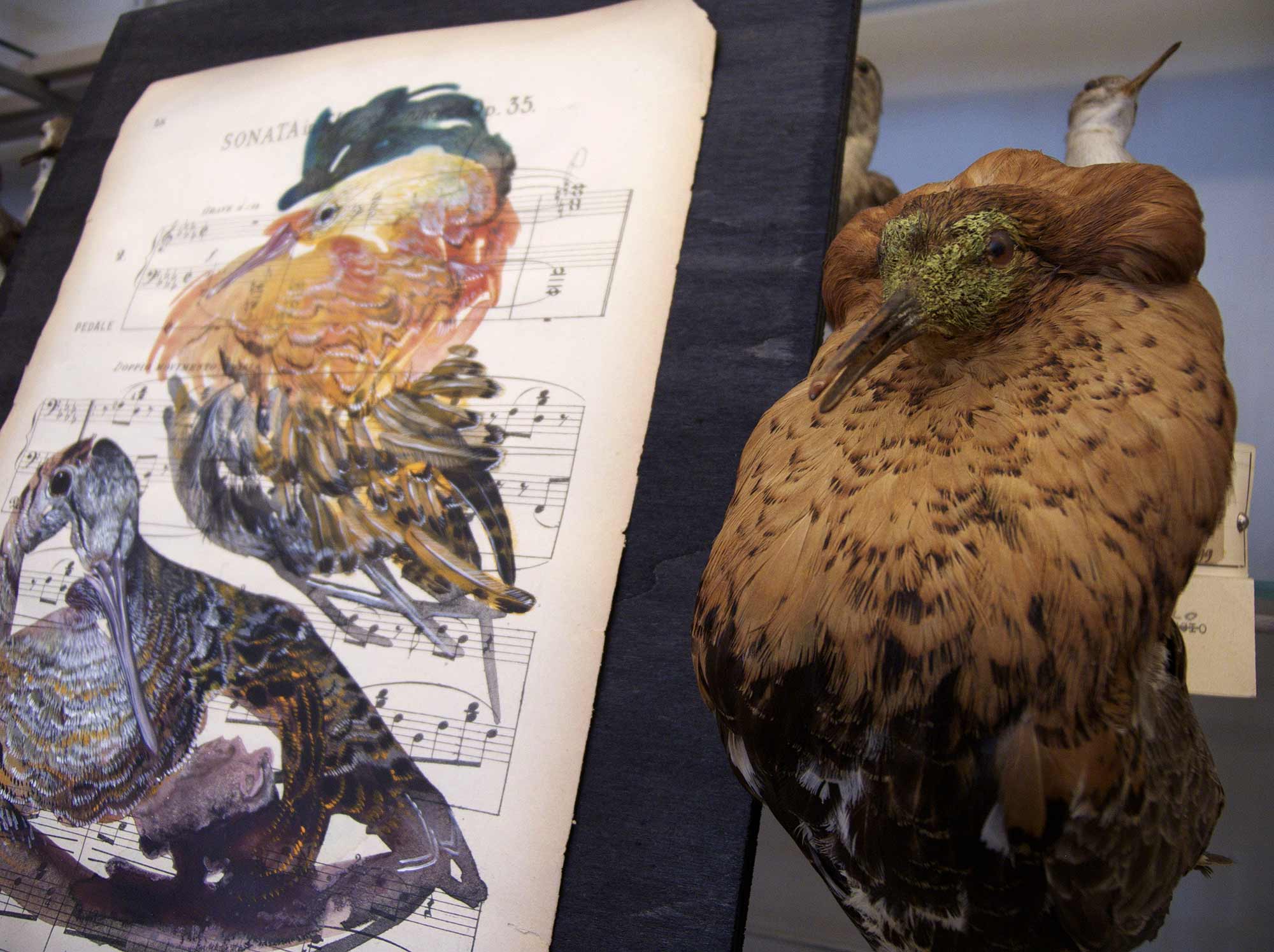
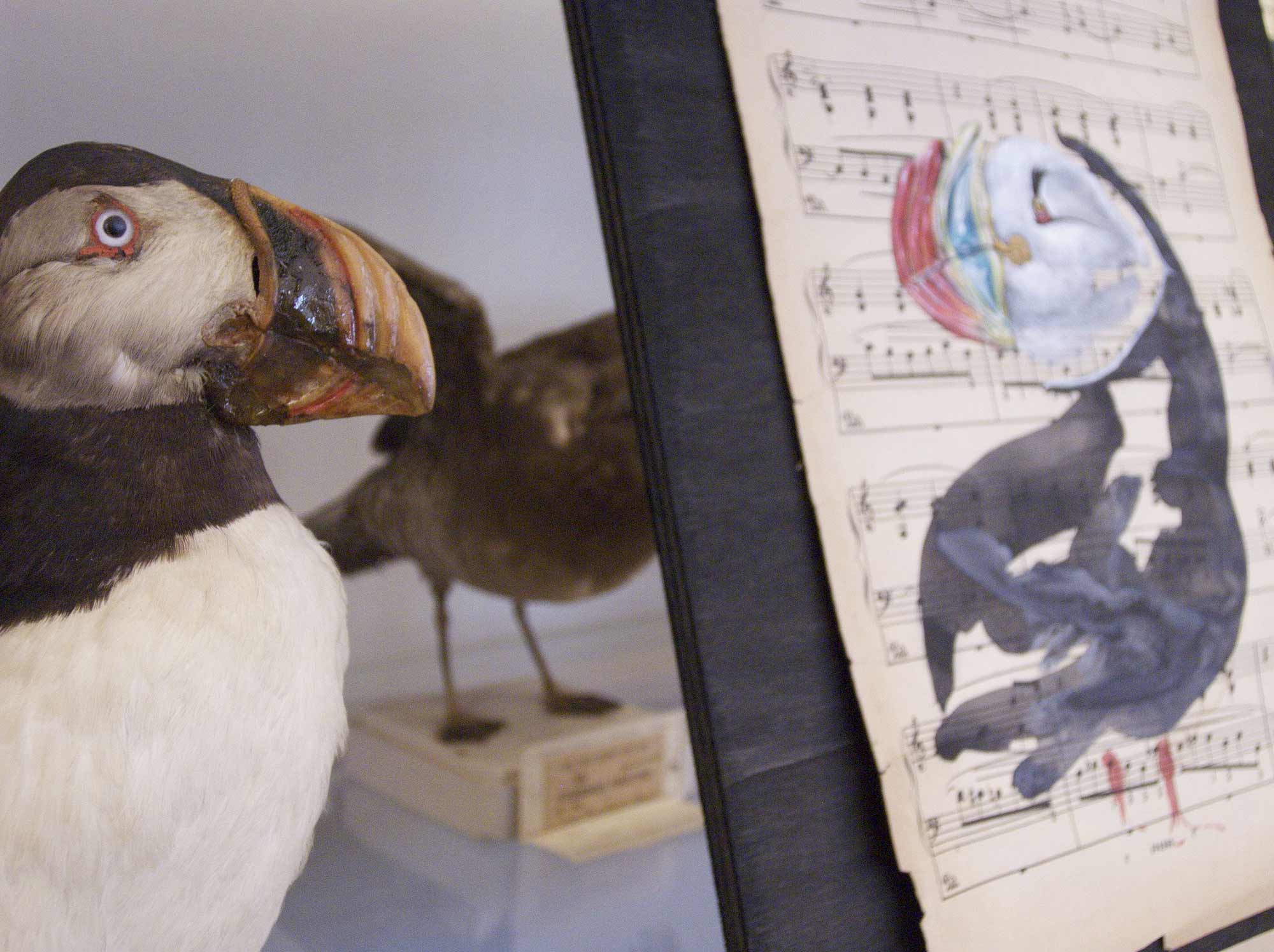
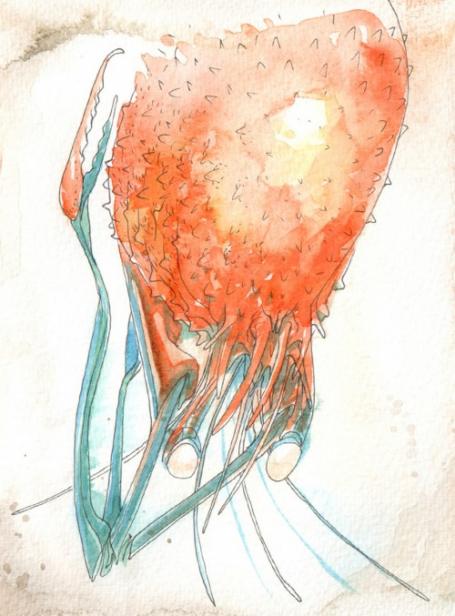
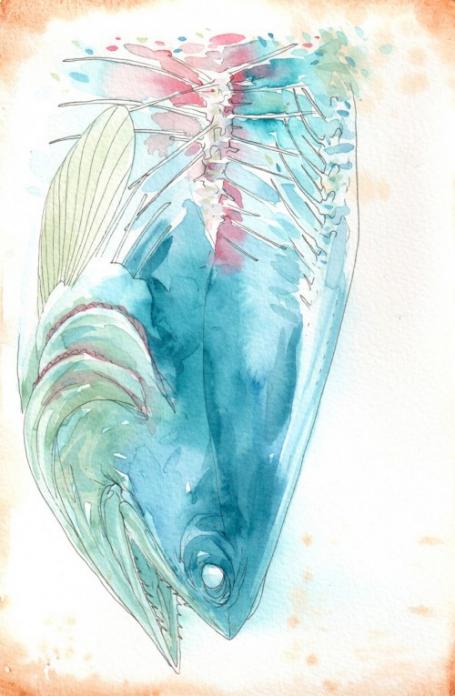
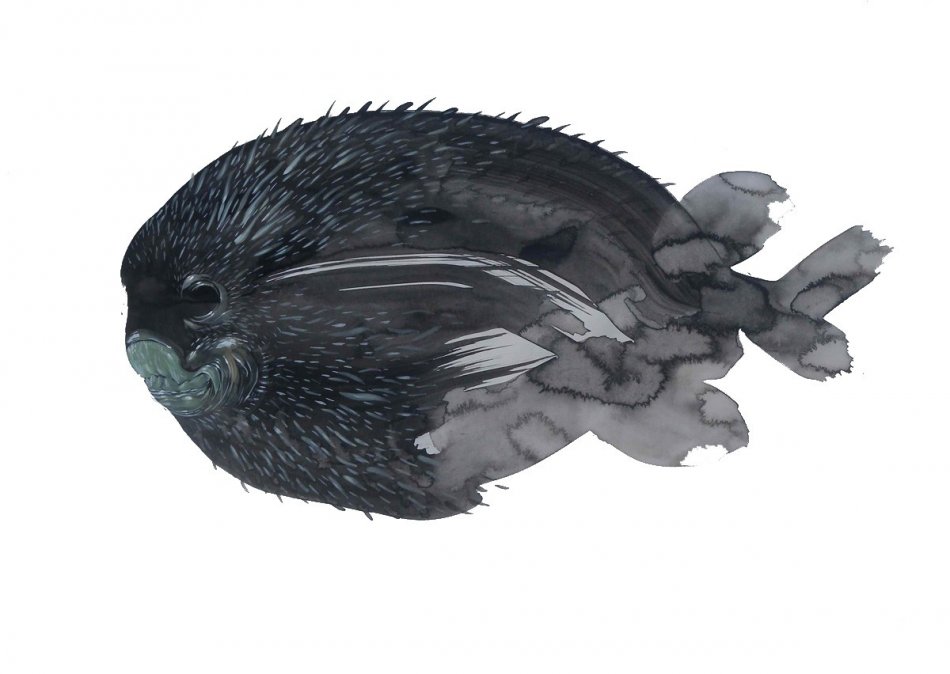
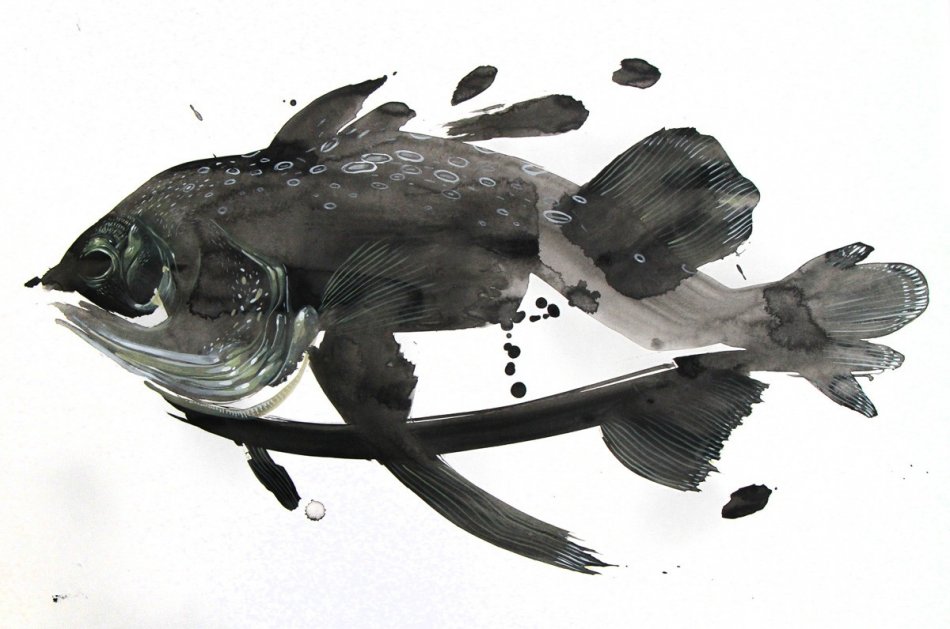
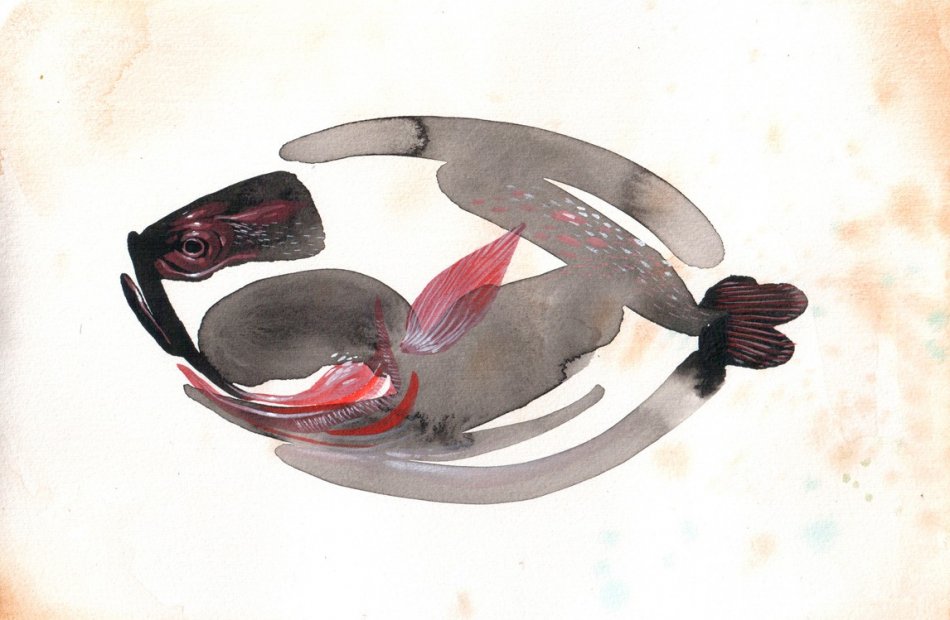
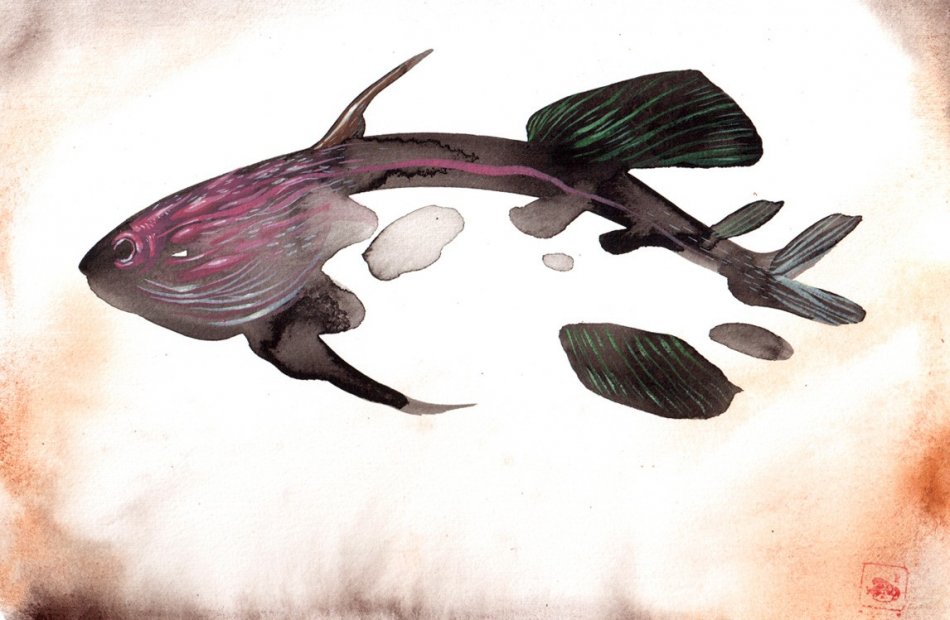
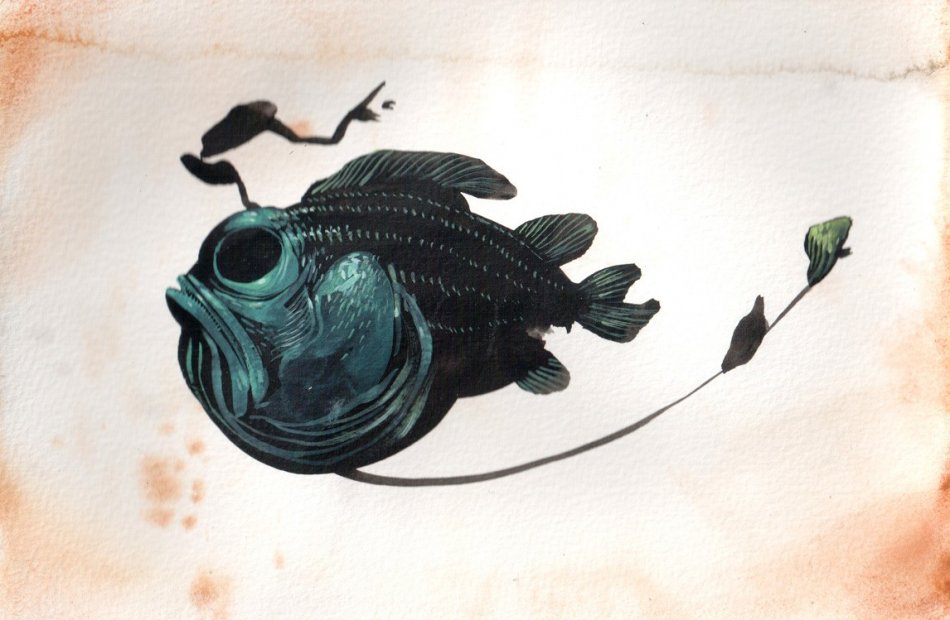
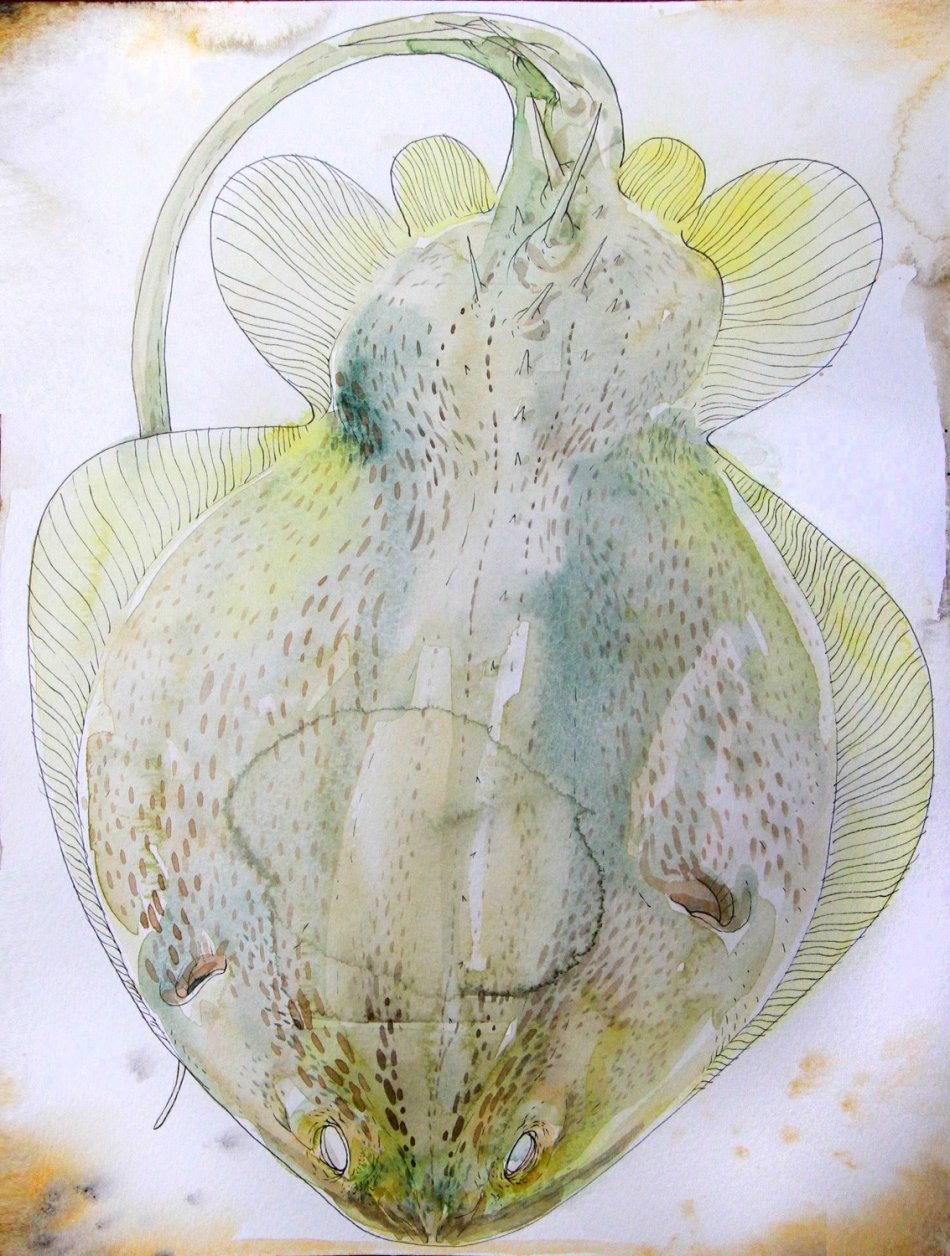
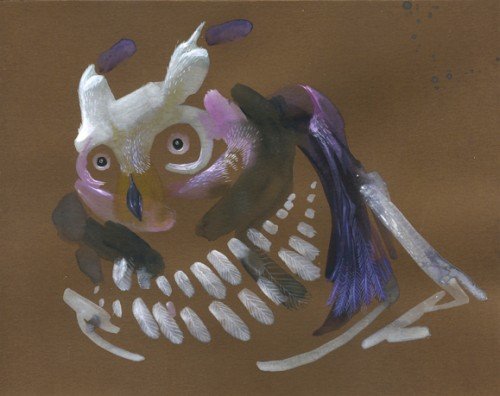
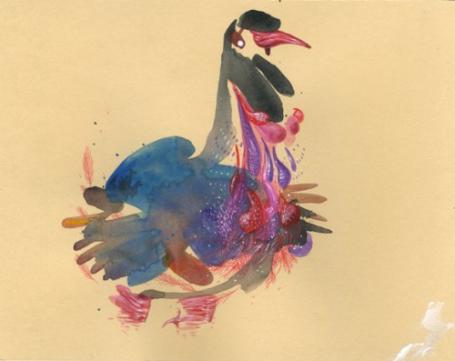
ritratti reali di animali fantastici

“A botany book without illustrations would be like a geography book without maps.”
John Ray, 1684.
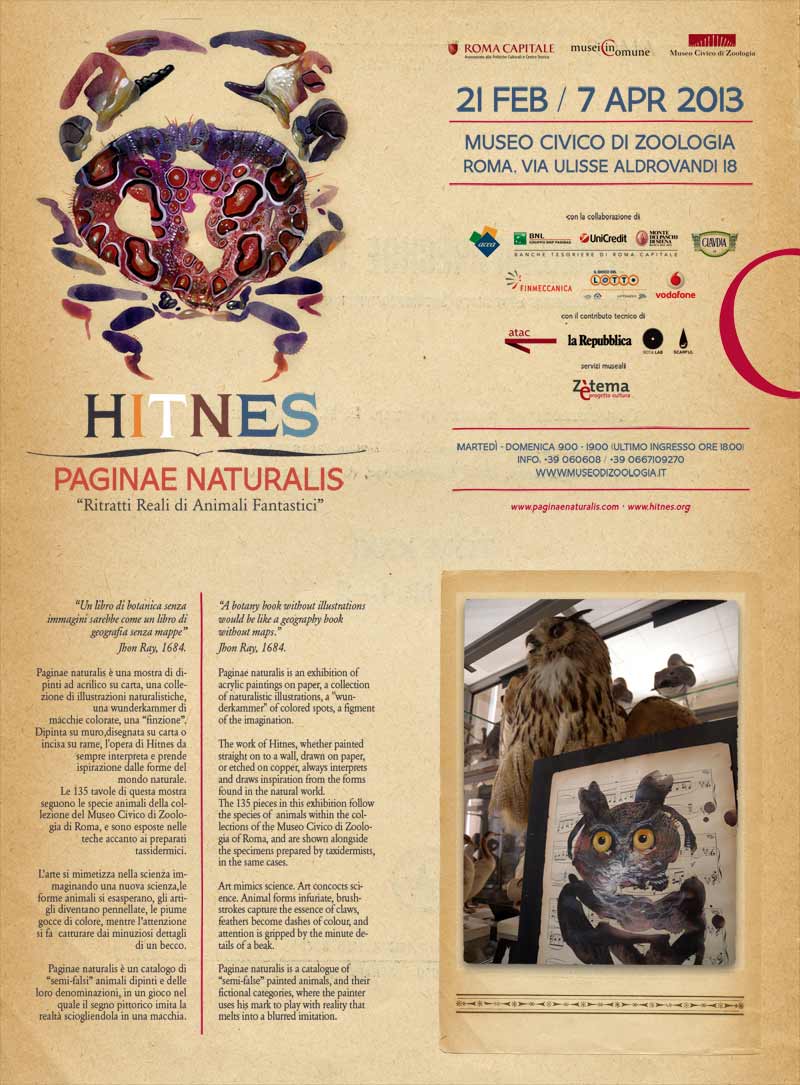
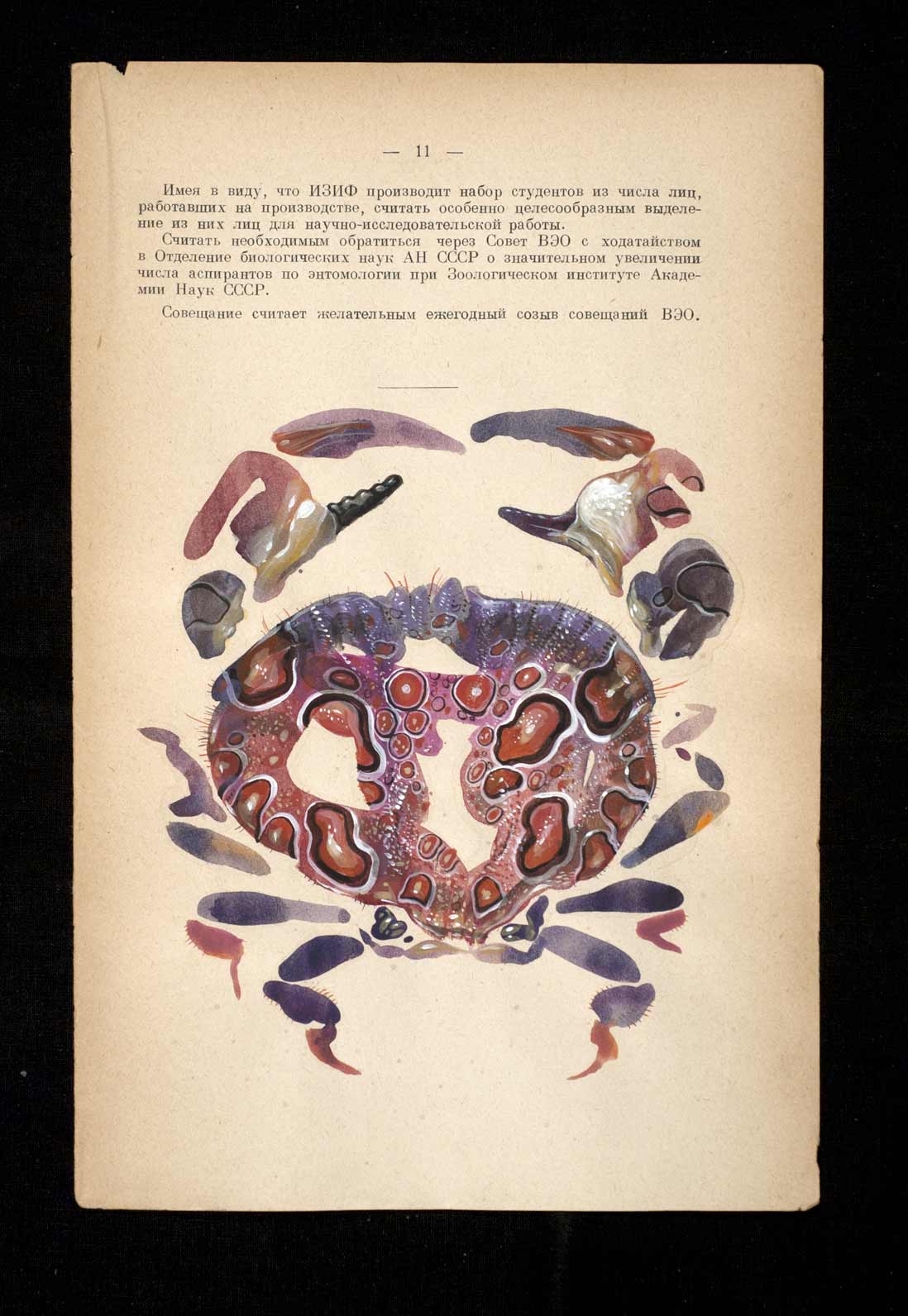
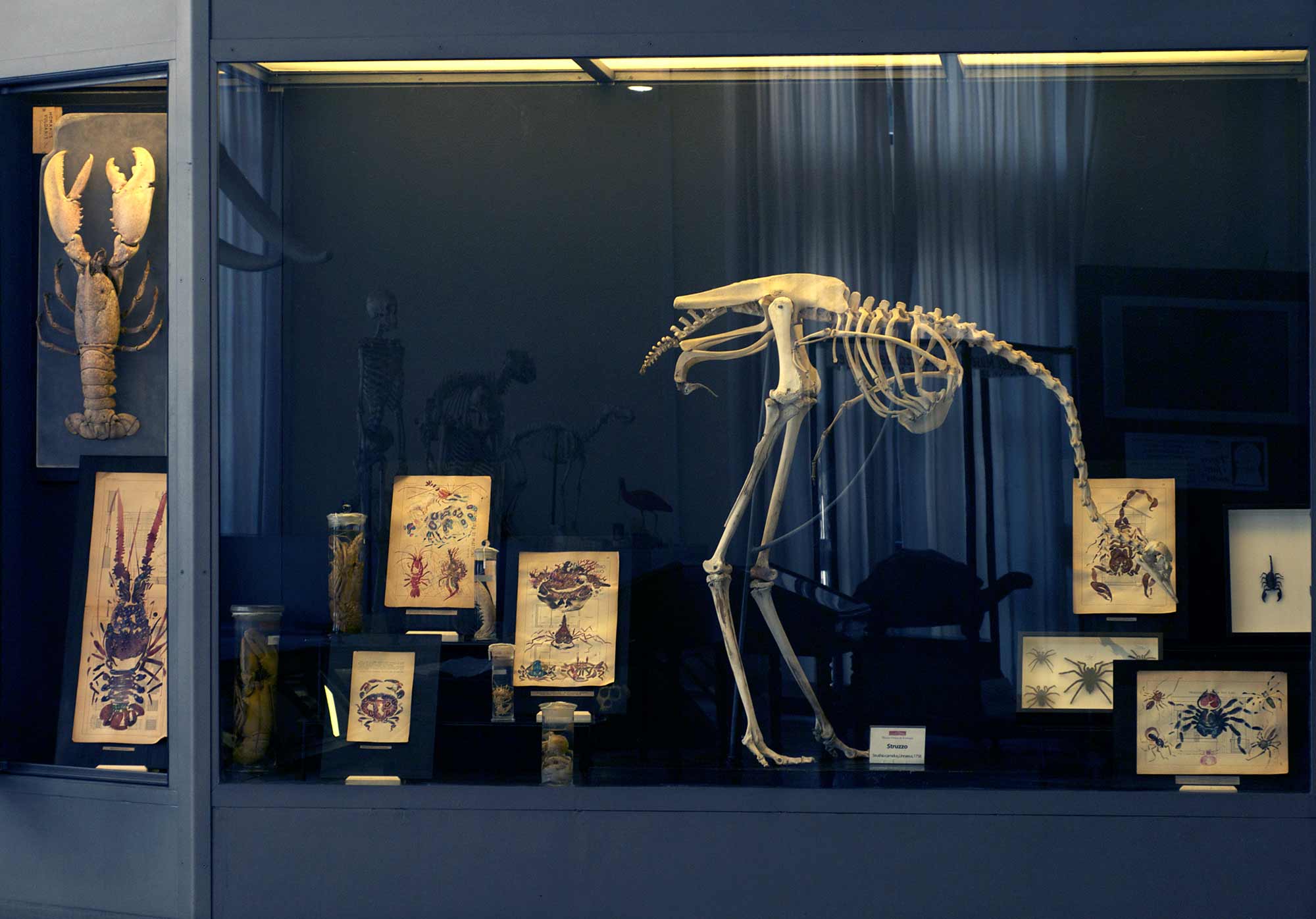
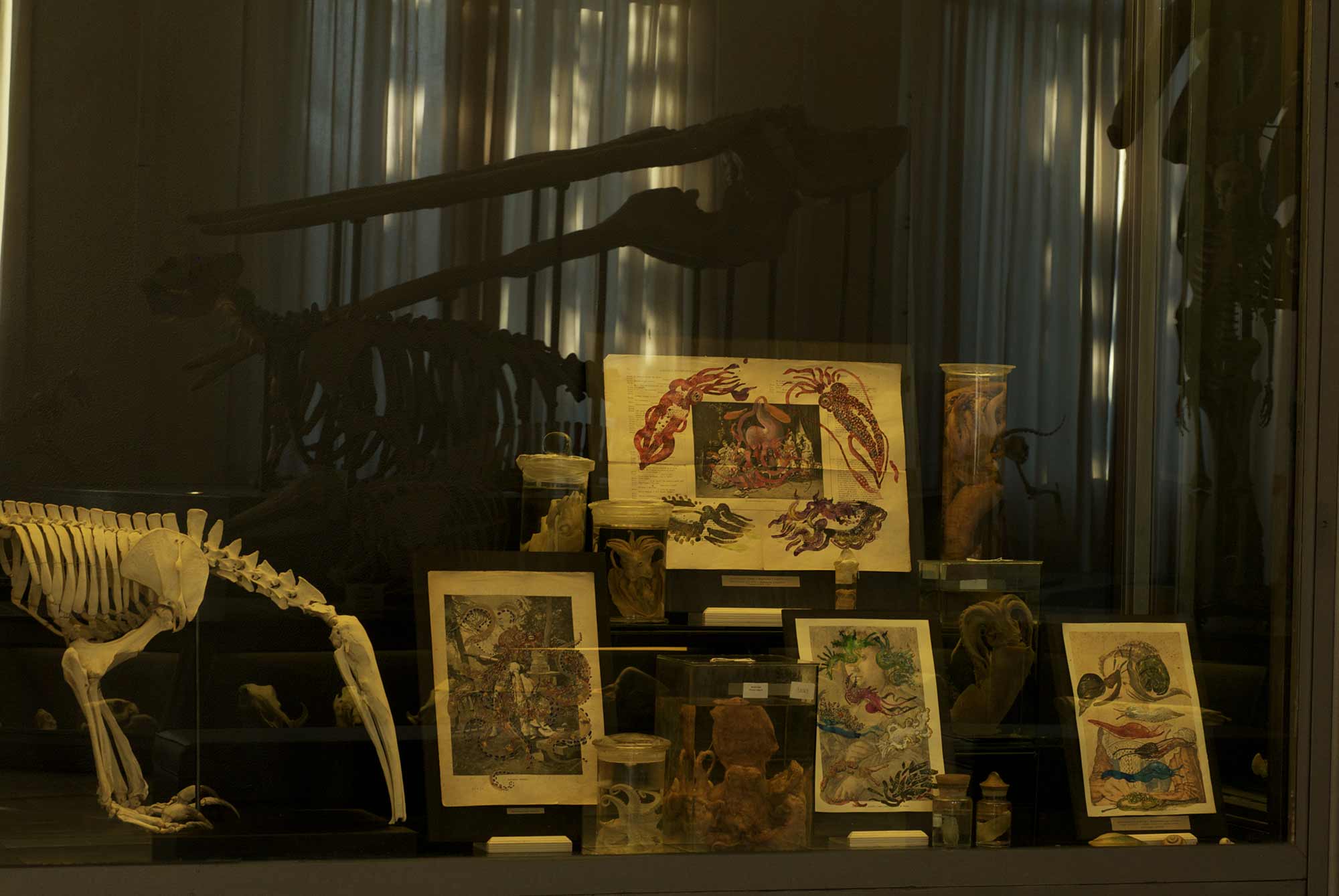
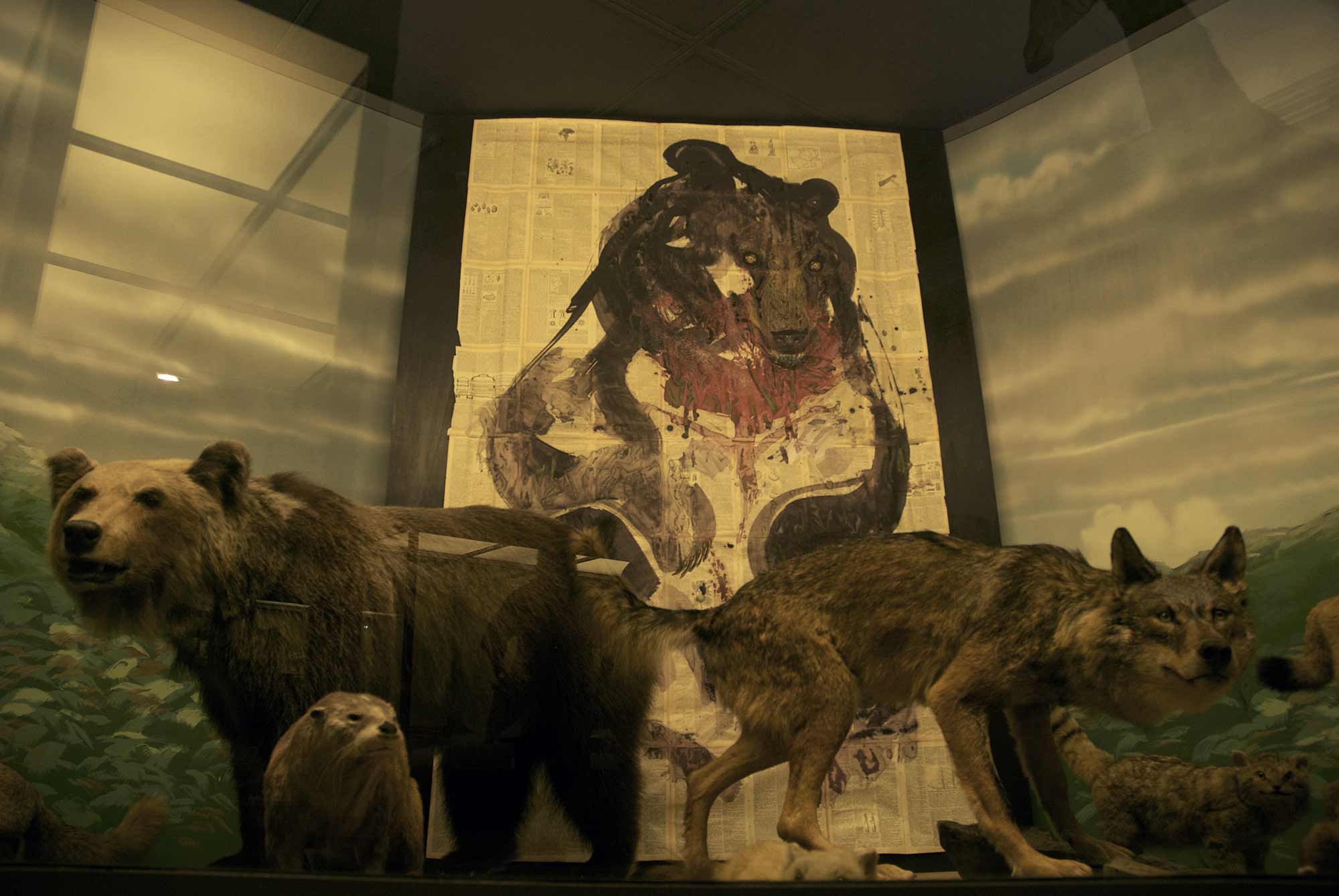
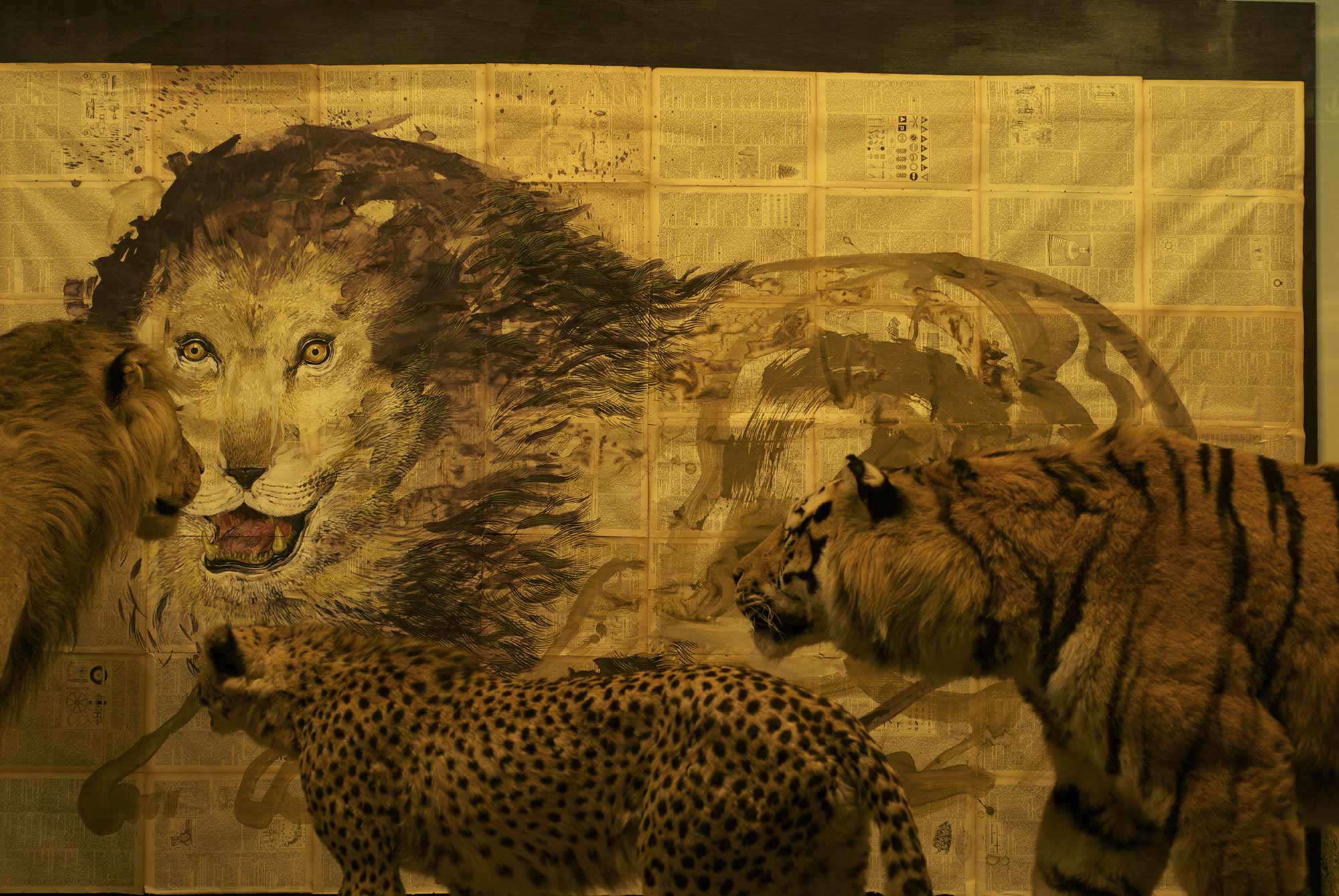
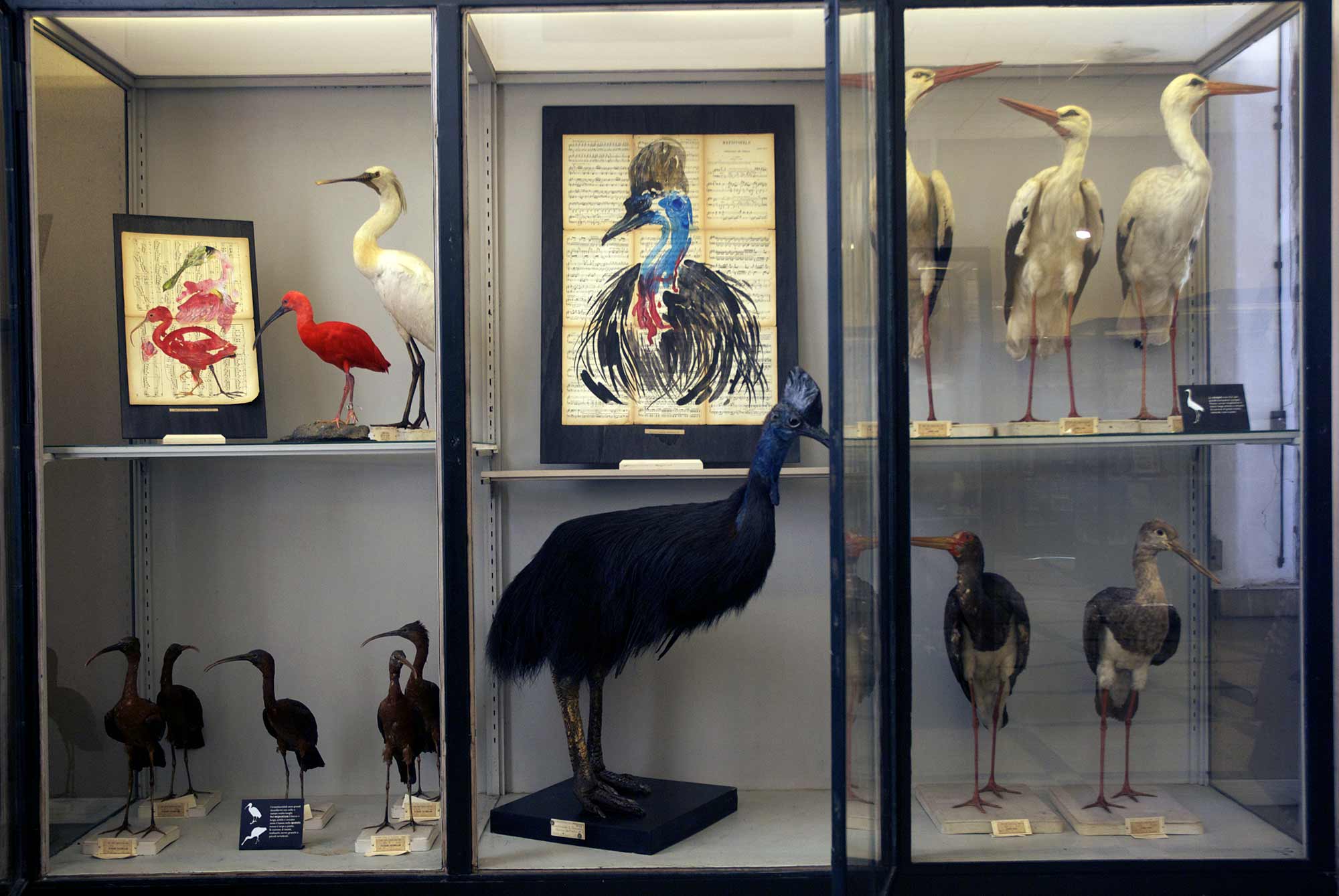
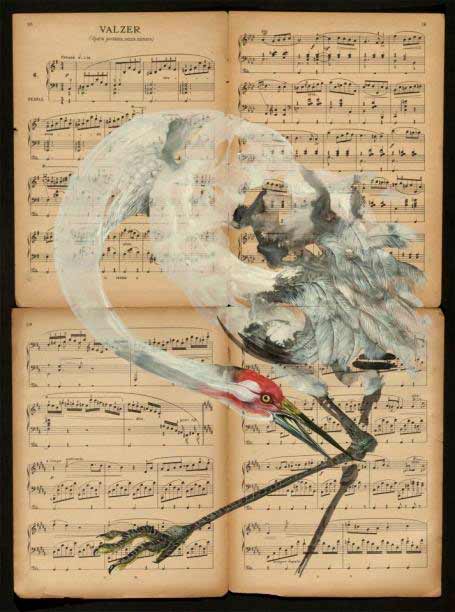
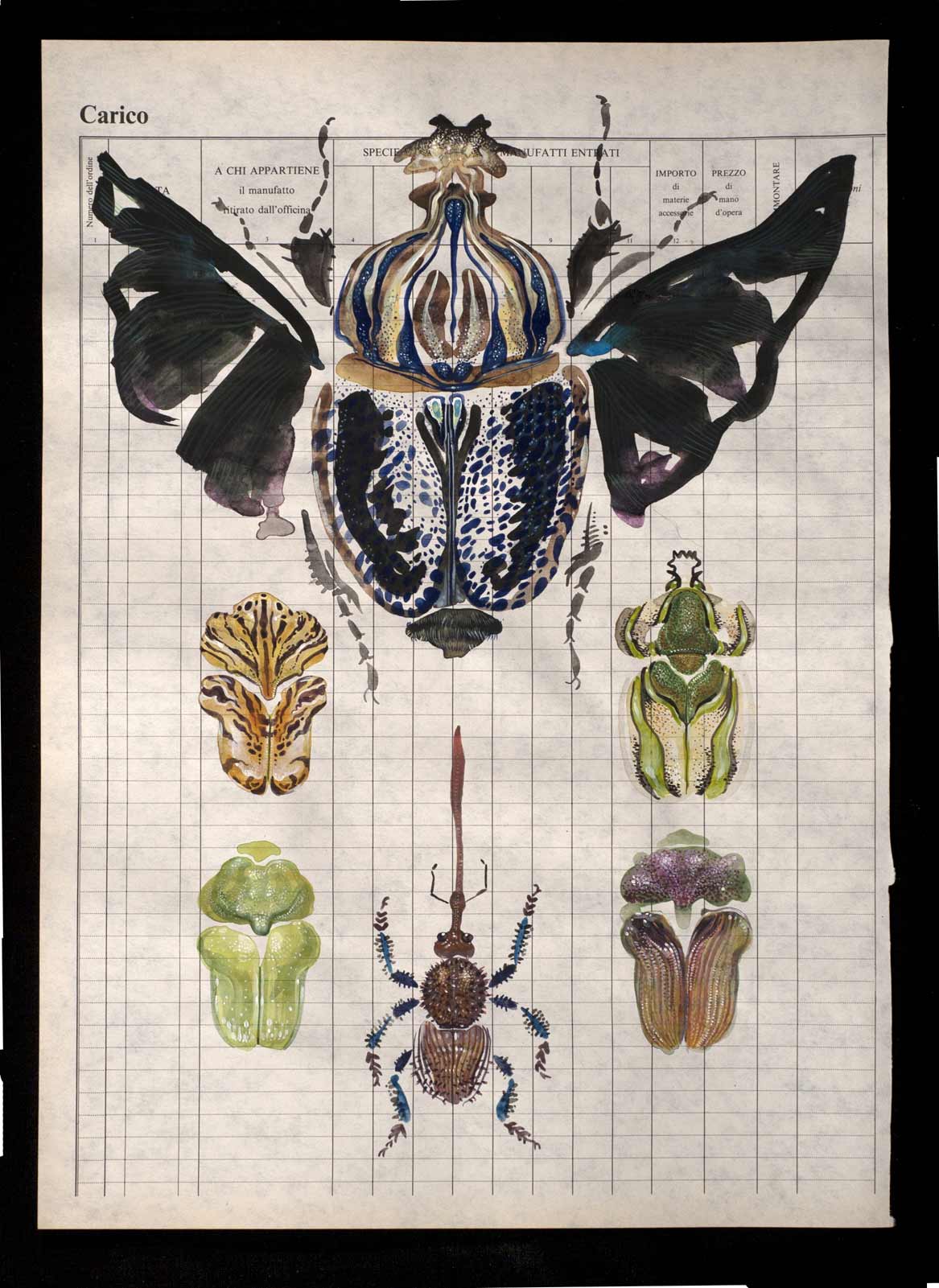
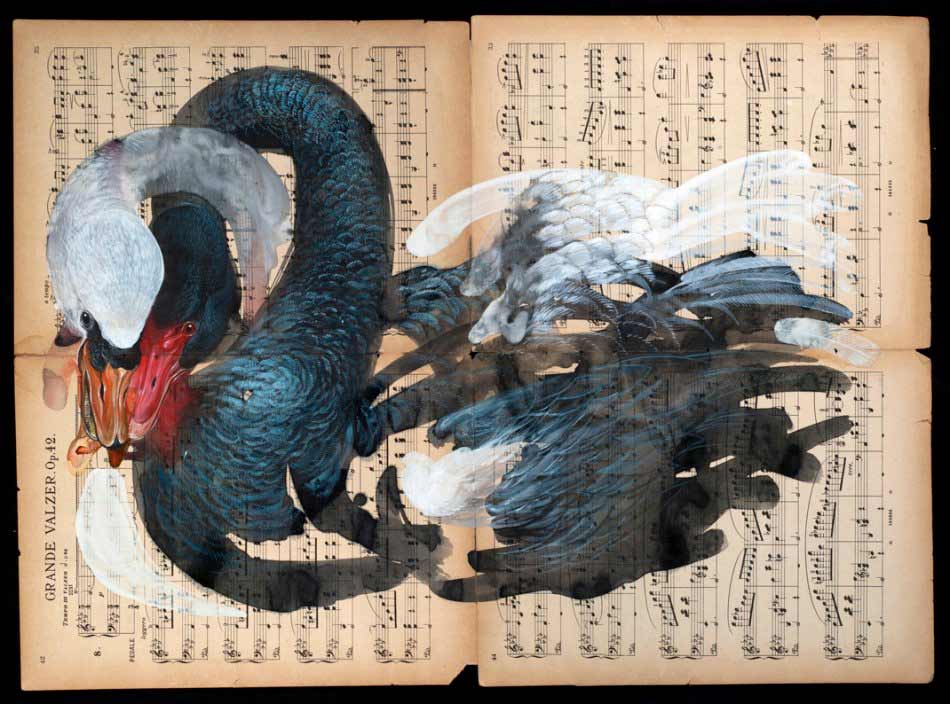
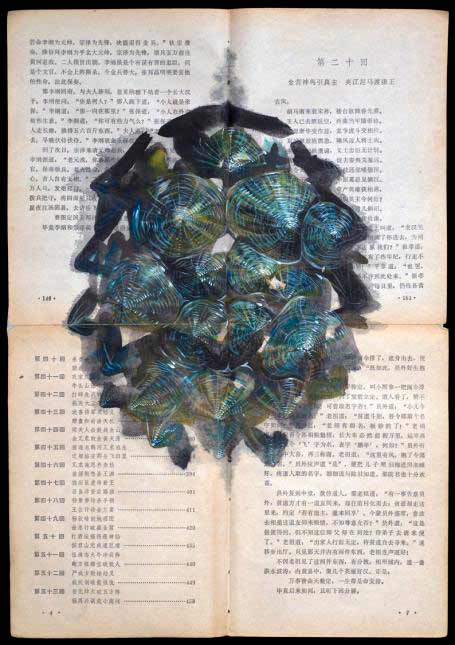
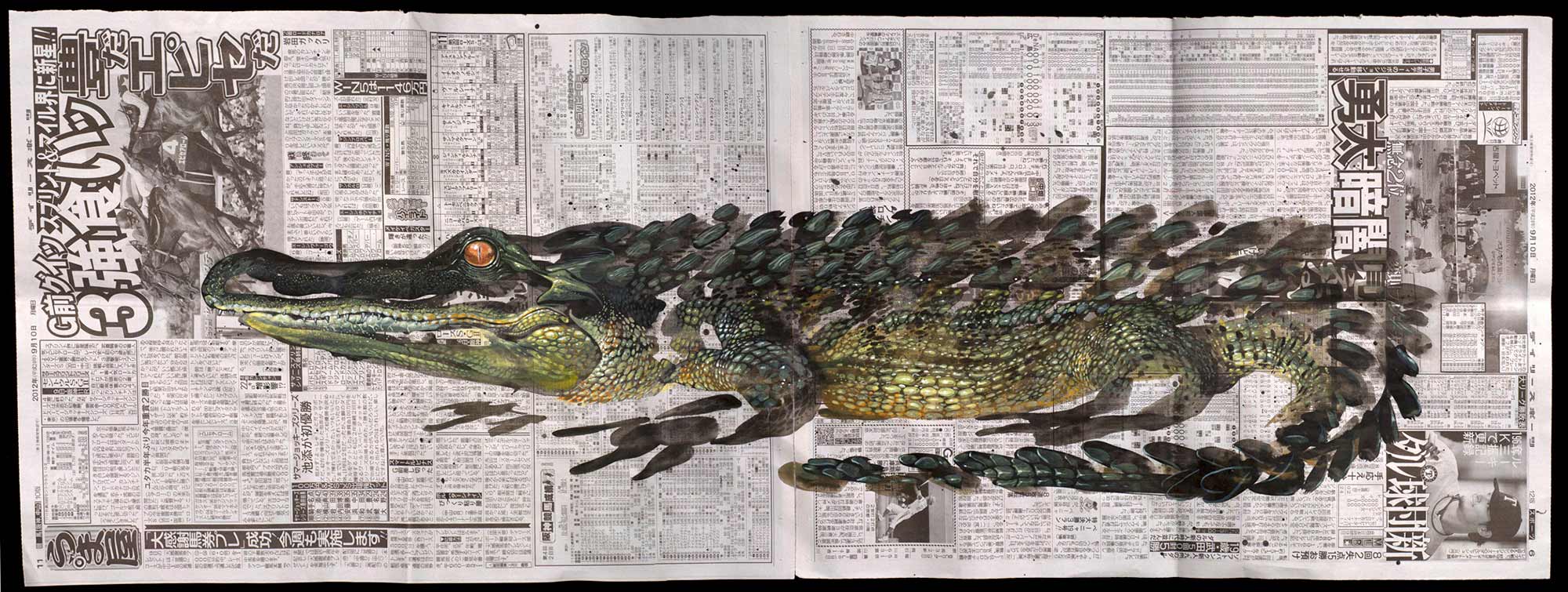
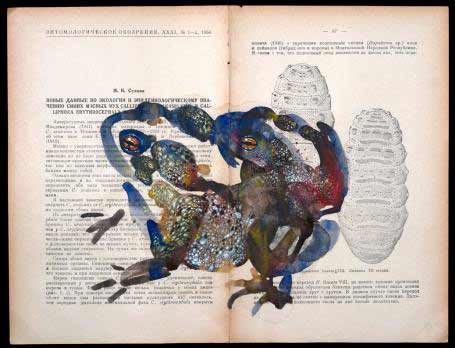
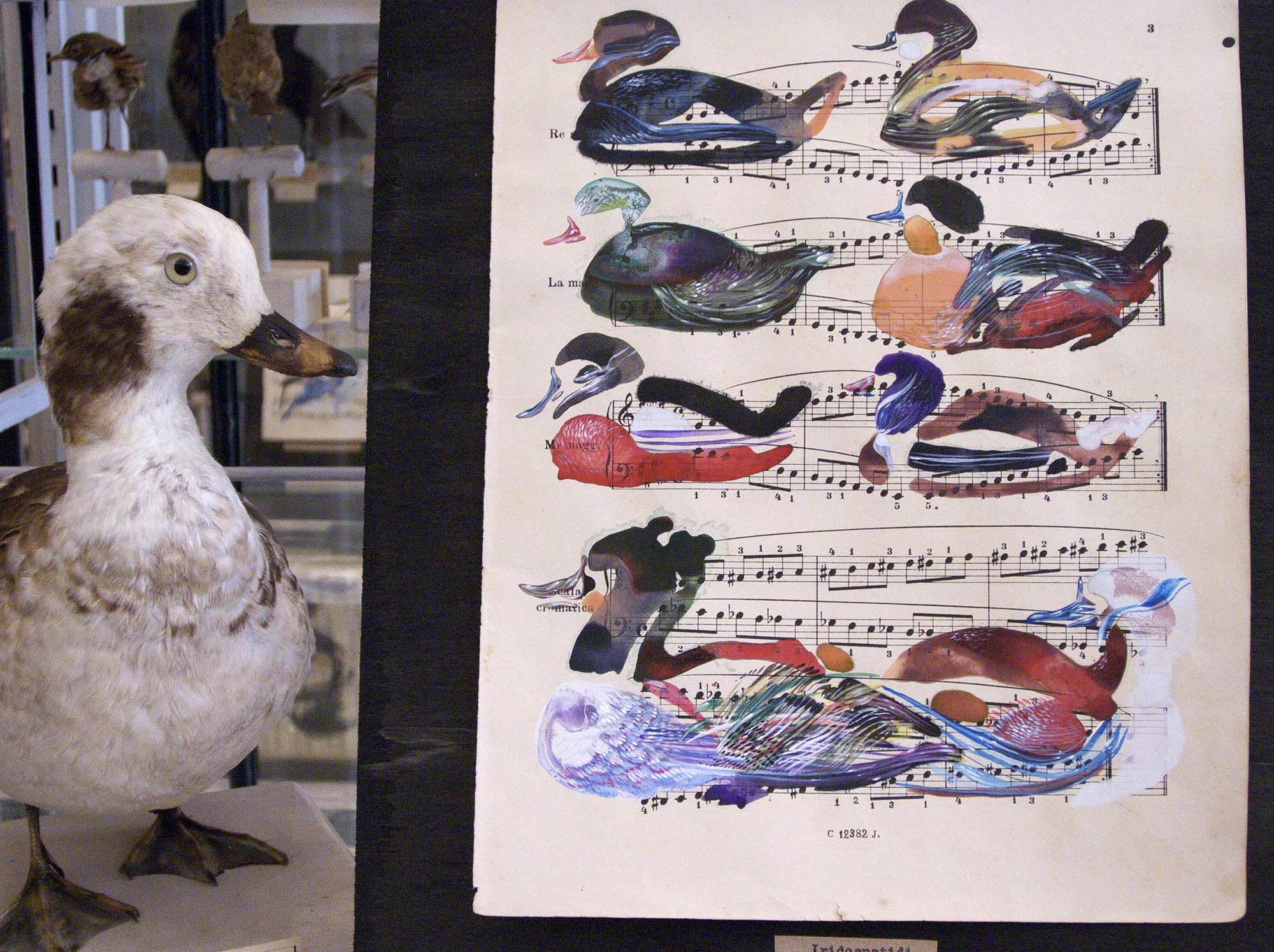
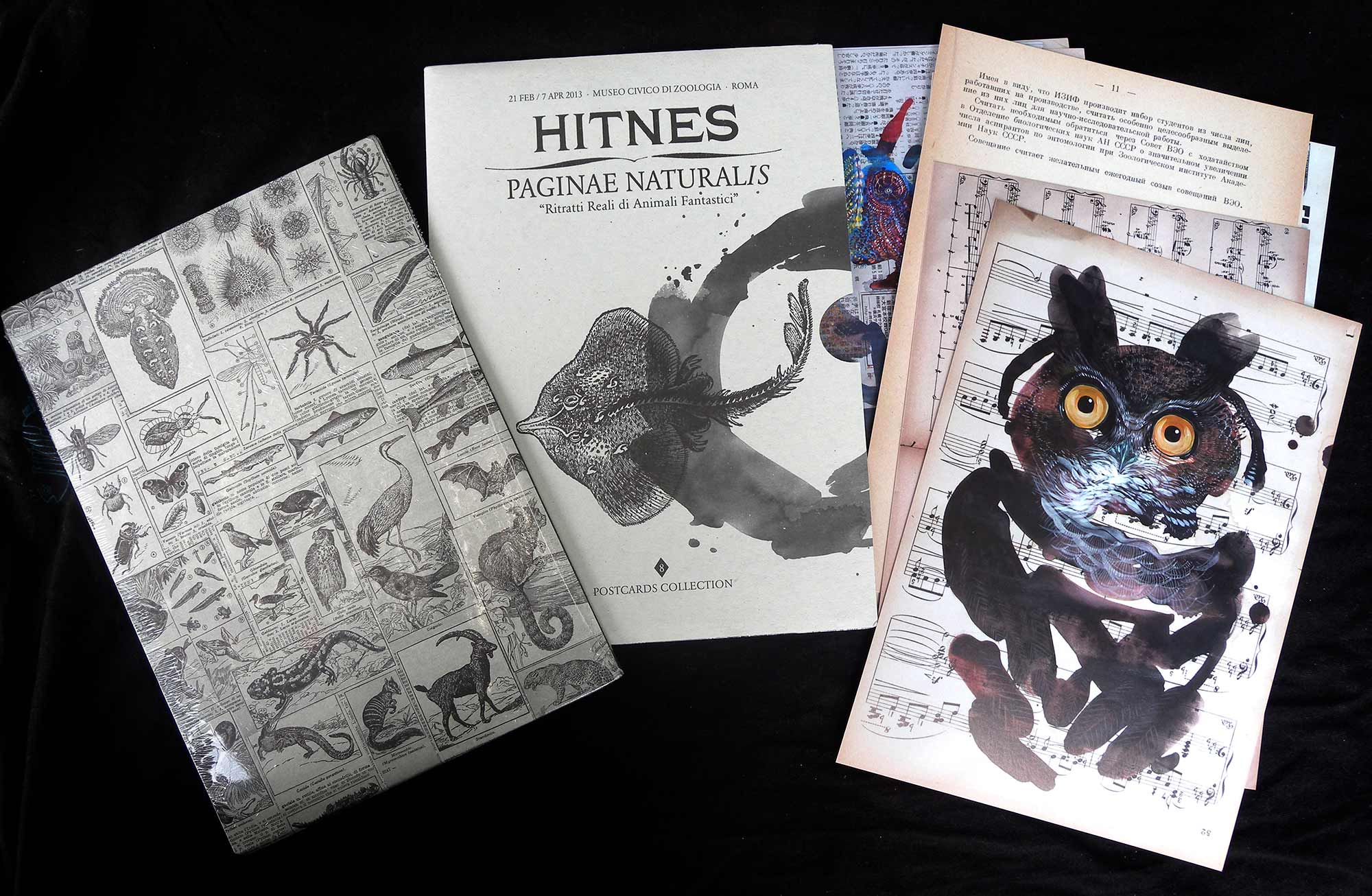
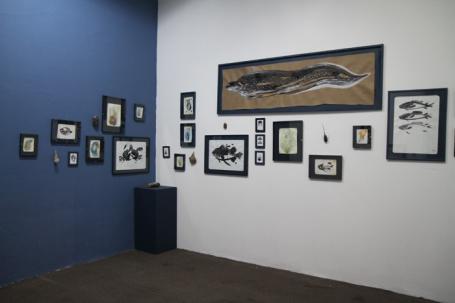
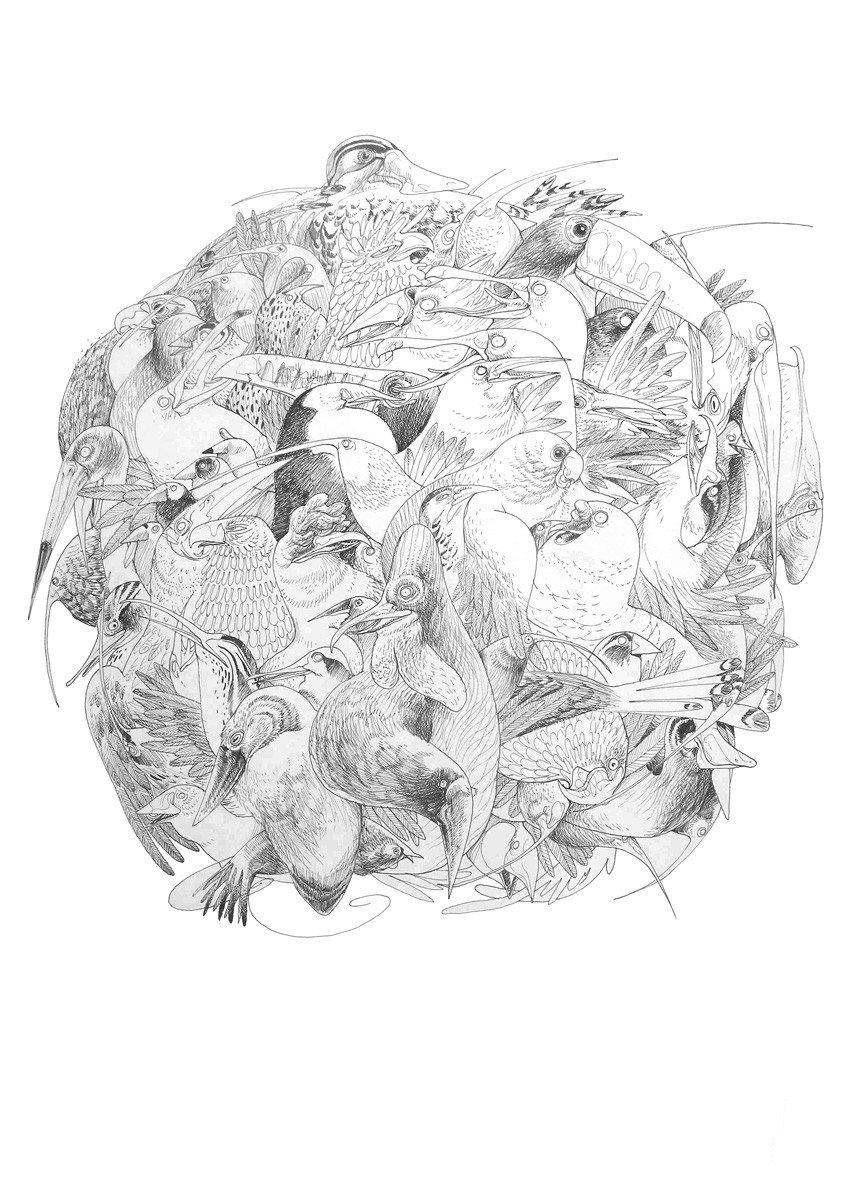
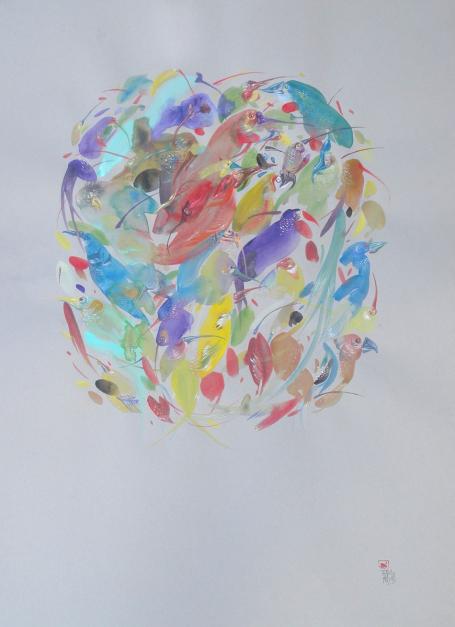
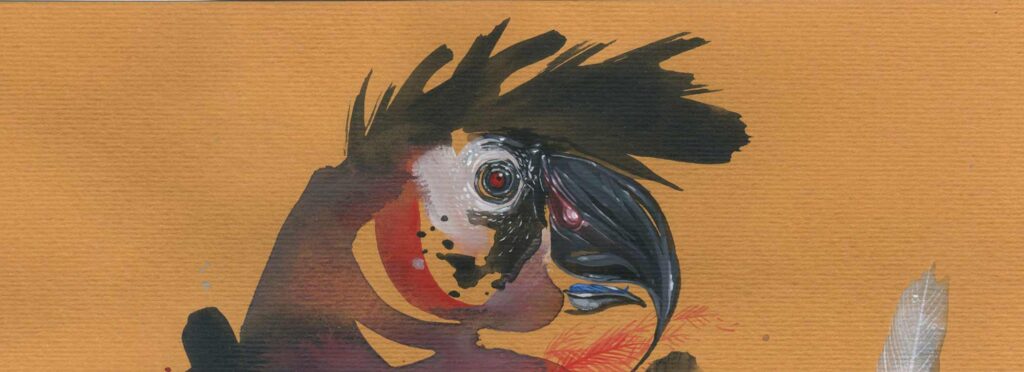
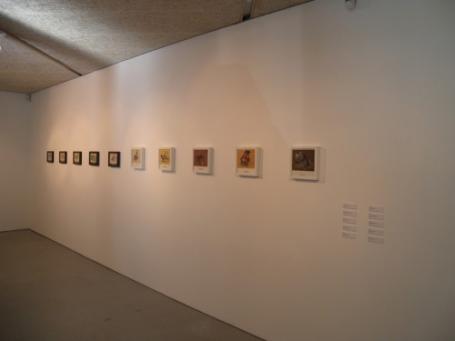
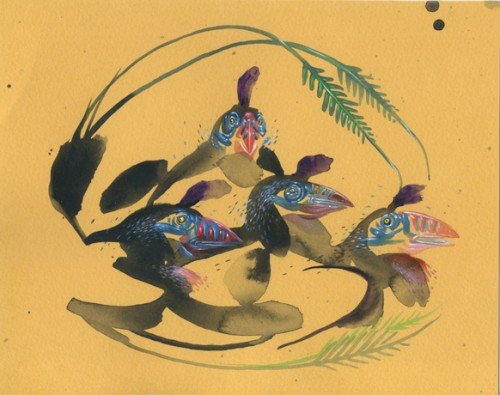
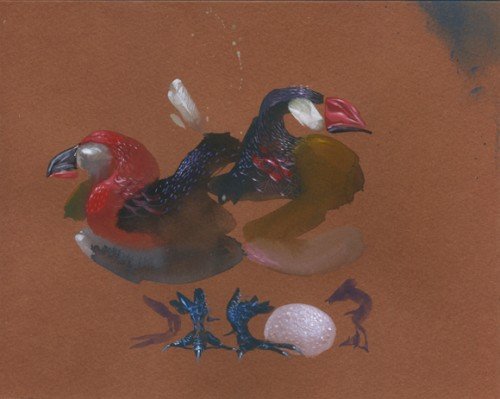
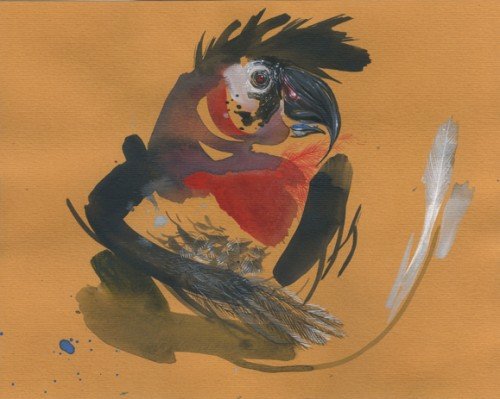
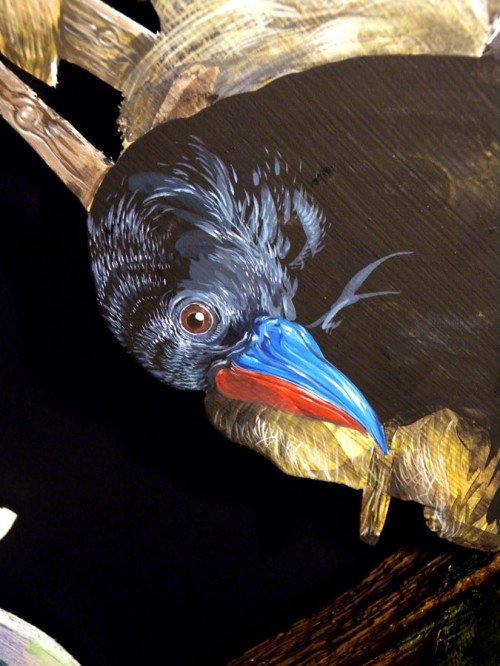
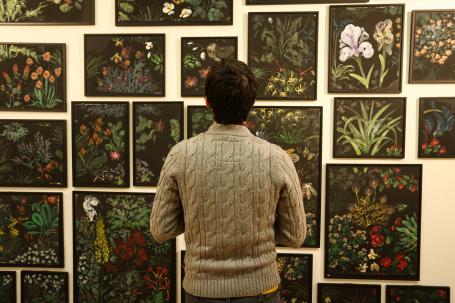
Paginae naturalis is an exhibition of acrylic paintings on paper, a collection of naturalistic illustrations, a “wunderkammer’ of colored spots, a figment of the imagination.
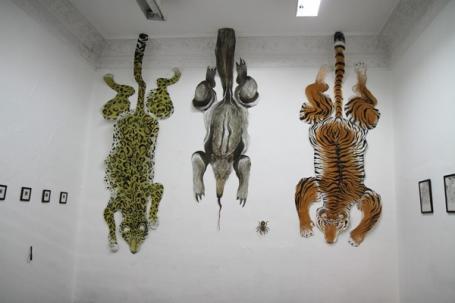
The work of Hitnes, whether painted straight on to a wall, drawn on paper, or etched on copper, always interprets and draws inspiration from the forms found in the natural world.
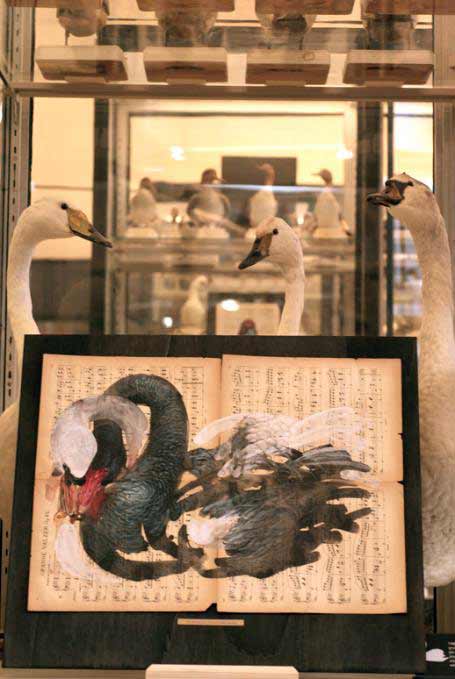
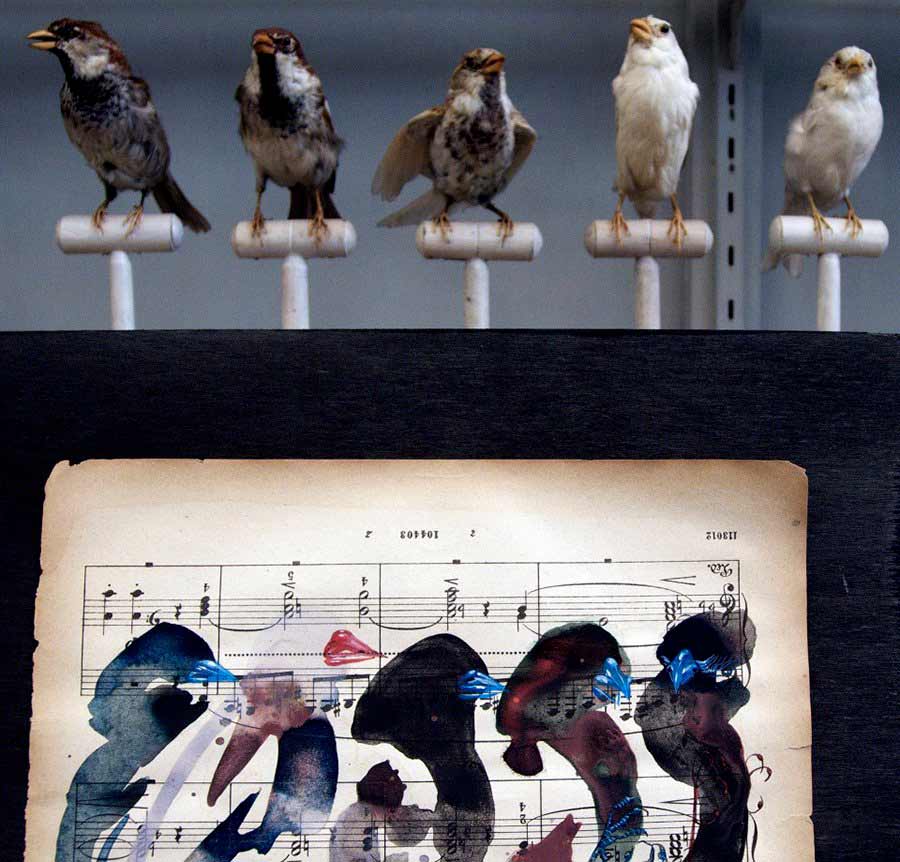
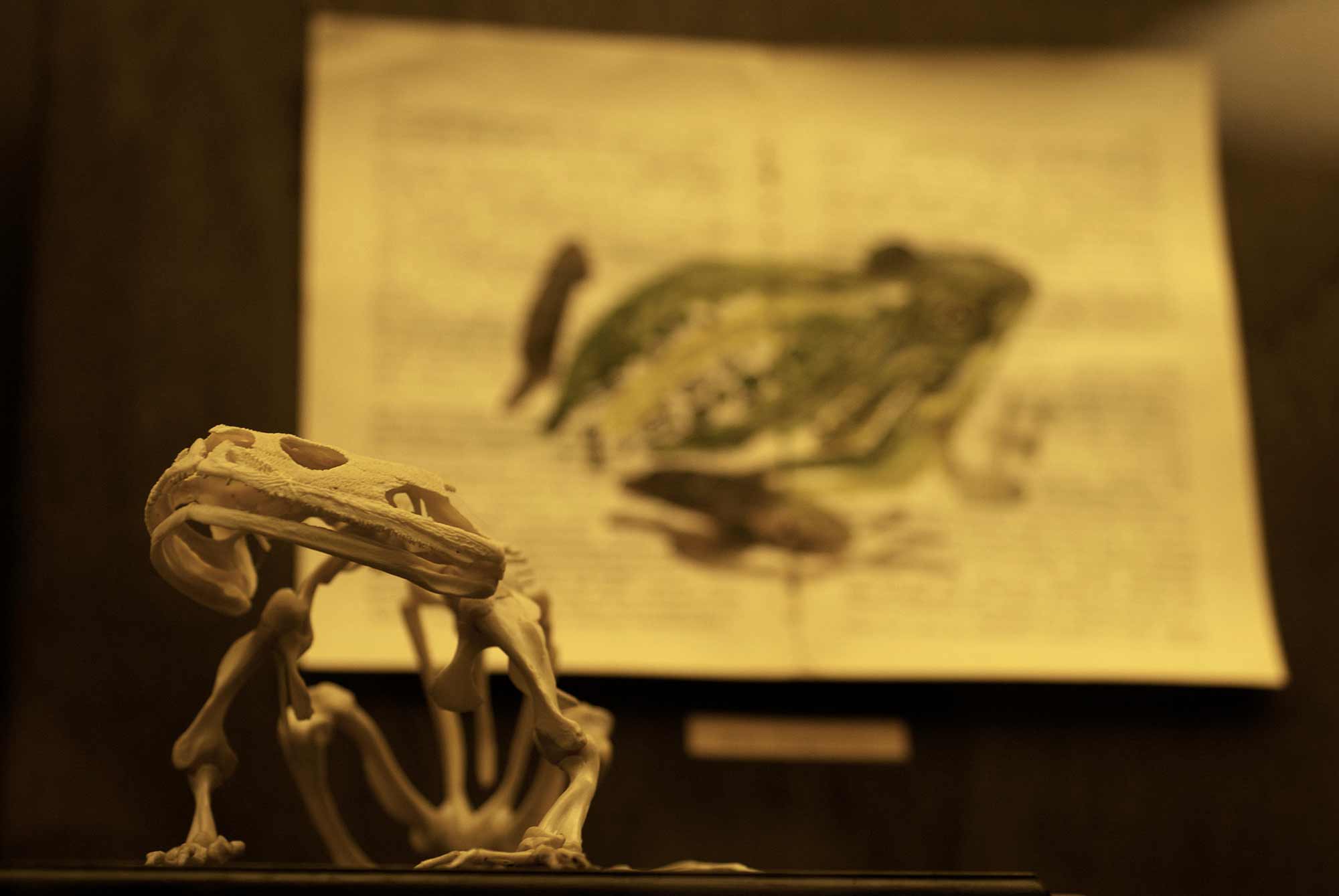
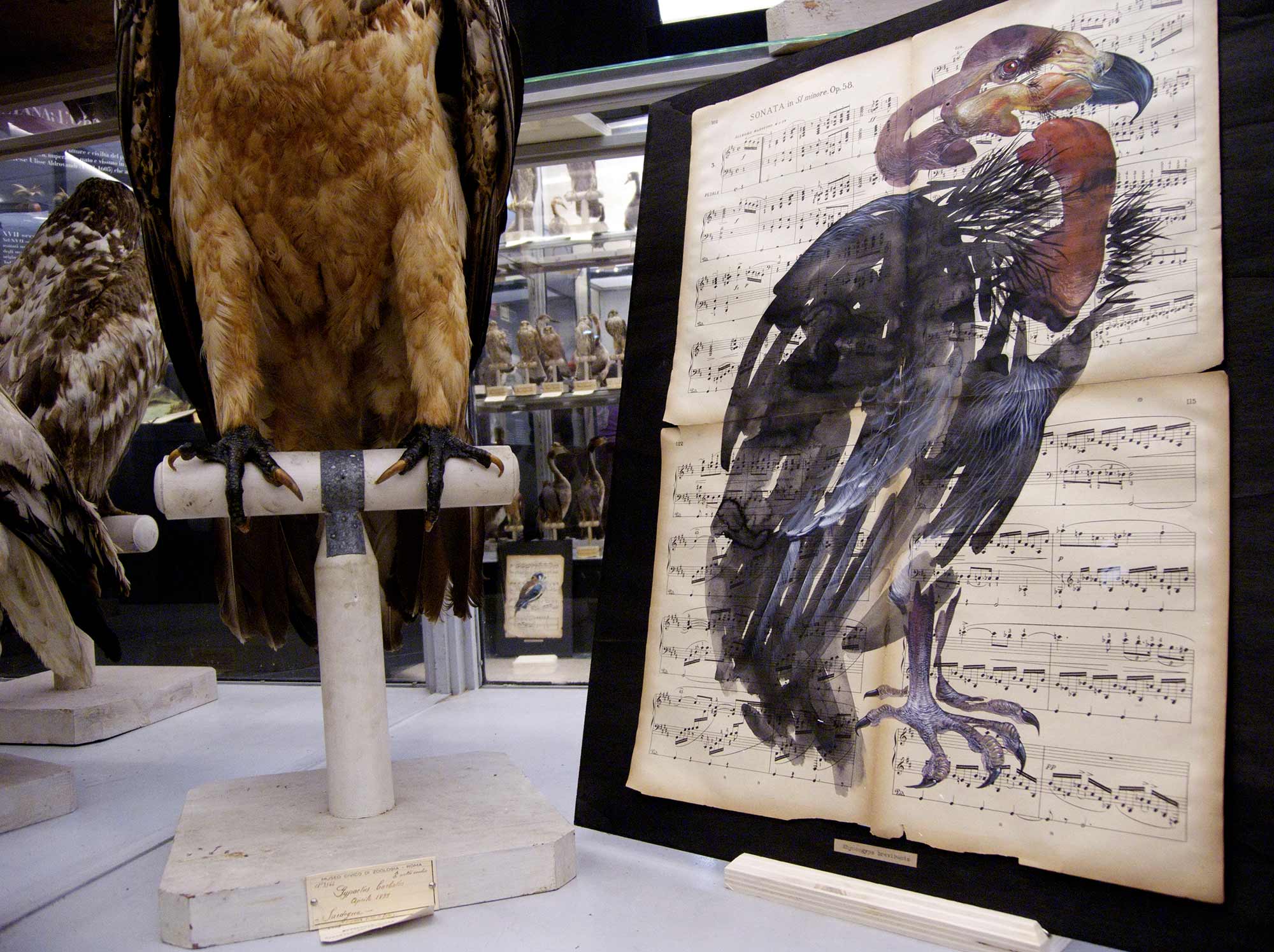
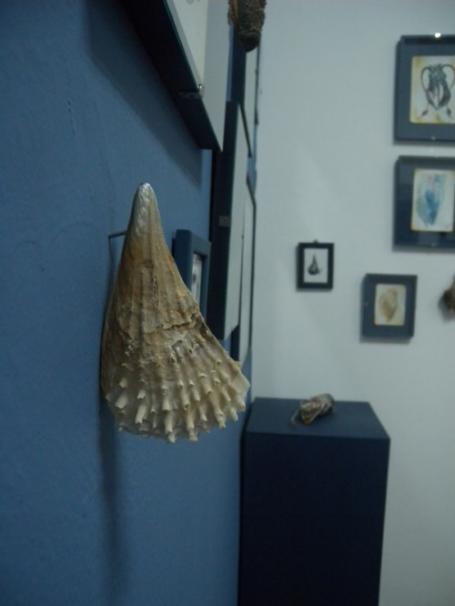
The 135 pieces in this exhibition follow the species of animals within the collections of the Museo Civico di Zoologia of Roma, and are shown alongside the specimens prepared by taxidermists, in the same cases.
Art mimics science. Art concocts science. Animal forms infuriate, brushstrokes capture the essence of claws, feathers become dashes of colour, and attention is gripped by the minute details of a beak.
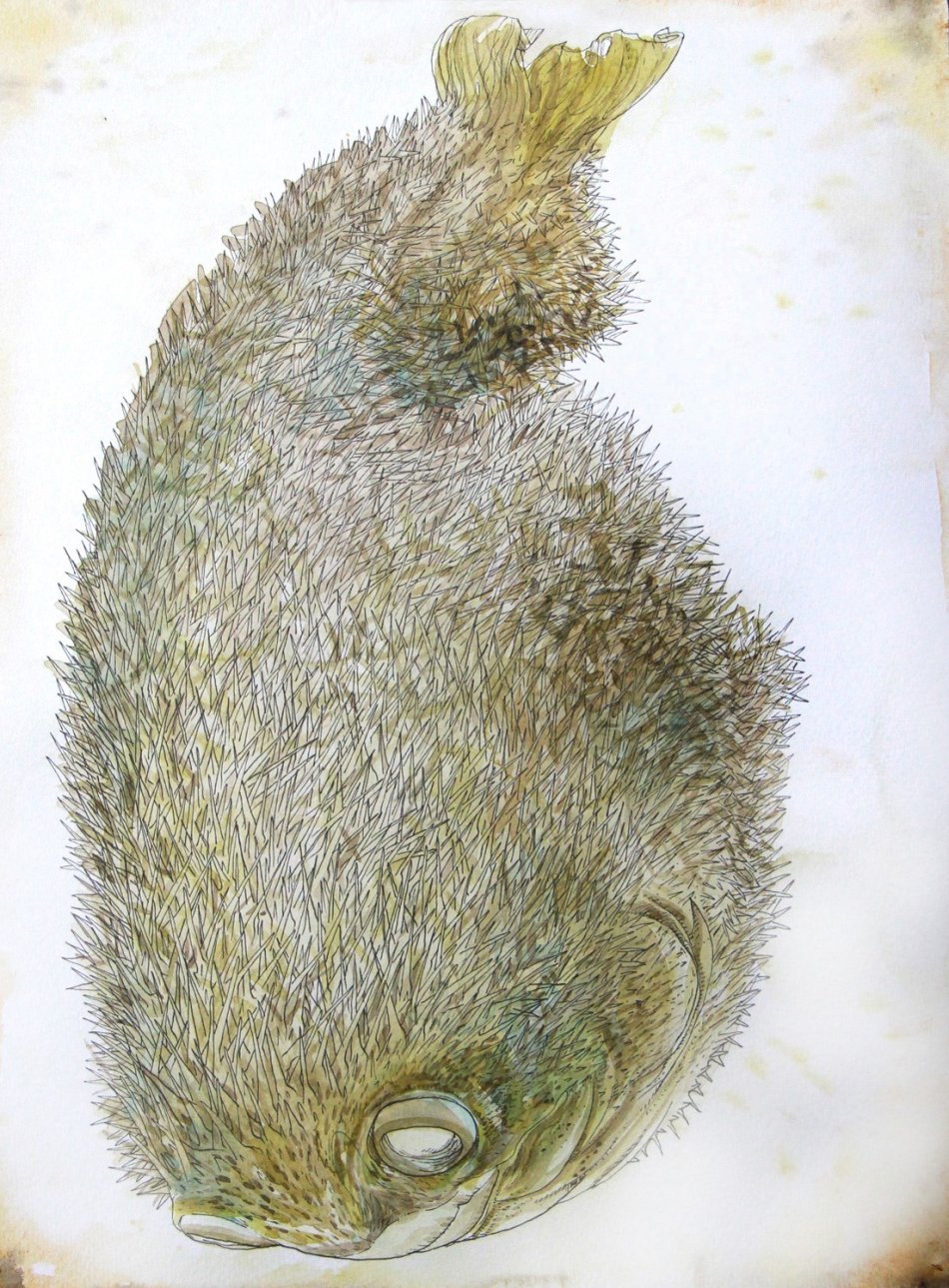
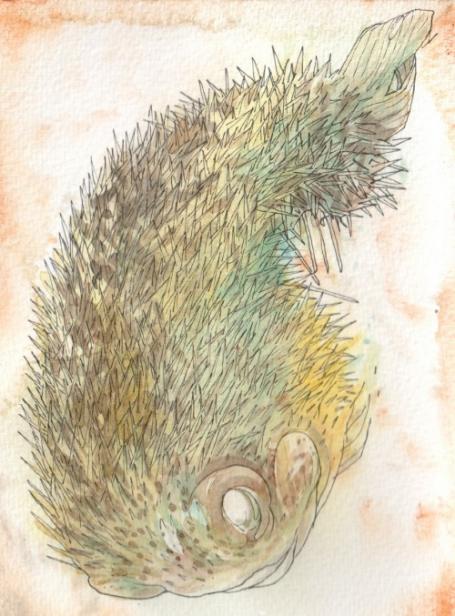
Paginae naturalis is a catalogue of “semi-false” painted animals, and their fictional categories, where the painter uses his mark to play with reality that melts into a blurred imitation.

Foto di Attila Remai

FALCONARA MARITTIMA

By Graffito, Project, Uncategorized

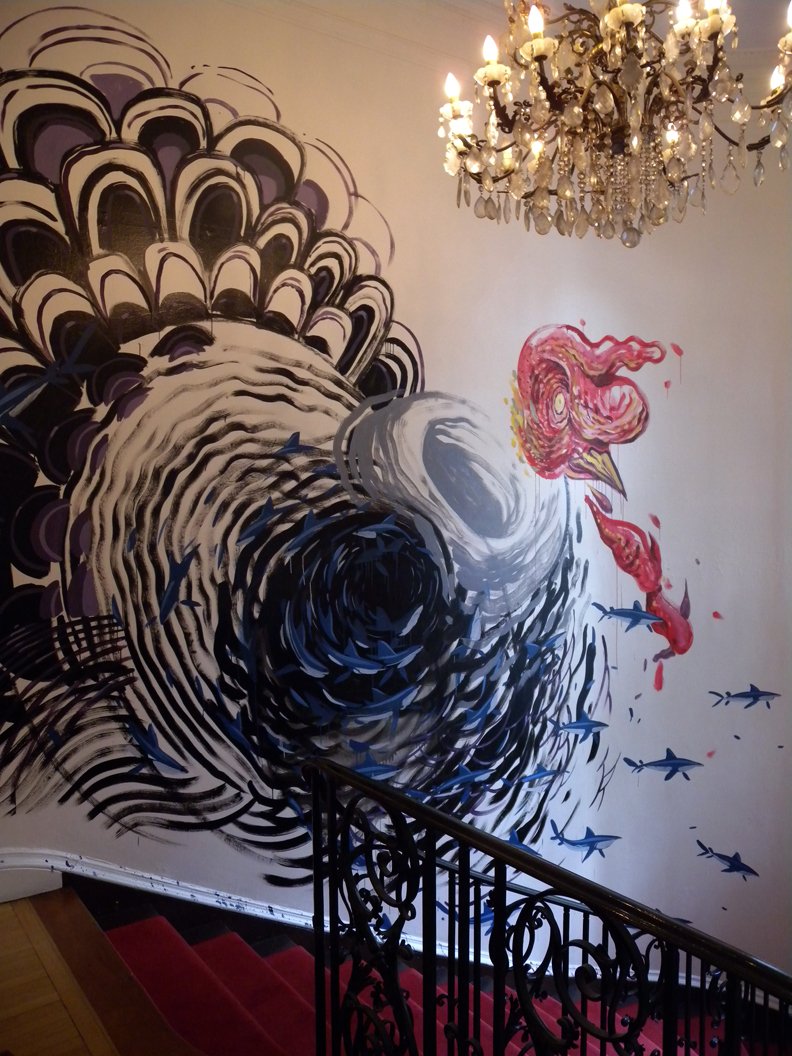
Il Nido.Falconara marittima
graffito (2013)

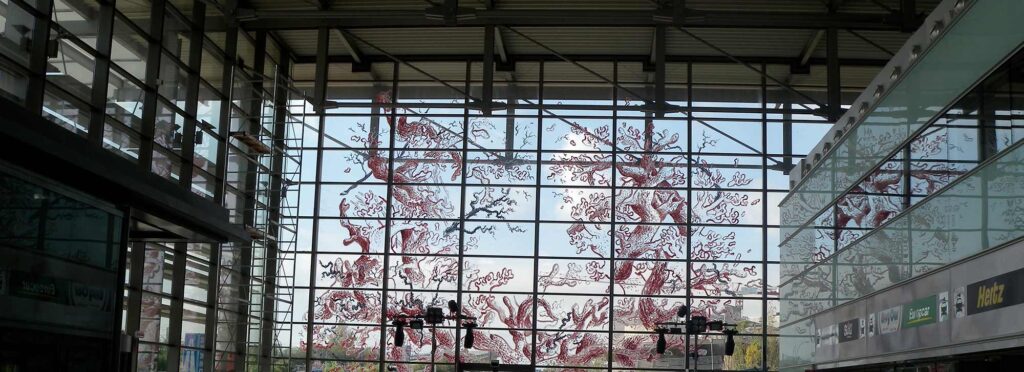
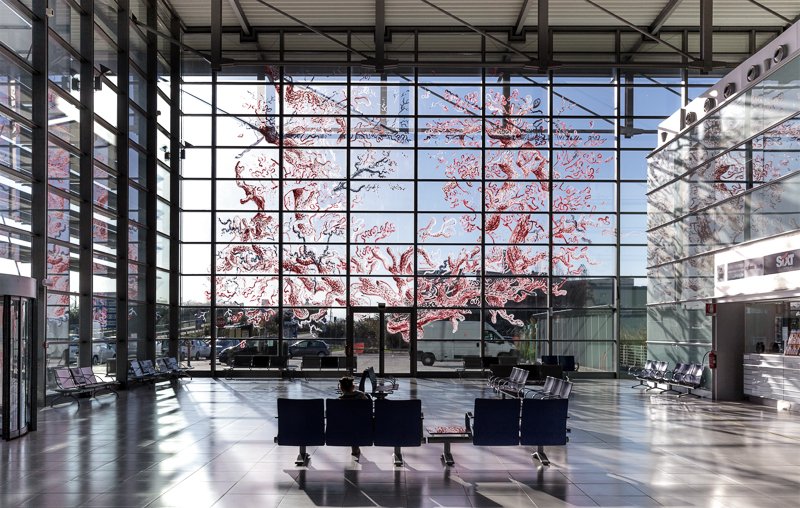
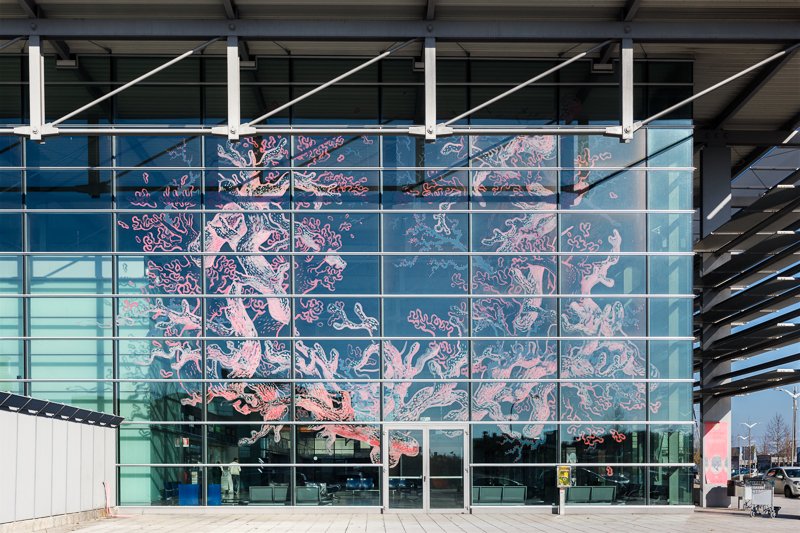
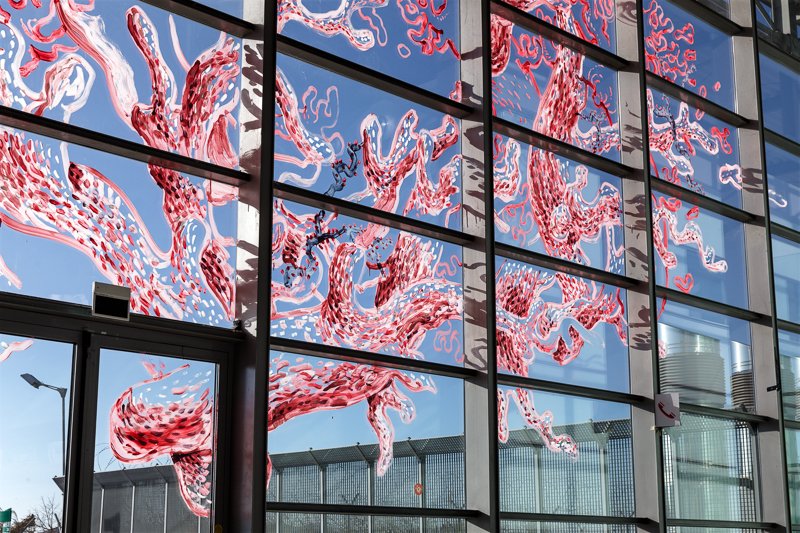
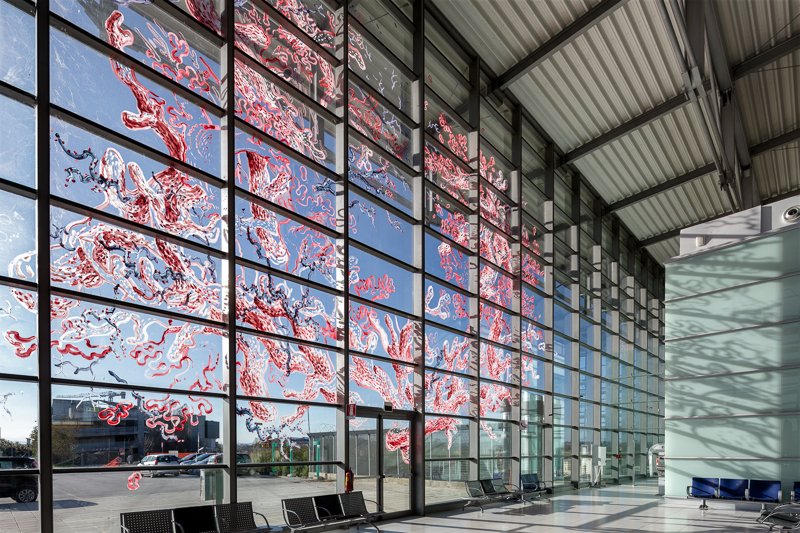
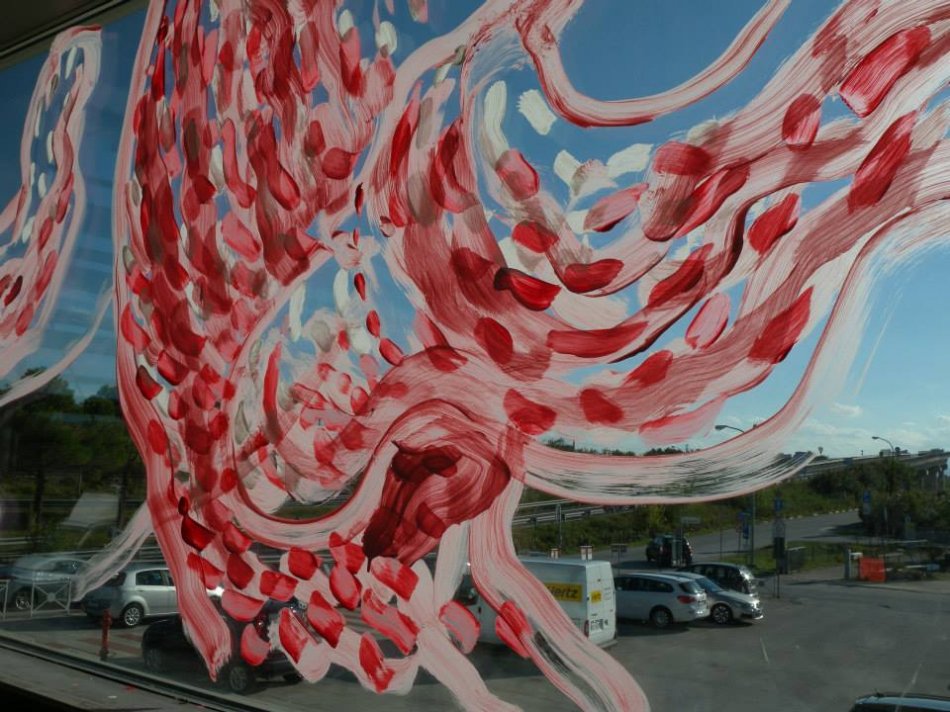
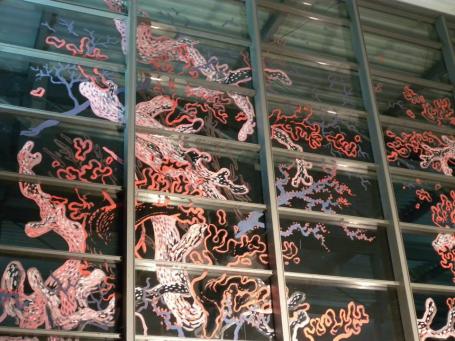
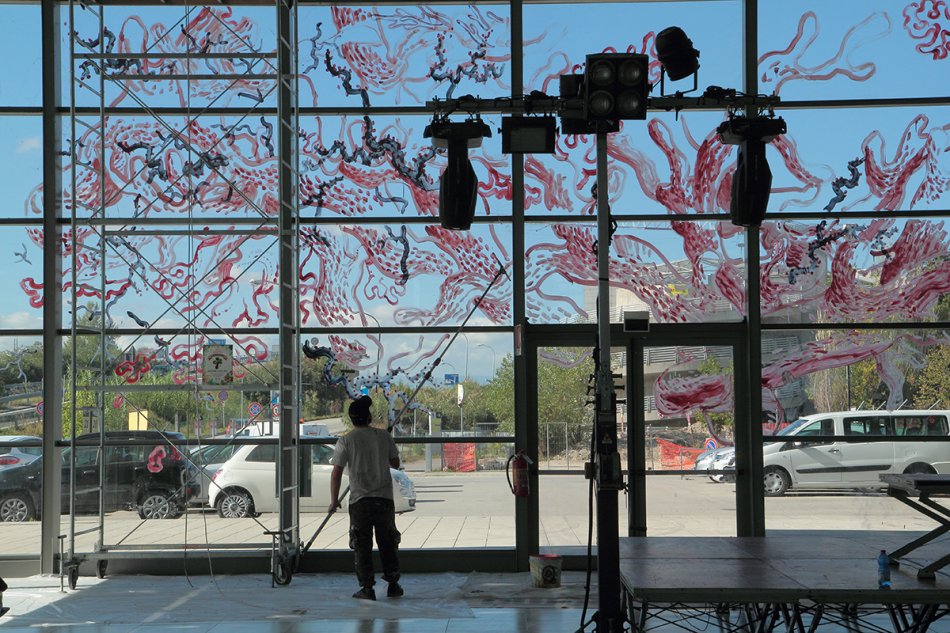
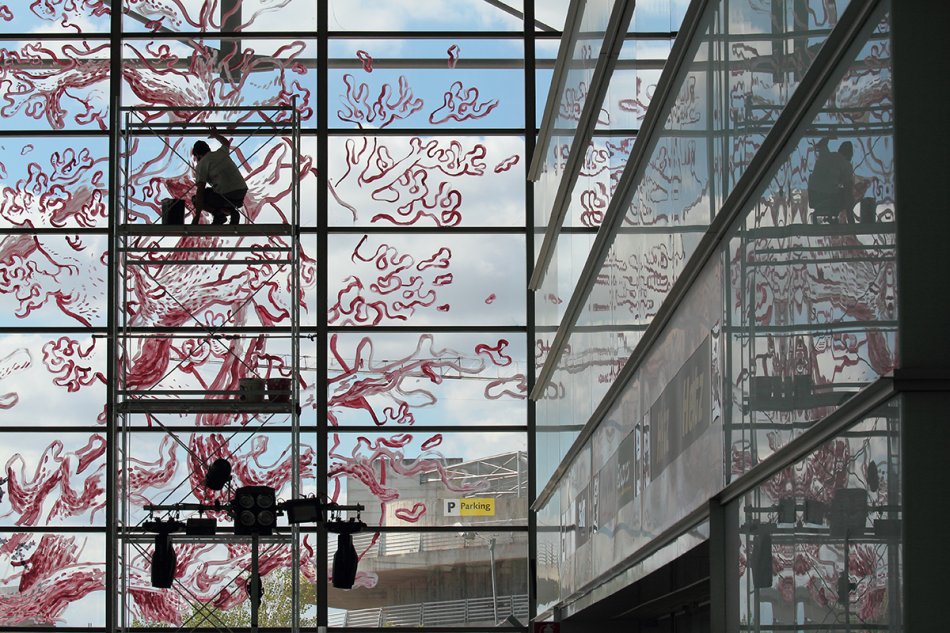
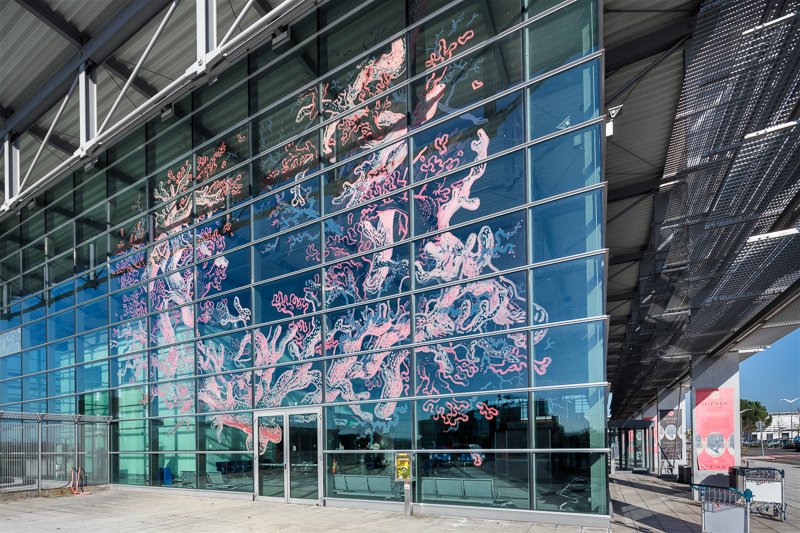
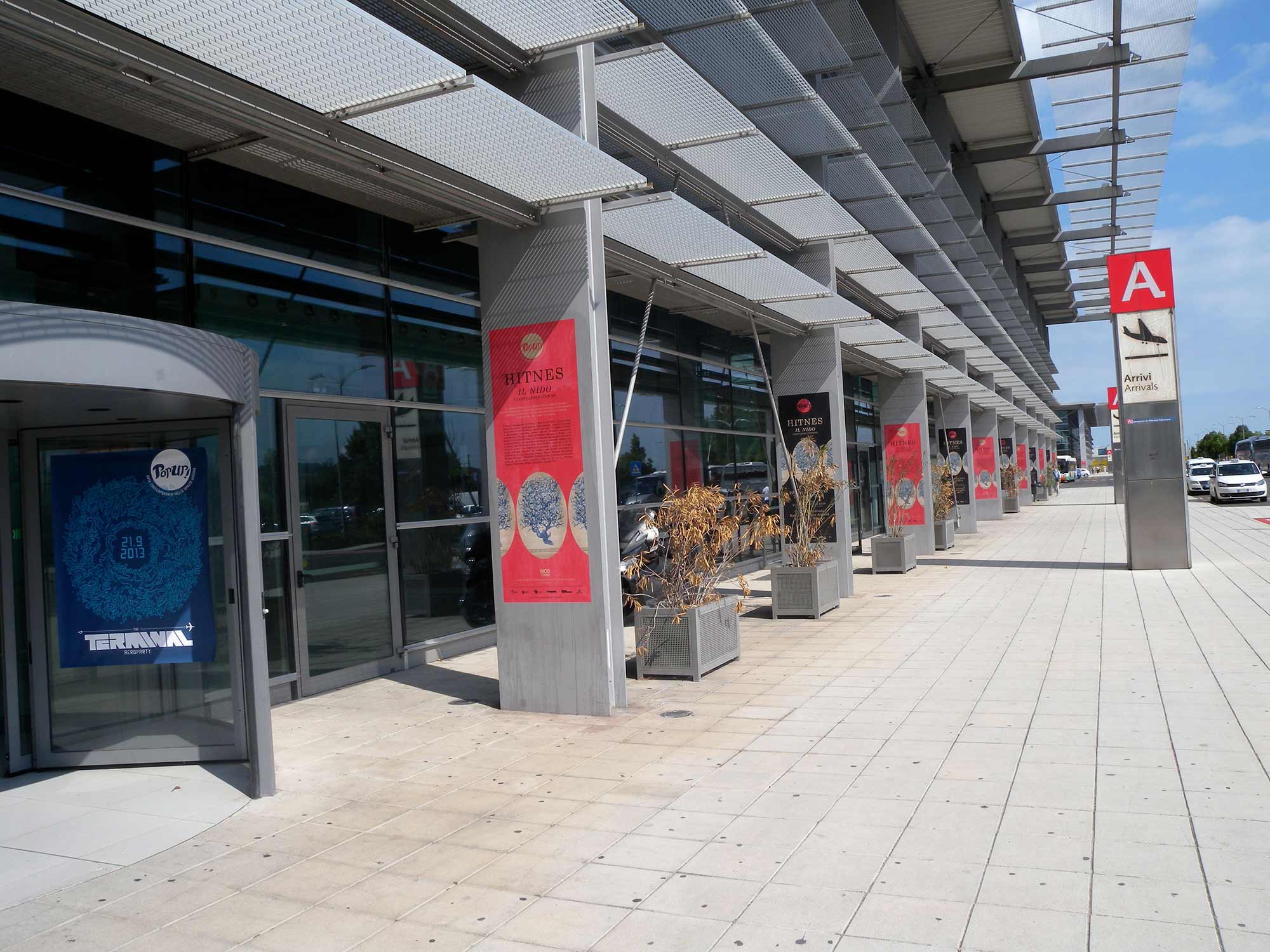
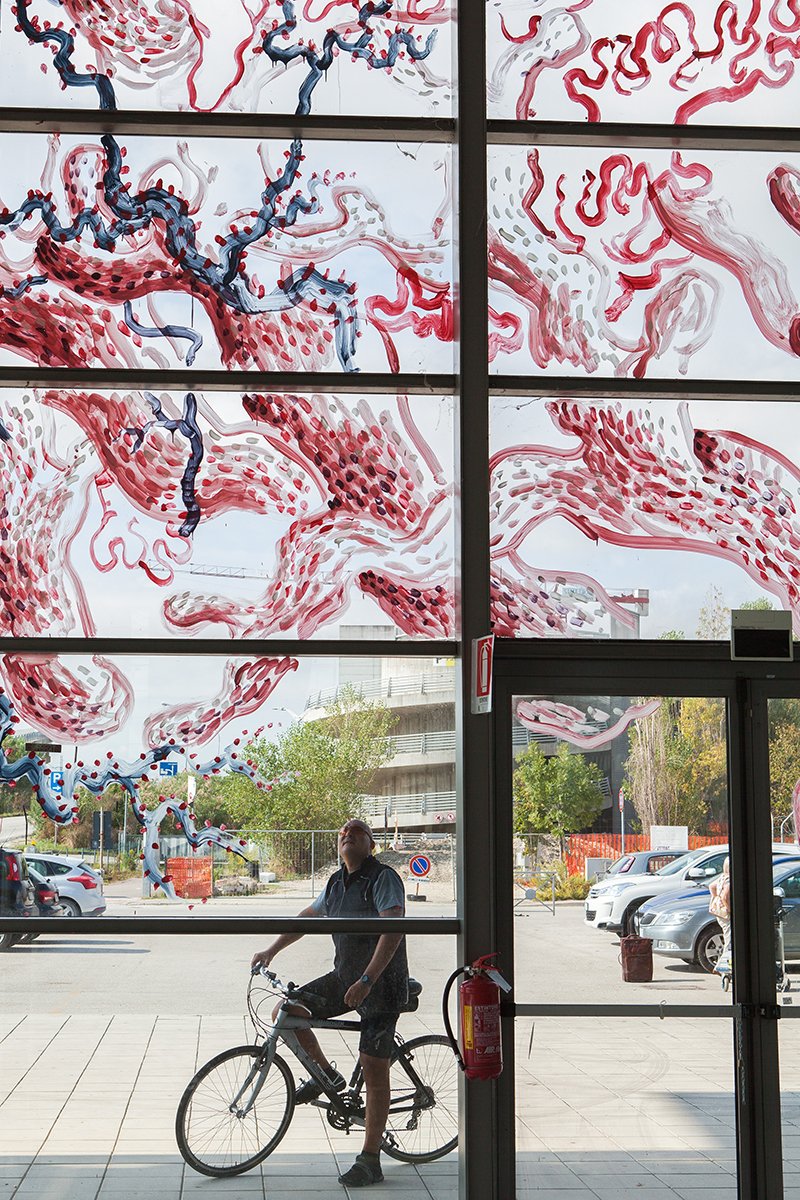
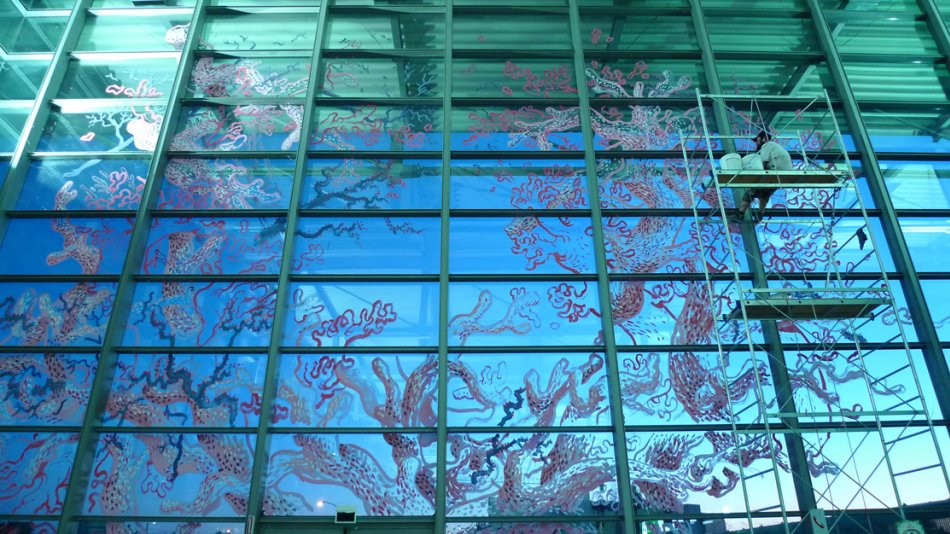
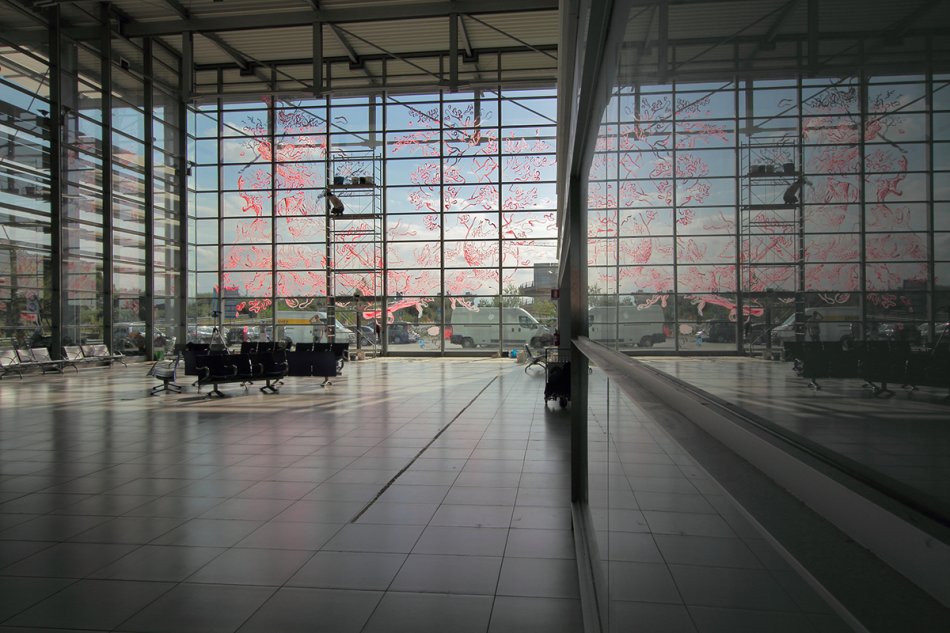
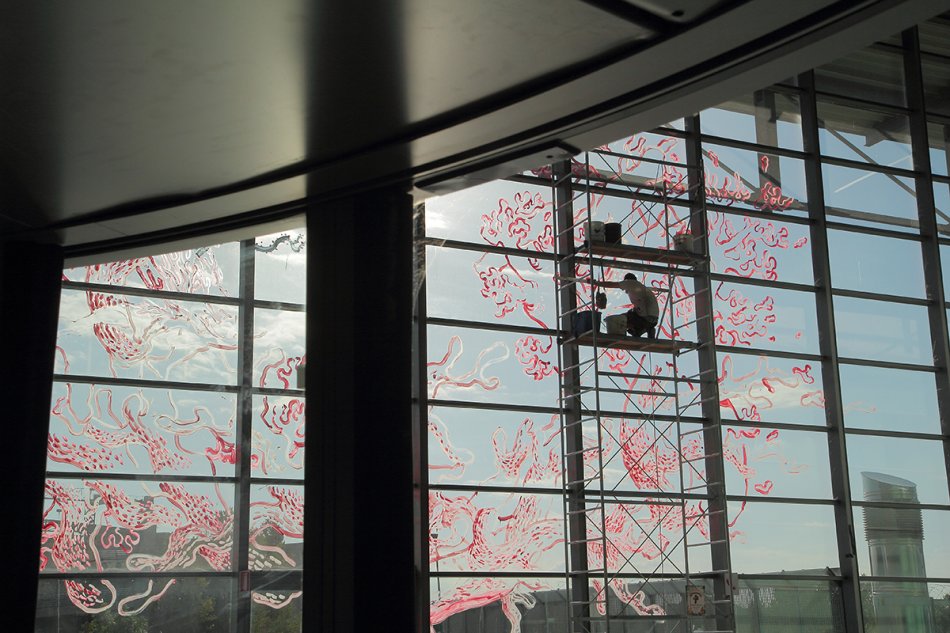
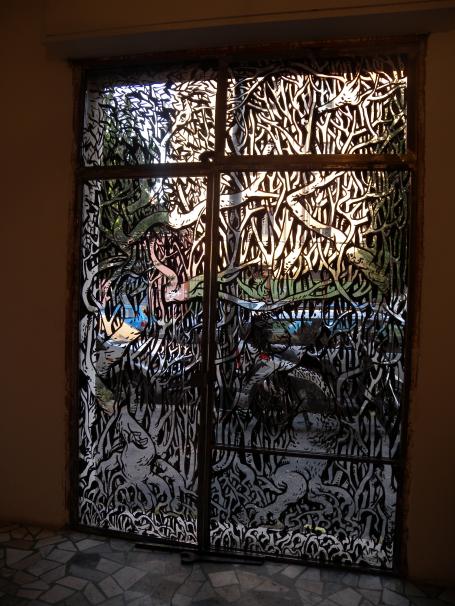
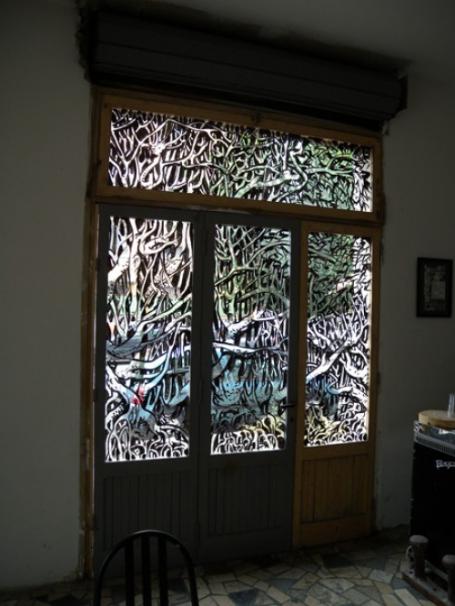
“Il Nido” (the nest) is a glass painting project at the Ancona’s airport Raffaello Sanzio, in Falconara marittima, for the POPUP! festival 2013 thanks to MAC.
Painted with natural colors on the glasses of the “arrivals hall” now the painting is departed.

SCHWARZWALD

By Project, Uncategorized

Schwarzwald (2011)
Roma

Roma, june 2011
The exhibition was held at the GRANMA in via dei gelsi 111, (Centocelle) Roma
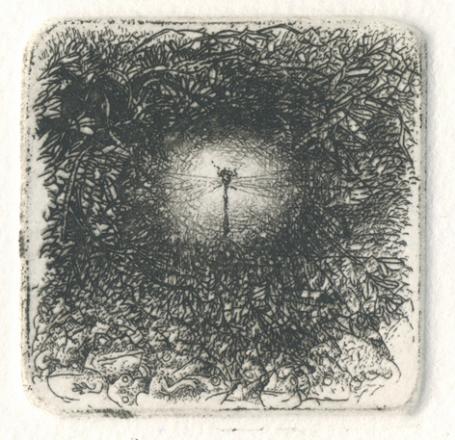
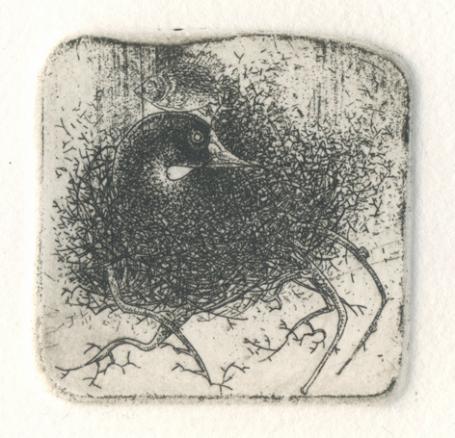
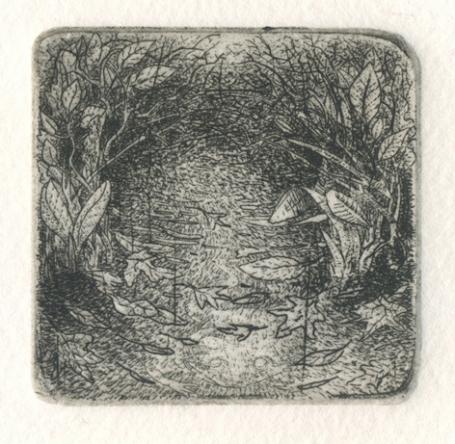
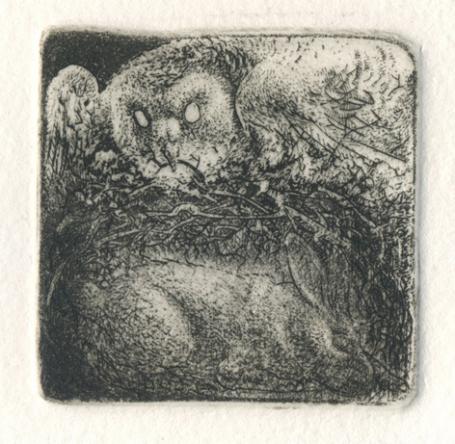
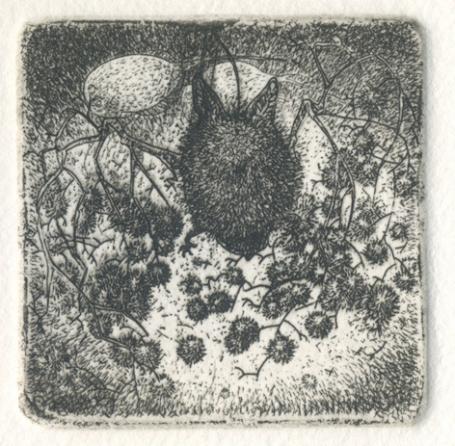
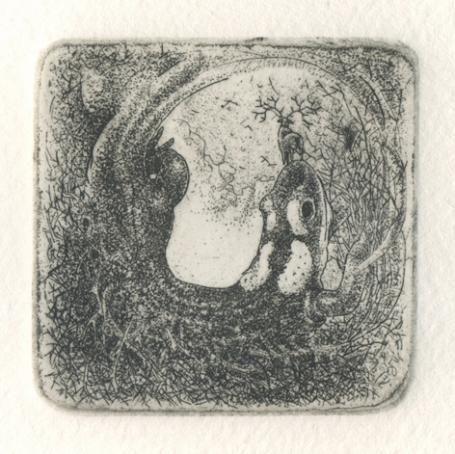
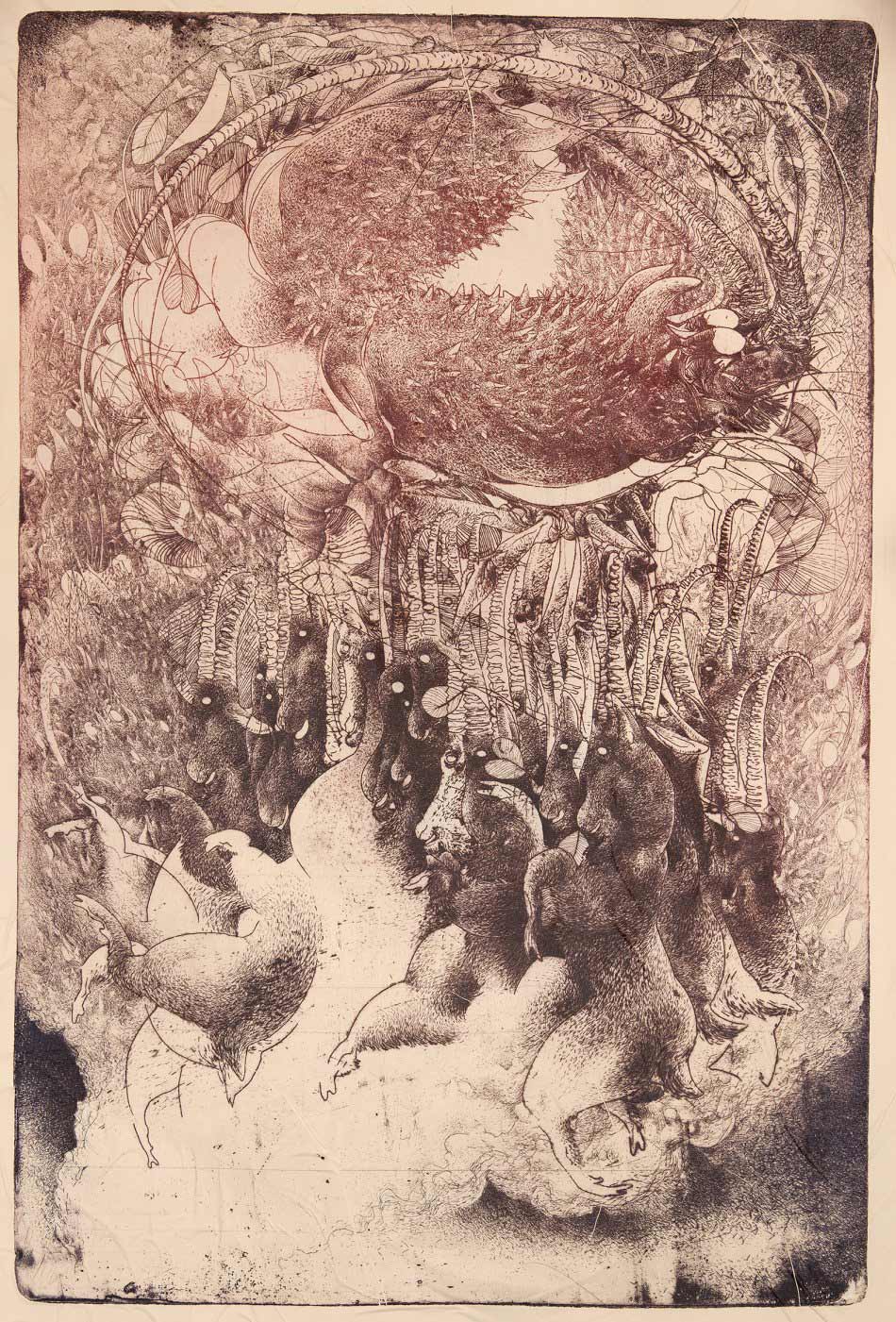
Schwarzwald, the “black forest” in german, is the name and the atmosphere of the 12 etching that form the work. The plates are engraved whit etching, mezzotint, and drypoint. Printed in a series of 1\15 thanks to the master engraver Patrizio Di Sciullo.

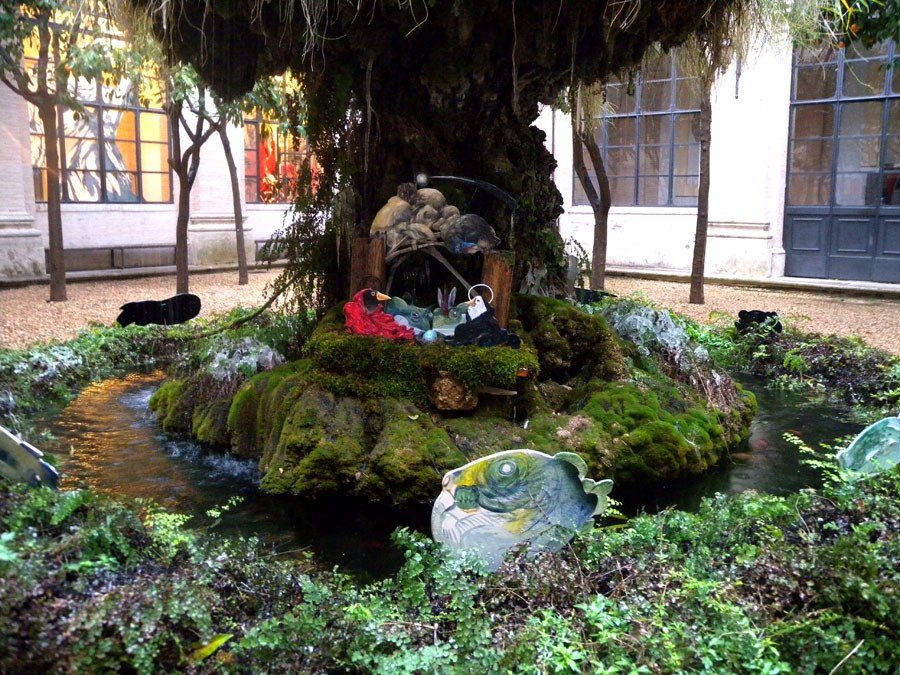
THE NATIVITY FOUNTAIN

By Project, Uncategorized

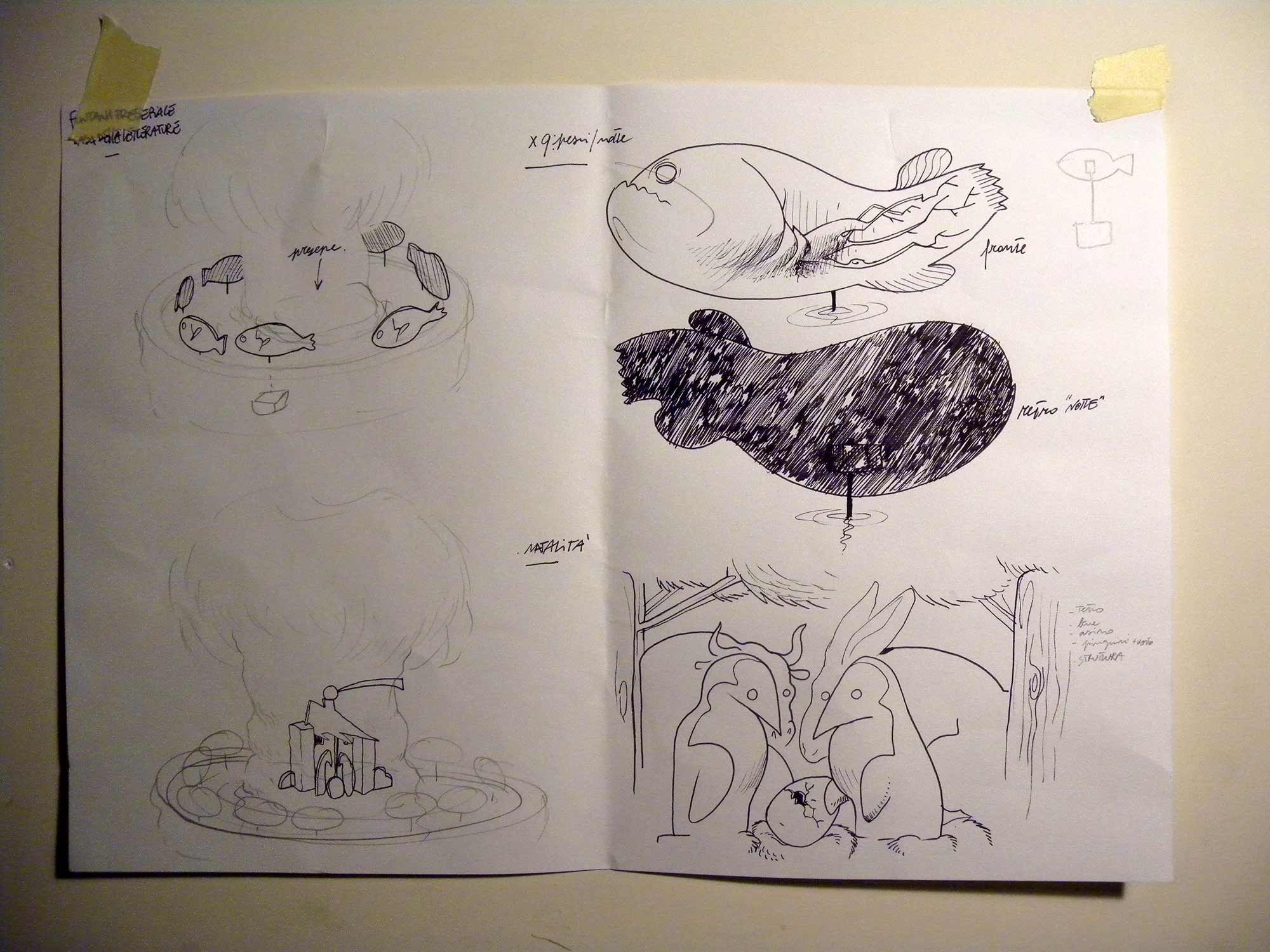
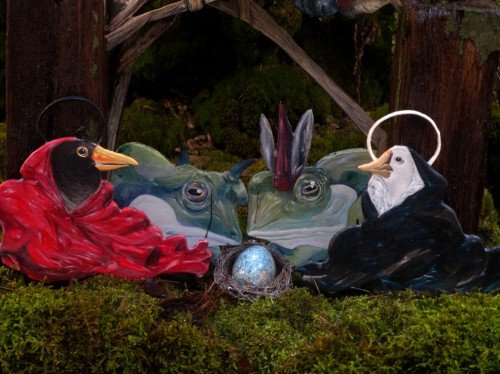
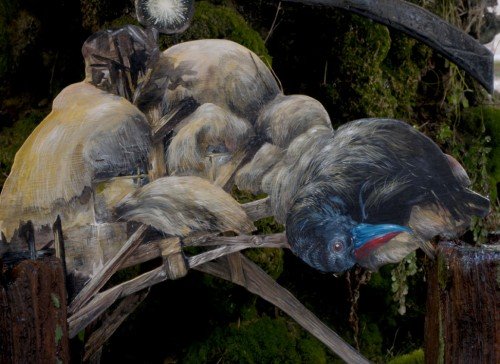
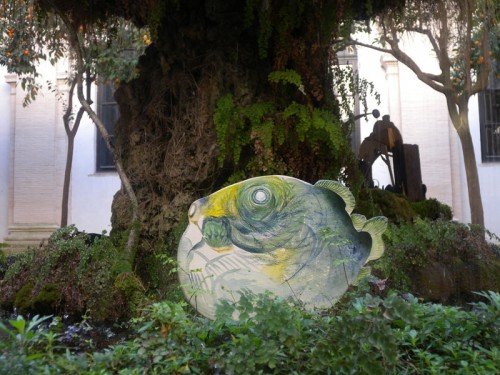
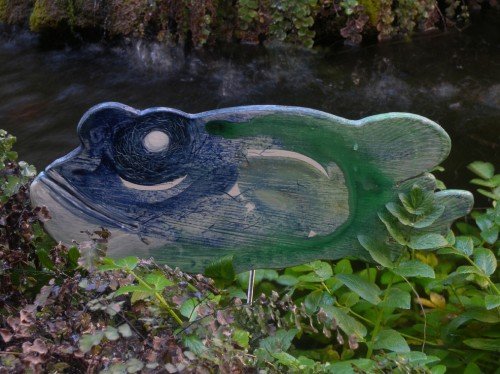
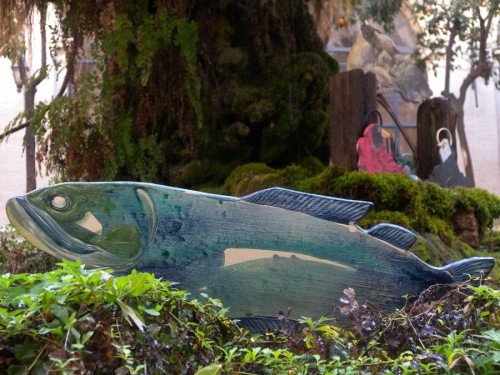
The nativity fountain (2010/2011)
Roma

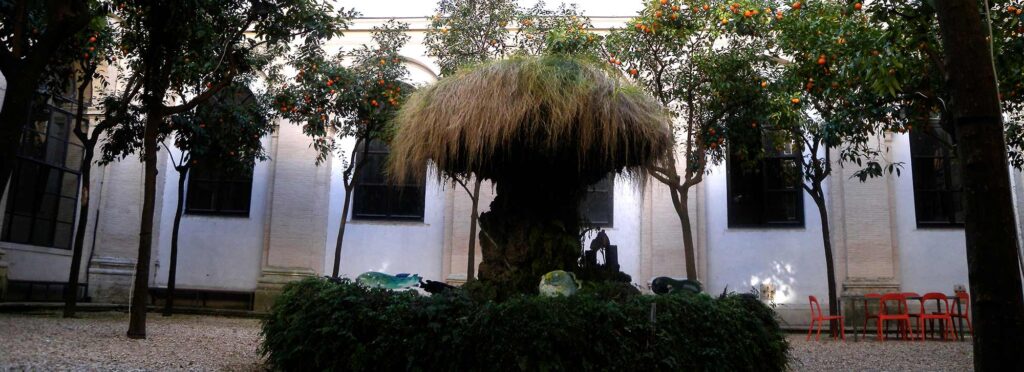
The Casa delle Letterature of Roma, conceived as a cultural centre specialized in Italian and foreign literatures of the twentieth century, is located within the prestigious Borrominian architectural complex of the ancient Oratory of the Philippine Friars in Piazza dell’Orologio, one of the most beloved sites of the whole municipal library network.
In this exquisit place, every year take place a christmas exhibition
focused on the “Nativity” theme.

error: