Quotidianità dei segni rupestri (2015)
Museum Circuit of Lazio National Ethnographic and Prehistoric Museum “Luigi Pigorini”
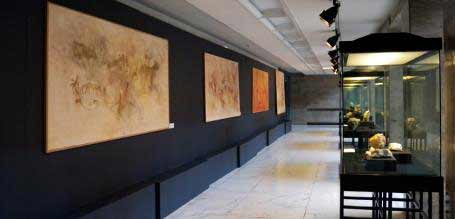
Quotidianità dei Segni Rupestri represents the second chapter of the Declinazioni di Comunità series, created and curated by Emanuele Rinaldo Meschini as part of the Torno subito project. Promoted by the region of Lazio, Declinazioni di Comunità is a contemporary art program divided into three exhibitions aimed at analyzing the relationship between artists and community in relation to the Pigorini Museum’s ethnographic and prehistoric collections. The exhibition Quotidianità dei Segni Rupestri, on show from May 7 to May 30 2015, is curated by Emanuele Rinaldo Meschini and Alessandra Serges. The work of two artists, Hitnes (Rome, 1982) and Il Baro (Paolo Baraldi, Bergamo,1977), creates a dialogue between street art and the prehistoric and protohistoric rock art found in two importan tinternational sites – Tadrart Acacus in Libya (VII-I millennium BC) and the Valle Camonica in Italy (Brescia, V-Imillennium BC). In particular, this dialogue comes from the need to grapple with issues surrounding the current concept of street art as it moves into galleries and becomes increasingly self-referential, yet tries to re-establish contact with primitive forms of public communication. Both Tadrart Acacus and Valle Camonica, with their unique representations, cast a light on a primitive concept of public communication. By bringing together narrative and visual vocabulary, this “pre-communication” fused different layers of communication into the first “identity” narrative.
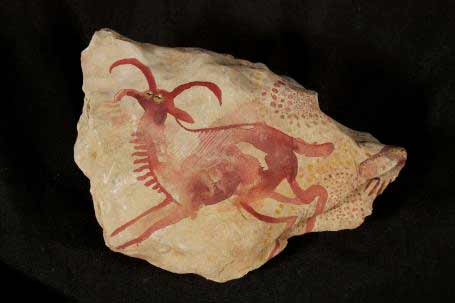
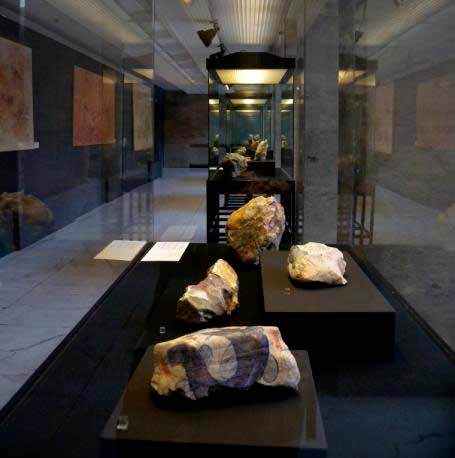
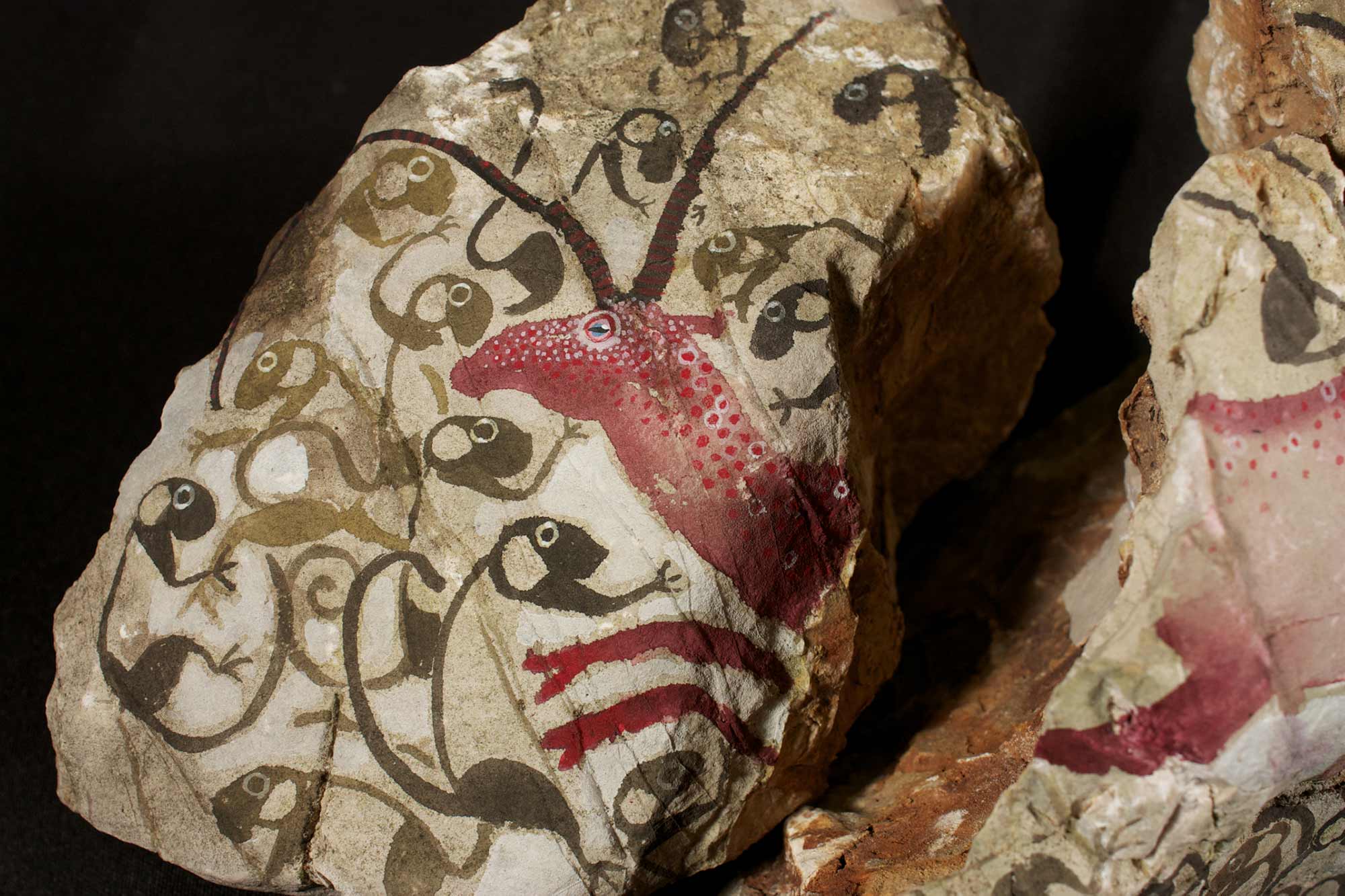
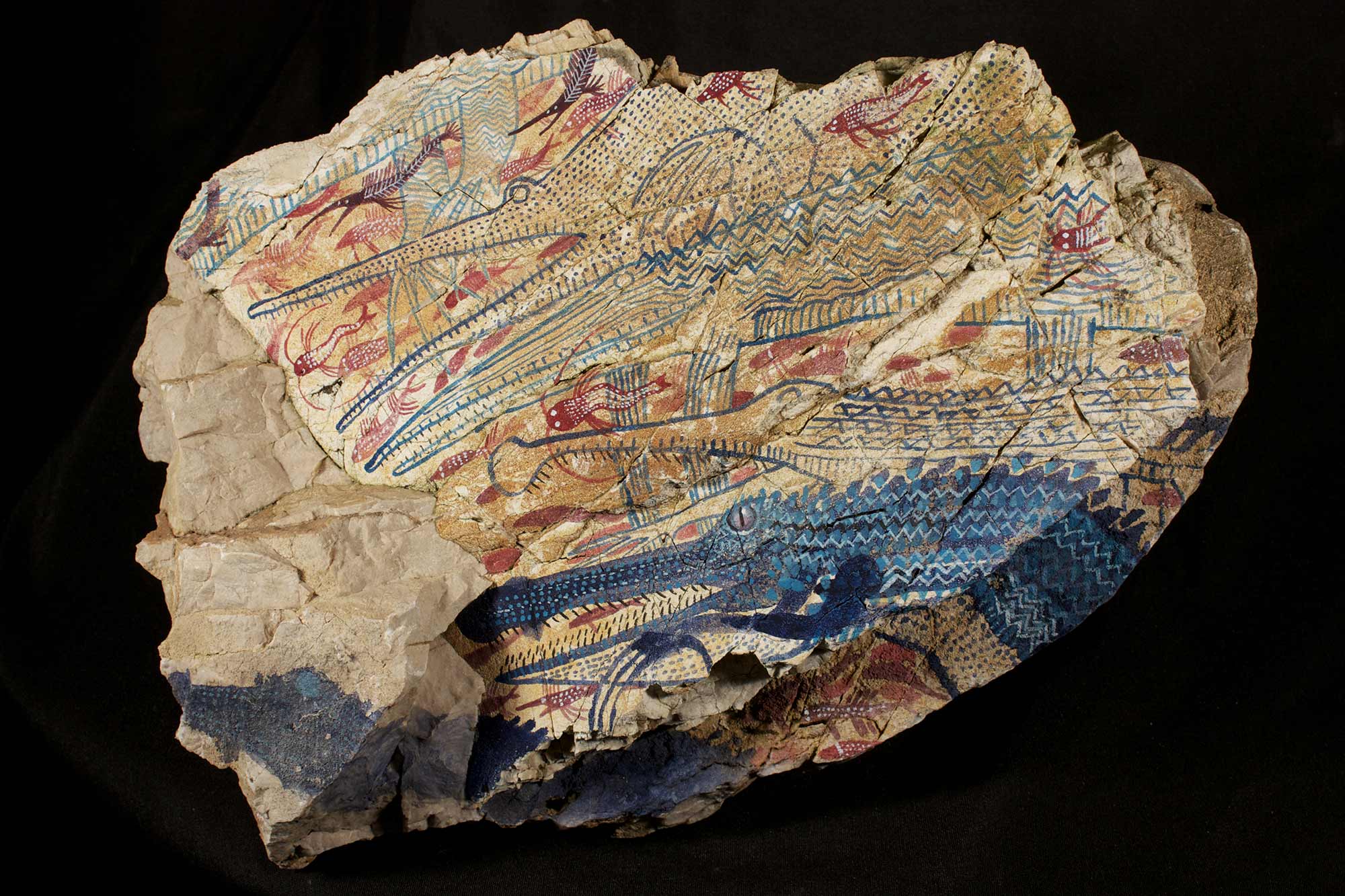
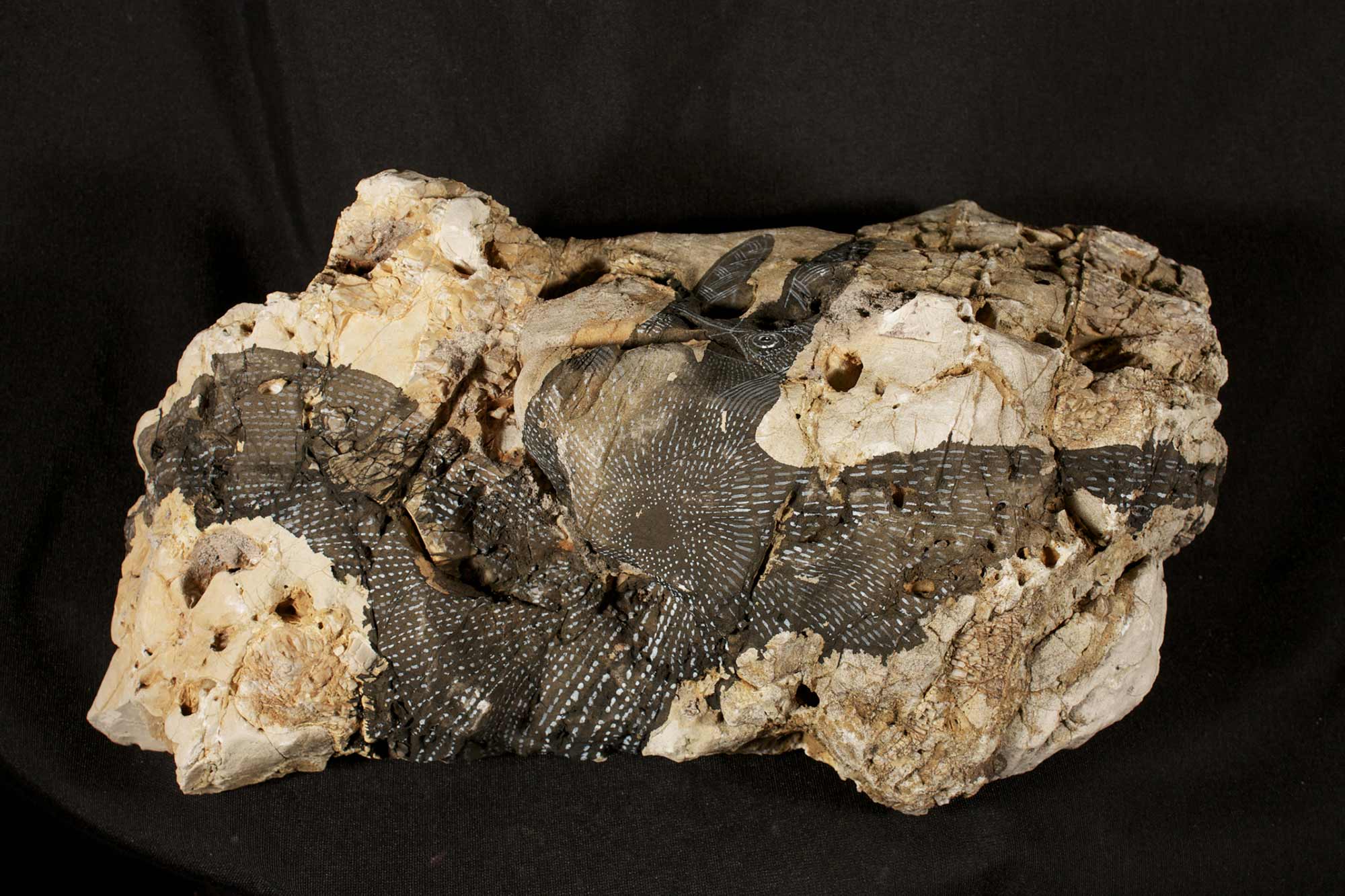
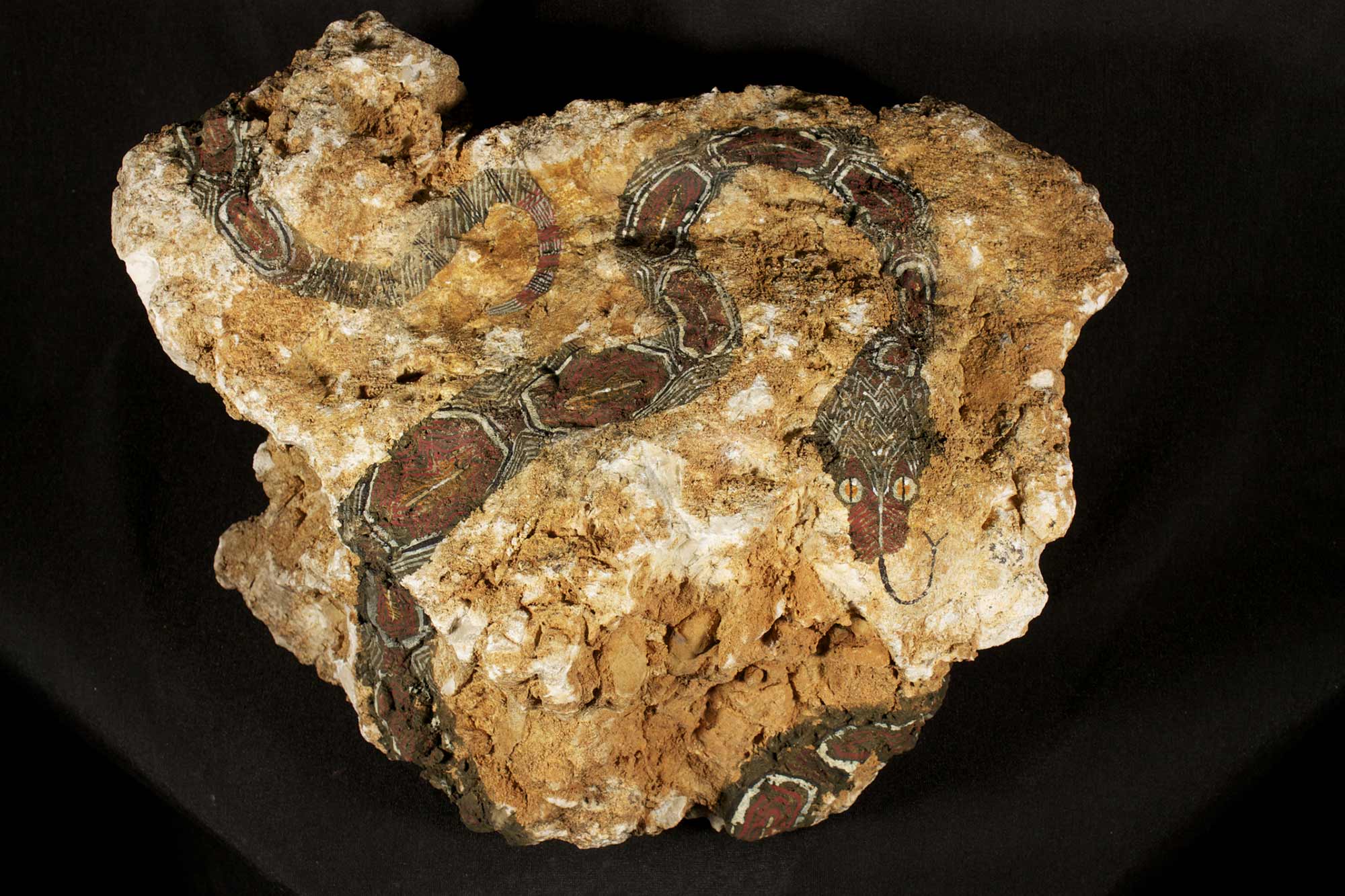
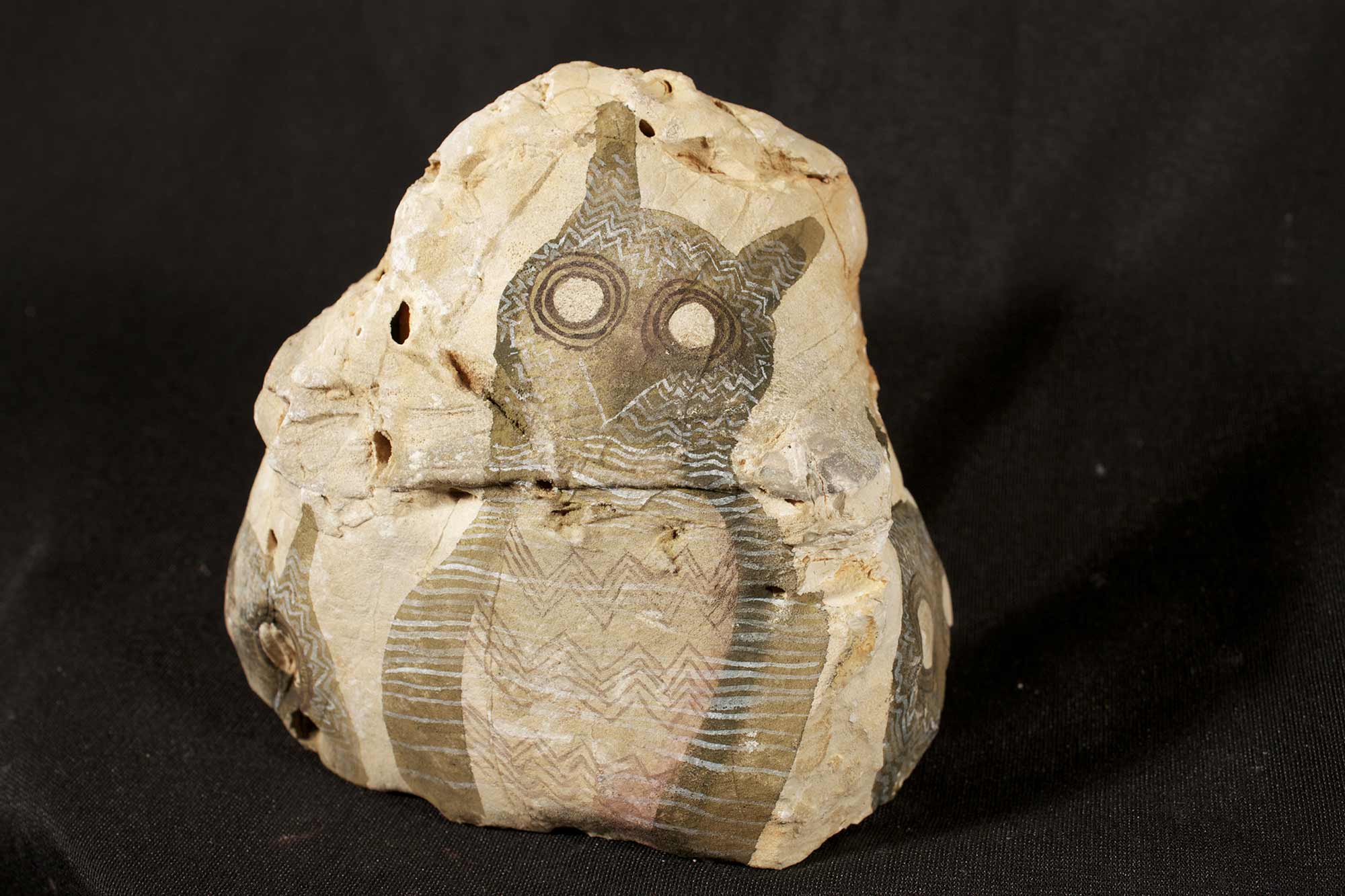
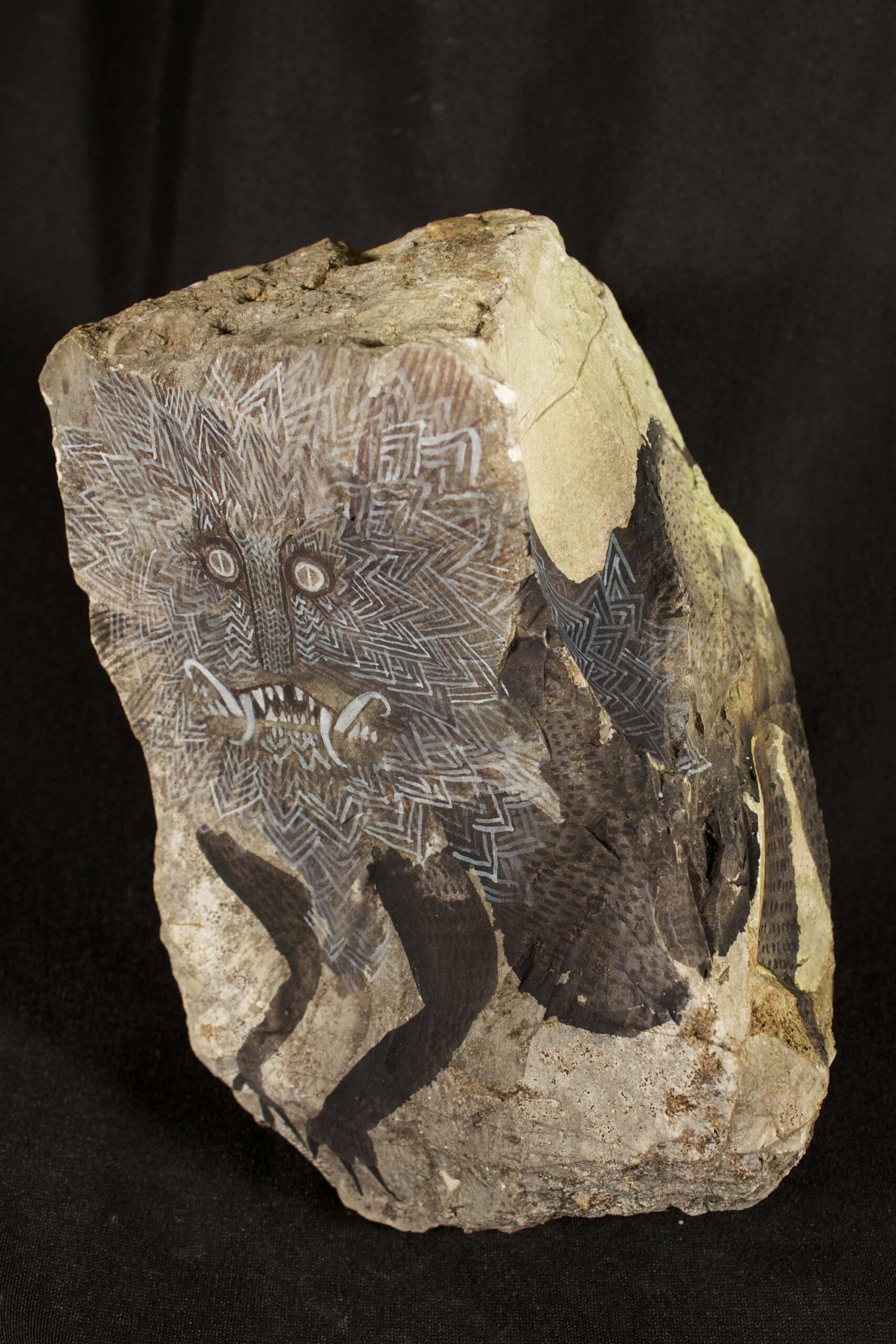
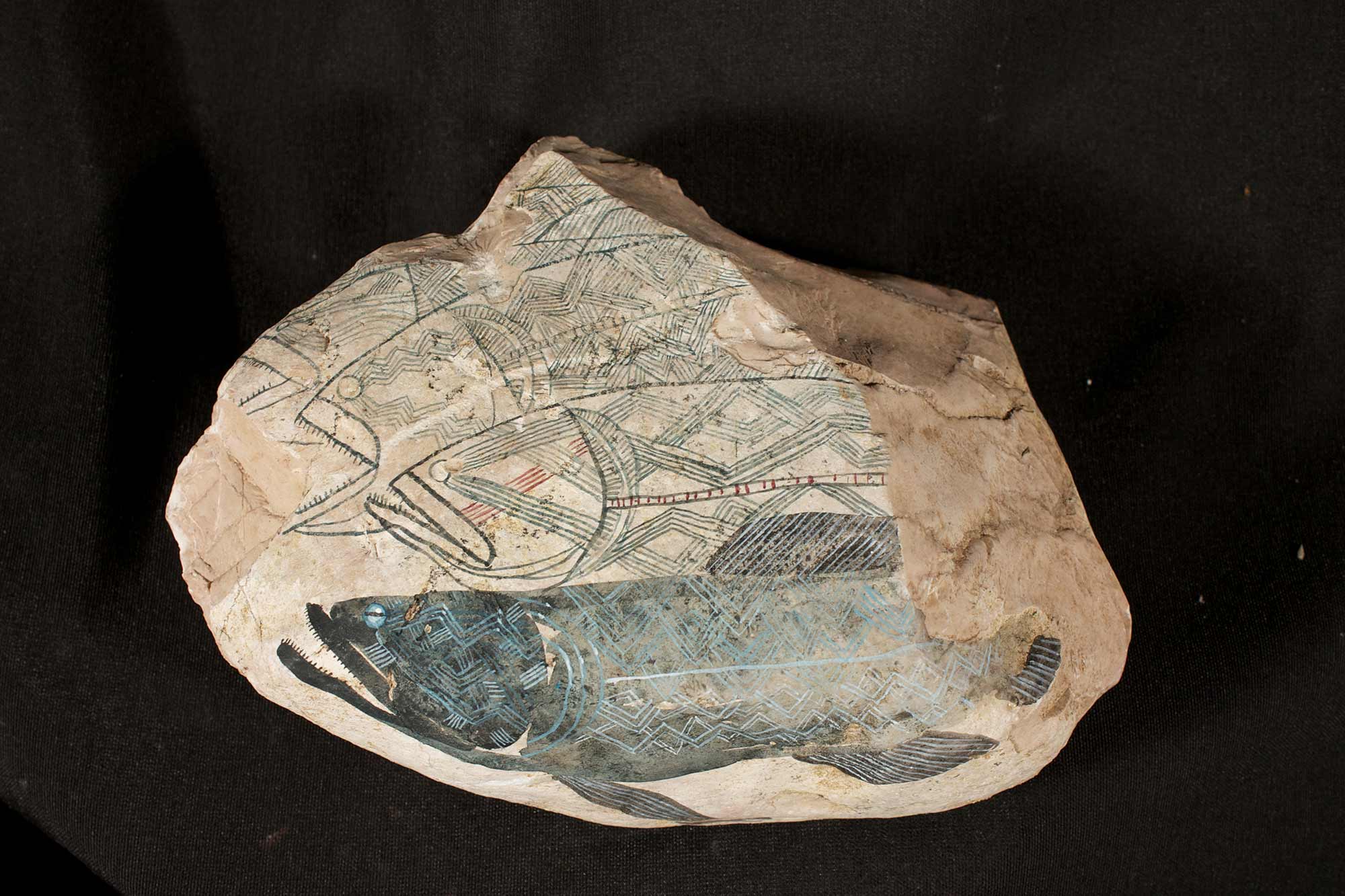
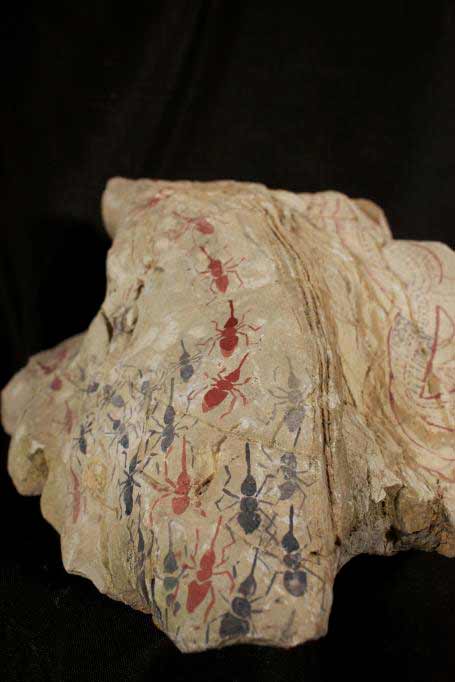
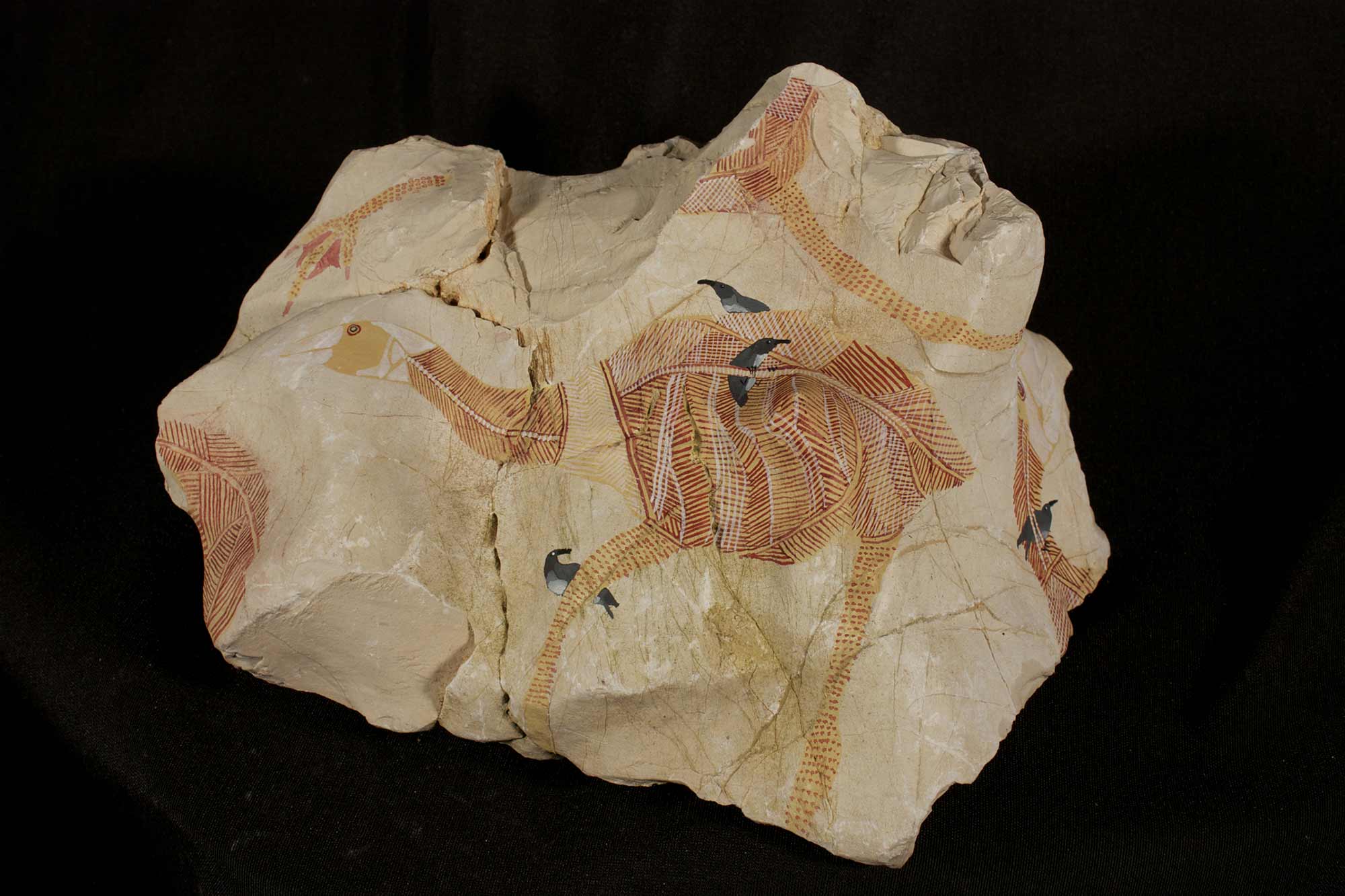
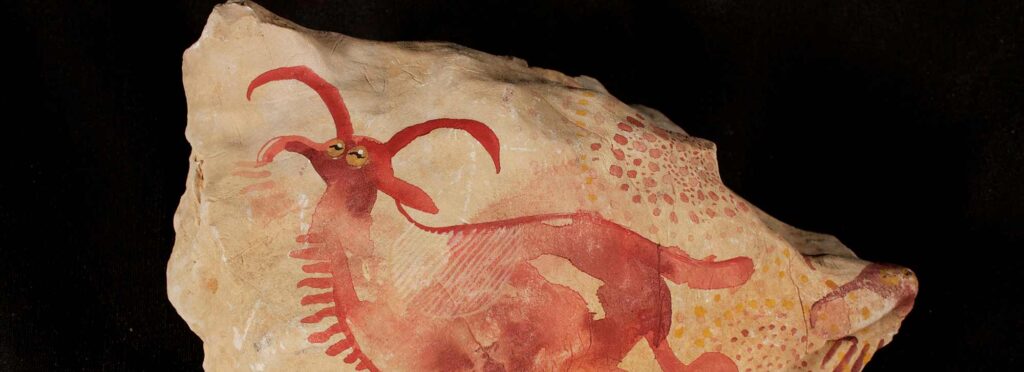
The artistic output Hitnes created for the Pigorini Museum dialogues with the rock paintings of Tadrart Acacus, primarily the reproductions created during Fabrizio Mori’s missions. The Mori Collections, a body of rock art reproductions created between 1958 and 1969 by Piero Guccione and Lorenzo Tornabuoni, is currently conserved in the museum. These collections were the inspiration for the Roman artist’s work, who used the concept of reproduction as a starting point in creating a series of painted rocks inspired by Saharan motifs. The technique developed by Guccione, which he himself defined as “false rock,” entailed recreating rock backgrounds on canvas, which Hitnes, in this instance, has contorted by using real stones and creating “false artifacts” that consist of dreamlike zoomorphic figures.